
The Cost of a Trip to Dublin: My Budget Break Down

In August 2026, my cousin came over from London for a weekend in Dublin. Although I live in Dublin, our house was being renovated, so I decided to book a hotel and spend the weekend exploring the city with him.
We stayed for 2 nights at the Clayton in Ballsbridge, spent our first day visiting the likes of Trinity and the Guinness Storehouse, and our second exploring Malahide and Howth.
We ate breakfast, lunch and dinner out, visited a few paid attractions and spent plenty of time catching up over pints. This was far from a budget trip. The table below breaks down what we spent along with the cost of a trip to Dublin in 2027.
How much a trip to Dublin costs
| Expense | Cost for 2 people |
|---|---|
| Accommodation (2 nights, breakfast included) | €452 |
| Food (2 breakfasts, 2 lunches, 2 dinners each) | €300 |
| Alcohol (28 pints at €7.50) | €210 |
| Tips | €30 |
| Attractions (4 paid attractions each) | €160 |
| Public transport | €24 |
| Refreshments | €40 |
| Airport transfer (Uber) | €42 |
| Total for 2 people | €1,258 |
| Total per person | €629 |
How much does a trip to Dublin cost for 2, 3 and 5 days?
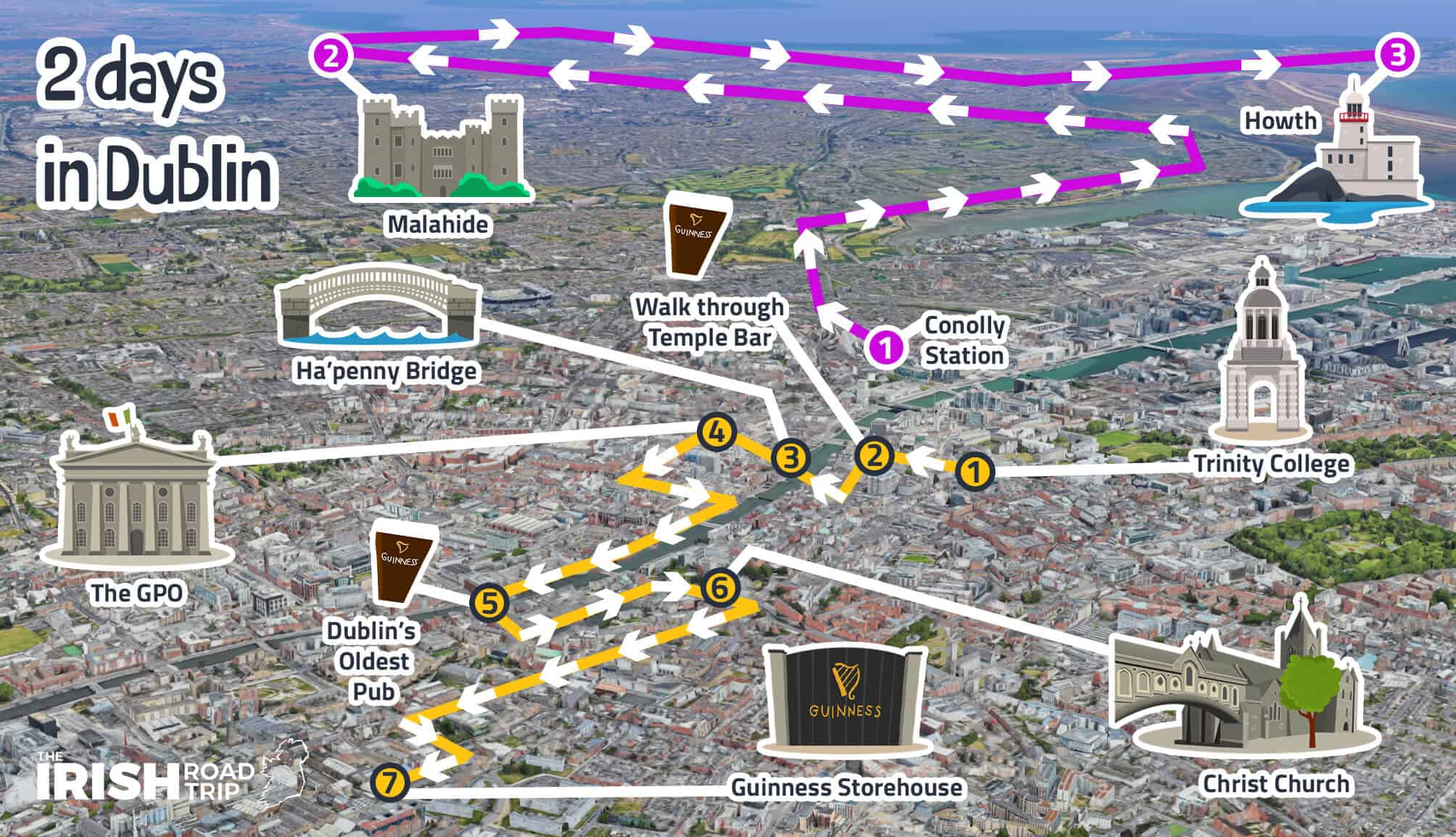
We followed the 2 days in Dublin itinerary shown on my map above. Our weekend in Ireland’s capital wasn’t cheap, but we weren’t trying to keep costs down.
It was my cousin’s first visit, so I wanted to show him some of the main attractions while also having plenty of time to catch up over food and pints.
For a trip in 2027, I’d budget around €540 per person for a comfortable 2-night stay, excluding flights. The table below compares the estimated cost of budget, mid-range and high-end stays lasting 2, 3 and 5 nights.
I’ve based the figures on two people sharing a hotel room, with one full day’s spending allowed for each night. All prices are per person and include accommodation, food and drink, transport, attractions and a 10% buffer.
The cost to go to Dublin across different budgets
| Budget | 2 days | 3 days | 5 days |
|---|---|---|---|
| Budget | €330 | €495 | €825 |
| Mid-range | €539 | €809 | €1,348 |
| High-end | €1,045 | €1,568 | €2,613 |
One thing to keep in mind is that Dublin hotel prices can vary enormously depending on what time of year you visit Ireland. A room that costs €180 on a quiet weekday could be considerably more expensive during a summer weekend or when there’s a major concert taking place.
1. Budget trip to Dublin
For a budget trip, I’ve allowed €150 per night for a double room shared by two people, €40 per person per day for food and drink, and a small allowance for transport and attractions. The biggest challenge will be finding accommodation at that price. Even hostels in Dublin are expensive these days. I’d also recommend prioritising free attractions, using public transport and limiting how much you spend in pubs.
2. Mid-range trip to Dublin
I’ve allowed €225 per night for a double room shared by two people, €75 per person per day for food and drink, and approximately €57.50 per person per day for attractions and transport. With a 10% buffer added, that comes to around €540 per person for two nights. For context, we paid €226 per night at the Clayton Hotel Ballsbridge in August 2026. Out of the many neighborhoods in Dublin, I find Ballsbridge to offer the best value.
3. High-end trip to Dublin
For a high-end trip, I’ve allowed €450 per night for accommodation, €150 per person per day for food and drink, and a larger allowance for taxis, attractions and experiences. This gives you considerably more flexibility when choosing hotels and restaurants, although some of the best hotels in Dublin, e.g. the Merrion, can cost substantially more than €450 per night.
4. Is Dublin expensive to visit?
Yes, Dublin is expensive, particularly for accommodation, food and alcohol. For 2027, I’d budget €150-€225 per night for a double room and €40-€75 per person per day for food and drink. However, public transport is relatively cheap (€2 per eligible 90-minute journey), and many things to do in Dublin, including museums and coastal walks, are free.
What impacts the cost of a trip to Dublin?
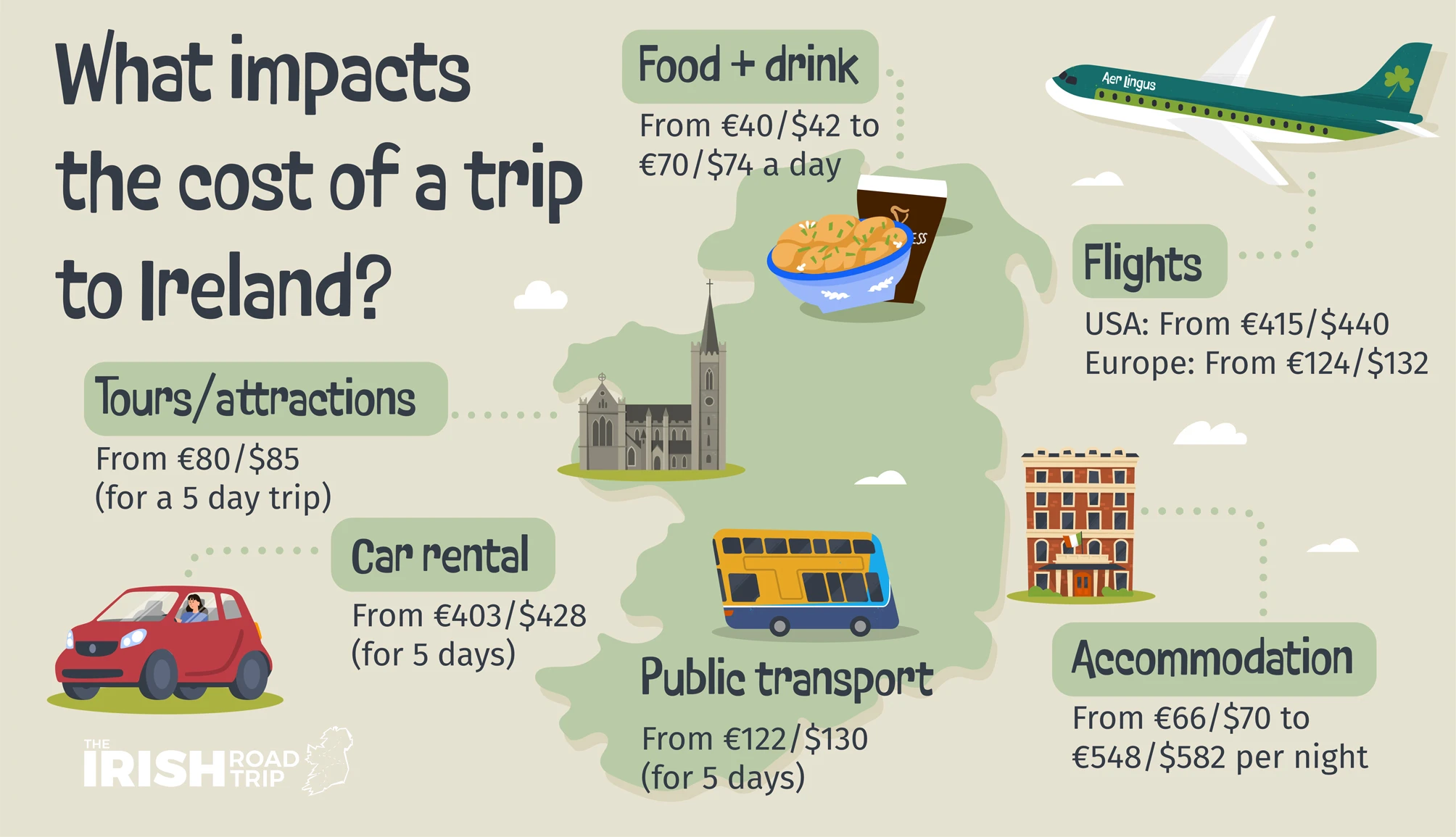
There are several things that will influence how much you spend in Dublin, but accommodation, food and drink, and the time of year you visit will have the biggest impact.
For example, you could spend two days exploring Dublin’s free museums, parks and coastal towns, or you could fill those same two days with paid attractions, restaurant meals and evenings in the pubs. The difference in cost would be fairly hefty.
Below, I’ll break down the main expenses involved in visiting Dublin, with estimated prices for 2027 and advice on where I think it’s worth spending more and where you can save.
The cost of flights to Dublin

The cost of flights to Dublin will depend on where you’re travelling from, when you’re visiting and how far in advance you book. If you’re flying from the UK, you can often find relatively inexpensive return flights, particularly if you’re flexible with dates and travelling with hand luggage.
For visitors from the US, flights will account for a much larger portion of the overall trip budget. The table below gives you a rough idea of what to allow for return economy flights to Dublin in 2027.
| Departure airport | Estimated return flight |
|---|---|
| London | €80-€200 |
| Manchester | €70-€180 |
| New York | €450-€850 |
| Boston | €450-€850 |
| Chicago | €550-€950 |
| Los Angeles | €600-€1,100 |
My thoughts
I’d recommend comparing flight prices before booking a hotel in Dublin, particularly if you have some flexibility with your travel dates. One thing I’d pay particular attention to is your arrival time.
My cousin landed at Dublin Airport at around 6am, and we met for breakfast in the city centre at 8am. That gave us almost a full day to explore Dublin, which was particularly useful as he was only visiting for the weekend.
However, if you’re arriving on an overnight flight from the US, I’d be careful about planning a full day of sightseeing immediately after landing. You may be exhausted before you’ve even checked into your hotel.
The cost of accommodation in Dublin

Accommodation will likely be your biggest expense when visiting Dublin, particularly if you’re travelling during the summer or over a weekend. When my cousin visited in August 2026, we paid €452 for two nights at the Clayton Hotel Ballsbridge.
That worked out at €226 per night for a double room, with breakfast included. We weren’t looking for the cheapest hotel available, but we didn’t want to spend a fortune on somewhere we’d mainly be using to sleep.
For a trip in 2027, here’s what I’d budget per night for accommodation in Dublin:
| Accommodation type | Estimated cost per night |
|---|---|
| Hostel dorm bed | €65-€100 |
| Budget double room | €150 |
| Mid-range hotel | €180-€260 |
| Higher-end hotel | €300-€500 |
| Luxury hotel | €500+ |
My thoughts
I’d recommend booking your hotel as early as possible, particularly if you’re visiting Dublin between June and August. I’d also check whether there’s a major concert, rugby match or other event taking place during your stay. These can have a big impact on accommodation prices, even outside the summer months.
When choosing where to stay in Dublin, don’t limit yourself to Temple Bar or the immediate city centre. We stayed in Ballsbridge, which worked well for us, and I’d also consider areas like Drumcondra or around St Stephen’s Green.
However, be careful about booking somewhere far outside the centre simply because the room is cheaper. If you end up taking taxis into town and back every evening, you could quickly lose whatever you’ve saved.
The cost of food and drink in Dublin

Food and drink can account for a surprisingly large portion of your Dublin travel budget, especially if you plan on eating out for every meal and spending your evenings in pubs.
During our August 2026 weekend, we ate out for breakfast, lunch and dinner on both Friday and Saturday. We also spent plenty of time catching up in many of my favourite pubs in Dublin, which pushed our spending up considerably. For a trip to Dublin in 2027, here’s what I’d allow for some common food and drink expenses:
| Food or drink | Estimated price |
|---|---|
| Full Irish breakfast | €12-€18 |
| Coffee | €3.50-€5 |
| Sandwich or light lunch | €10-€16 |
| Pub lunch | €18-€25 |
| Restaurant main course | €22-€35 |
| Two-course dinner | €35-€55 |
| Pint of Guinness | €7-€8.50 |
| Glass of wine | €7-€10 |
| Cocktail | €13-€17 |
My thoughts
If you’re planning to spend a lot of time in Dublin’s pubs, I’d recommend budgeting for alcohol separately. During our weekend, we had approximately seven pints each per day. At an estimated €7.50 per pint, that worked out at €105 per person over two days.
We weren’t trying to save money, and catching up over a few pints was part of the reason for the trip. However, someone having just one or two drinks each evening would spend considerably less.
Another thing to allow for is tips. When it comes to tipping in Ireland, I generally leave around 10% when I’ve received good table service in a restaurant, although tipping isn’t compulsory in Ireland. You don’t need to tip every time you order a coffee or pint at the bar.
Finally, keep an eye on smaller expenses like coffees, bottled water and snacks. They might not seem significant individually, but they can add up over several days.
The cost of getting around Dublin

You don’t need to rent a car in Dublin. Most of the main attractions are within walking distance of each other, while the bus, the Luas (tram) and DART (coastal train) make getting around Dublin relatively cheap.
I’d recommend getting a TFI Leap Card. It’s a reusable travel card that you top up and use on public transport. The €2 TFI 90-minute fare lets you transfer between eligible services within 90 minutes, while the €6 daily cap limits what you’ll spend on eligible journeys in Zone 1. Here’s what you can expect to pay:
| Transport | Cost |
|---|---|
| Walking around Dublin | Free |
| TFI 90-minute Leap fare | €2 |
| Daily Leap Card cap (Zone 1) | €6 |
| Leap Visitor Card (24 hours) | €8 |
| Leap Visitor Card (72 hours) | €16 |
| Dublin Bus from airport | €2 Leap / €2.60 cash |
| Dublin Express from airport | €10 |
| Aircoach from airport | €9-€10 |
| Taxi/Uber from airport | €25-€35 |
My thoughts
I’d use a regular Leap Card for most visits. There’s also a Leap Visitor Card offering unlimited eligible journeys for 24 hours (€8), 72 hours (€16) or seven days (€32), but it won’t necessarily save you money if you’re mainly walking.
We used the DART to visit Malahide and Howth during our weekend, and I’d strongly recommend it for exploring Dublin’s coastline without a car. For the journey from Dublin Airport to the city centre, Dublin Bus is cheapest at €2 with a Leap Card, although luggage space is limited.
Dublin Express (€10) and Aircoach (€9-€10) are alternatives, while taxis and Uber are more convenient if you’re carrying bags. On the Sunday my cousin was leaving, we missed the bus and he had to get an Uber which cost €42 from Ballsbridge.
If you’re renting a car in Ireland for part of a longer trip, collect it when you’re leaving Dublin rather than paying for rental and parking while you’re in the city.
The cost of tours and attractions in Dublin

There are some mighty free things to do in Dublin, including visiting the National Gallery of Ireland, exploring St Stephen’s Green and the Howth Cliff Walk. However, some of the city’s most popular attractions charge admission, and the costs can add up quickly if you’re visiting several in one day.
On Friday, we spent much of the day visiting paid attractions, including the Book of Kells Experience, Christ Church Cathedral and the Guinness Storehouse. Here’s what I’d budget for some of Dublin’s main attractions in 2027:
| Attraction | Estimated adult admission |
|---|---|
| Book of Kells Experience | From €25 |
| Guinness Storehouse | From €30 |
| Christ Church Cathedral | €12-€15 |
| St Patrick's Cathedral | €11-€13 |
| Kilmainham Gaol | Around €8 |
| EPIC The Irish Emigration Museum | €20-€25 |
| Jameson Distillery Bow St. | From €30 |
My thoughts
I’d recommend choosing the paid attractions you want to visit before buying the Dublin Pass from Go City. It can save money if you’re visiting several participating attractions, but compare the pass price against individual tickets first.
I’d also avoid filling every day with paid sightseeing. On Saturday, we took the DART to Malahide and Howth, explored the castle grounds, visited Howth Market and walked along the cliffs without paying for admission.
Travel insurance and other expenses

There are a few additional expenses worth allowing for when budgeting for the cost of a trip to Dublin. Travel insurance is one I’d recommend arranging before you travel, particularly if you’re visiting from outside Europe.
The price will depend on your age, where you’re travelling from and the level of cover you choose. Other expenses to consider include:
- An eSIM: Check whether your phone plan includes roaming in Ireland. Personally, I always get my through Revolut
- Souvenirs: Allow a little extra if you’re planning to bring home gifts or Irish-made products
- Luggage storage: Useful if you arrive early or have several hours between checking out and your flight
The all important buffer
I’d recommend keeping an extra 10% available for unexpected expenses. You might need a taxi when the weather turns, decide to visit another attraction or spend more on food and drink than planned.
I’ve seen how quickly unexpected costs can arise. A couple of years ago, friends of mine arrived at an Airbnb in Belfast only to discover it was a scam. They eventually got their money back, but had to pay for alternative accommodation in the meantime.
On a recent road trip around Ireland, I also ended up buying a €45 rain jacket I hadn’t budgeted for. For example, if your accommodation, food, transport and attractions come to €1,000, I’d allow another €100 for unexpected expenses. I’ve already factored this into the budget estimates earlier in this guide.
When is the cheapest time to visit Dublin?

January, February and November are generally the cheapest months to visit Dublin, particularly when it comes to accommodation. Hotel demand tends to be lower, although major concerts, rugby matches and other events can still push prices up.
July and August are usually among the most expensive months, while prices during March in Ireland sky rocket due to St Patrick’s Day.
However, I wouldn’t recommend visiting Dublin in winter purely to save money. The days are short, the weather can be cold and wet, and you’ll have less daylight for exploring places like Howth and Malahide.
Personally, I think May, September and early October are the best time to visit Ireland. One thing I’d strongly recommend is checking Dublin’s events calendar before booking accommodation.
Even outside the main tourist season, a major concert or sporting event can cause hotel prices to increase considerably.
How to save money on a trip to Dublin
Dublin can be expensive, but there are plenty of ways to reduce your spending without missing out on the city’s main attractions. Here are six things I’d recommend:
1. Book accommodation early
Accommodation will likely be your biggest expense, so I’d recommend comparing hotels as soon as you know your travel dates. Check several areas rather than limiting yourself to Temple Bar or the immediate city centre. Just make sure any savings aren’t cancelled out by expensive taxi journeys.
2. Check what’s on in Dublin before booking
Major concerts, rugby matches and other events can send hotel prices soaring, even outside the summer months. If you’re flexible, compare different weekends and midweek stays before committing to your dates.
3. Make the most of free attractions
You don’t need to spend a fortune on admission tickets to enjoy Dublin. The National Gallery of Ireland, St Stephen’s Green and the National Museum of Ireland are all worth visiting, while the Howth Cliff Walk is one of my favourite free things to do in Dublin.
4. Use public transport instead of taxis
I’d recommend walking around the city centre and using a Leap Card for longer journeys. The €2 TFI 90-minute fare and €6 daily cap on eligible journeys make public transport relatively affordable. You can also use the DART to visit coastal towns like Howth and Malahide.
5. Keep an eye on food and drink spending
Eating out three times a day and spending several hours in pubs can quickly push your budget up. Look for lunch specials or early bird menus, make use of breakfast included with your hotel and consider having fewer drinks on some evenings.
6. Compare the Dublin Pass with individual tickets

If you’re planning to visit several paid attractions, check whether the Dublin Pass from Go City will save you money. However, don’t buy it automatically.
Add up the admission prices for the attractions you actually want to visit and compare the total with the pass.
I’d also avoid booking too many paid attractions on the same day. Leave yourself time to explore Dublin without constantly rushing between ticketed experiences.
FAQs about the cost of a trip to Dublin
I’ve covered the main expenses above, but there are a few other questions worth answering if you’re trying to work out how much spending money you’ll need for Dublin in 2027.
How much does a trip to Dublin cost for 2 people?
I’d budget around €1,080 for two people spending 2 nights in Dublin on a comfortable mid-range trip, excluding flights. This covers a shared hotel room, food and drink, public transport, several paid attractions and a 10% buffer.
How much does a 3-day trip to Dublin cost?
For a mid-range 3-night trip to Dublin, I’d allow around €810 per person, excluding flights. You could spend considerably less by choosing budget accommodation, visiting free attractions and limiting alcohol.
How much does a 5-day trip to Dublin cost?
I’d budget around €1,350 per person for a comfortable 5-night visit to Dublin, excluding flights. That includes accommodation, food and drink, sightseeing, transport and a 10% buffer.
Is €100 a day enough for Dublin?
Yes, €100 per person per day should be enough for food, drink, public transport and some sightseeing if your accommodation is already paid for. However, if you’re planning to visit several paid attractions and spend your evenings in pubs, I’d allow more.
How much spending money do I need for Dublin per day?
If you’ve already paid for accommodation, I’d recommend allowing around €75 per person per day for food and drink on a mid-range trip, with additional money for transport and attractions. If you’re visiting Dublin on a tighter budget, you could manage on €40 per day for food and drink by choosing inexpensive meals and limiting alcohol.
Do you need a car in Dublin?
No. I’d strongly recommend against renting a car if you’re only visiting Dublin. Most of the main attractions are within walking distance of each other, while buses, Luas and DART make it easy to explore further afield. If you’re planning a road trip around Ireland, collect your rental car when you’re leaving Dublin rather than paying for rental and parking during your city break.
Is Dublin expensive compared with the rest of Ireland?
Dublin is generally one of the more expensive places to visit in Ireland, particularly for accommodation, restaurants and alcohol. However, you can save money on transport by exploring on foot and using public transport instead of renting a car. There are also plenty of free attractions, including museums, parks and coastal walks.

Keith O’Hara has lived in Ireland for 35 years and has spent much of the last 13 creating what is now The Irish Road Trip guide. Over the years, the website has published thousands of meticulously researched Ireland travel guides, welcoming 40 million+ visitors along the way. In 2022, the Irish Road Trip team published the world’s largest collection of Irish Road Trip itineraries. Keith lives in Dublin with his dog Toby and finds writing in the 3rd person minus craic altogether.


