
50 Best Things to do in Ireland (From 37 Years of Trips)

I’ve spent the last 37 years exploring Ireland, first on childhood holidays with my parents and later on road trips with friends and on my own. This guide contains what I believe are the best things to do in Ireland, based on a lifetime of trips and plenty of wrong turns.
If you’re planning an Ireland vacation, there’s far too much to see in one trip, so you’ll need to pick and choose. Before deciding what to do in Ireland, here’s a quick overview to help you narrow it down:
- Start with Kerry: Home to many of Ireland’s most famous attractions, including the Ring of Kerry, the Dingle Peninsula and Killarney National Park
- Head west: Connemara, the Aran Islands, the Burren and the Cliffs of Moher offer a mix of mountain scenery, island trips and coastal walks
- Donegal: I’ve been visiting since the mid-90s and I still feel like I’ve only scratched the surface (note: Attractions are spread out, so I’d recommend a minimum of 3 days here)
- Northern Ireland: Follow the Antrim Coast for the Giant’s Causeway and plenty more or head south to walk in the Mourne Mountains
My favourite things to do in Ireland

The illustrated map above shows some of my favourite things to do in Ireland, from famous attractions to places that are often overlooked.
I’ll take you through each of my favourites below, along with tips from my visits to help you decide which are worth adding to your Ireland itinerary.
At the end of this guide, you’ll also find my Google Map with hundreds of places to visit in Ireland that I’ve been adding to since 2016.
1. Achill Island

I’ve driven around Achill Island in Mayo in all kinds of weather, and it’s somewhere I’d happily return to again and again. One of the beauties of Achill is that you can drive straight onto it thanks to the Michael Davitt Bridge.
If you have a day to spare, I’d recommend following the 55km Atlantic Drive, which takes in the White Cliffs of Ashleam, Minaun Heights, Keel Beach and the magnificent Keem Bay.
I’ve visited in summer, when the sun is shining and you can enjoy a swim, but the crowds, particularly at Keem, can make it a nightmare at times. Personally, I prefer Achill in autumn or winter.
The weather in Ireland can be wild, but the island is much quieter, and the stormy conditions often make the scenery even more impressive.
My advice: Allow a full day for Achill. The Atlantic Drive takes around 4 – 5 hours with short stops, but you’ll want extra time to explore.
2. Yeats Country

I’ve been visiting Sligo since 2015, when my dad and I stopped at the Gleniff Horseshoe while driving from Mayo to Donegal. We enjoyed it so much that we returned the following year, and again the year after that!
One of my favourite things about Yeats Country is how close together many of the main attractions are. You could easily spend a weekend here, see a huge amount and spend very little time in the car.
I’d recommend starting with the 20km Gleniff Horseshoe Drive, before heading to the Benbulben Forest Walk (5.5km), Drumcliffe Church, where W.B. Yeats is buried, and Glencar Waterfall, which inspired his poem The Stolen Child.
My advice: Give yourself two days if you can. You’ll have time to explore the main sights without rushing, with Sligo Town making a handy base.
3. The Slieve League Cliffs

I’ve visited the Slieve League Cliffs in Donegal 6 times over the last 15 years, and it wasn’t until my 2025 visit that I finally saw them without a blanket of cloud!
Standing at 601m (1,972ft), they’re almost three times the height of the Cliffs of Moher, and the views from the upper viewing point are spectacular when the weather plays ball.
On my most recent visit in May, I parked at the visitor centre and paid for the shuttle bus to the top. The driver gave a brilliant commentary along the way, and I’d happily recommend it, although the queue for the return bus was a bit of a mess.
My advice: Check the forecast before visiting. Low cloud can completely hide the cliffs, as I learned on my first five visits! During the busier months, you’ll generally need to take the shuttle or walk up, while driving to the upper viewpoint is usually possible in the off-season.
4. The Beara Peninsula

If you’re looking for some top things to do in Ireland that take you away from the crowds, pop the Beara Peninsula on your to-visit list and head off on your merry way.
Part of the Beara Peninsula stretches into Kerry, while the rest lies in Cork, and it’s best explored on the 148km/92 mile Ring of Beara drive.
This place boasts bucketloads of scenery around every (often narrow!) twist and turn and some gorgeous towns and villages, like Eyeries, Allihies and the very bendy Healy Pass.
My advice: I’d strongly recommend spending a night here, if your itinerary allows. One of my fondest Irish Road Trip memories is of a summer’s evening spent tucked away in O’Shea’s Bar in Eyeries with my aul lad, sipping pints and looking back at photos from our day on Beara.
5. The Loop Head Peninsula

I’ve visited Clare’s Loop Head Peninsula many times over the years, and I’m always amazed by how quiet it is, especially considering how impressive the scenery is.
A visit here is one of the more off-the-beaten-path things to do in Ireland, with enormous cliffs, crashing waves and relatively few visitors compared to the Cliffs of Moher further north.
I’d recommend starting with the Kilkee Cliffs, before continuing to the Bridges of Ross and Loop Head Lighthouse, where you can climb the tower and explore the surrounding headland.
My advice: Allow at least half a day to explore the peninsula. Bring decent walking shoes, as the paths around Loop Head can get extremely muddy, even when the weather is dry (see photo of my ruined trainers above!)
6. The Slea Head Drive

Many of the most famous things to see in Ireland are dotted along the Slea Head Drive on the Dingle Peninsula – a 38km scenic loop.
This coastal route packs in big scenery in a short distance: cliff-backed beaches, views of the Blasket Islands, ancient sites, and some of the finest stretches of road in Kerry.
Starting and finishing in Dingle, it’s best driven clockwise, and although you can complete the loop in under an hour, it deserves at least half a day.
My advice: Any time I set out to do this drive, I try and stay at least a night in Dingle Town – there’s great restaurants (like FishBox), while some of the pubs in Dingle, like Foxy John’s, will make leaving the town a struggle!
7. Connemara

One mistake I see visitors to Connemara make is driving straight from Galway City to Clifden or Kylemore Abbey, missing some of the best scenery along the way.
There’s a huge amount to see between these places, from the mountains and lakes of the Inagh Valley to the little village of Leenaun, overlooking Killary Fjord, and the beautiful beaches around Roundstone.
I’ve done my Connemara road trip four times over the last 10 years, tweaking the route as I went, and it’s now the itinerary I recommend to anyone looking to explore the region.
My advice: Give Connemara National Park two days if you can. Spend the first exploring the valleys and beaches, then use the second for the Sky Road, Diamond Hill and Kylemore Abbey. Clifden makes a great base for both.
8. Spike Island and Cobh

Cork is arguably one of the best places to visit in Ireland when it comes to the sheer volume of things to see and do, and the historic town of Cobh is a great example.
Many people visit Cobh for a photo of its colourful Deck of Cards houses and then head off again. It’s a shame, as there’s plenty to see here, from the impressive St Colman’s Cathedral and the Titanic Experience to Spike Island, a former monastery, fortress and prison reached by ferry.
My advice: Cobh makes a great day trip from Cork City. Allow at least half a day to explore, or a full day if you’re planning to visit Spike Island.
9. Valentia Island

One of the best things to do in Ireland, in my opinion, is to drive up Geokaun Mountain on Valentia Island in Kerry. I’ve visited many times over the years, and the views from the top never fail to impress.
One of the beauties of Geokaun is that you can drive right up to the viewing point, so there’s no long hike involved. From the top, you’ll be treated to magnificent views of the Skellig Islands, the Kerry coastline and the surrounding mountains.
Valentia Island is also home to the Skellig Experience Centre, the Fogher Cliffs and the site of the first transatlantic telegraph cable landing.
My advice: If you’re driving the Ring of Kerry and Skellig Ring, use the little village of Portmagee as your base for night one. It breaks up the drive nicely and you can enjoy a feed and a pint in the Moorings (yes, the pub where Mark Hamill poured his pint of Guinness during the Star Wars filming).
10. The Antrim Coastal Route

The 185km Causeway Coastal Route between Belfast and Derry is home to some of the most varied scenery in Ireland, from the nine Glens of Antrim to towering cliffs, beaches and ancient castles.
Most visitors come for the Giant’s Causeway, Carrick-a-Rede Rope Bridge and Northern Ireland’s Game of Thrones filming locations, but I’d argue that some of the best scenery is found away from these famous stops.
The Torr Head Scenic Route, Murlough Bay and Glenariff Forest Park are three of my favourites, and they’re well worth making time for if you’re not in a rush.
I’ve driven the route in a single day as a day trip from Belfast and, while it’s doable, I found it hectic. There’s so much to see that you end up watching the clock rather than enjoying the stops.
My advice: Split the drive over two days and use Ballycastle as your base. You’ll have much more time to explore without rushing. I’d also give the Torr Head a miss if you’re a nervous driver or travelling in a large vehicle, as the roads are narrow and steep.
The best things to do in Ireland’s west and south
From coastal drives in Donegal and Kerry to island trips off Galway and walks in Mayo, the West of Ireland and the south offer plenty to build your Ireland road trip around. This section covers Donegal, Sligo, Leitrim, Mayo, Galway, Clare, Kerry and Cork, with my advice on what to prioritise and how much time to allow.
11. The Ring of Kerry Drive

The Ring of Kerry is a 179km (111-mile) scenic driving route that starts and finishes in Killarney, taking in some of the best scenery County Kerry has to offer. It’s one of my favourite road trips in Ireland, partly because of the variety of attractions along the way.
You’ve everything from the mountains and lakes of Killarney National Park to the beaches, coastal viewpoints and little towns dotted around the Iveragh Peninsula. Some of my favourite stops include Ross Castle, Torc Waterfall, Ladies View, Derrynane Beach and the colourful village of Kenmare.
Although you could drive the route without stopping in around 3.5 hours, you’d miss the very things that make it worth doing. I’d allow at least 7 – 8 hours to explore it properly.
My advice: Drive the Ring of Kerry clockwise from Killarney, heading towards Kenmare first. Most tour buses travel anticlockwise, so you’ll avoid getting stuck behind them for much of the drive. Start early, too, as popular stops like Torc Waterfall get very busy as the day goes on.
12. Mizen Head

Mizen Head sits at the very tip of West Cork, where sheer cliffs, a dramatic concrete bridge and a historic signal station make this one of the most impressive places to visit in Ireland!
The visitor centre covers everything from shipwrecks to maritime history, while a series of paths leads you down towards the famous bridge, the signal station and several viewpoints overlooking the Atlantic.
One thing I’ve learned from visiting Mizen is that you need to dress for the weather, regardless of the season. I’ve been here in July when the wind and rain made it feel more like January!
My advice: Check the opening hours before making the journey. I once drove all the way out without checking, only to find the place closed. It’s generally open daily from April to October, but only at weekends from November to March, unless otherwise stated.
13. Donegal’s Inishowen Peninsula

If you’re wondering what to do in Ireland away from the usual tourist trail, the Inishowen Peninsula in Donegal is one of the first places I’d recommend.
Long, sweeping beaches, towering mountains and plenty of hidden gems are dotted along the Inishowen 100, a 100-mile (161km) scenic driving route around the peninsula.
The route takes in some of Donegal’s most impressive attractions, including Malin Head, Mamore Gap and Five Finger Strand. However, Inishowen has more going for it than scenery alone.
One of my favourite things about this part of Ireland is the people. You’ll find a warm welcome in its little towns and villages, which is every bit as memorable as the places you’ll visit.
My advice: Stay in Buncrana (I usually stay at The Gateway Hotel) and start the drive at Grianán of Aileach, working clockwise around the peninsula. Allow at least 5 hours, although I’d give it a full day if possible.
14. The Cliffs of Moher

The Cliffs of Moher rise to 702 feet (214m) above the Atlantic along a 13km stretch of coastline in County Clare. With around 1.5 million visitors each year, they’re one of the best things to do in Ireland.
The cliffs formed over 300 million years ago, and today you can admire them from several viewpoints near the visitor centre, including O’Brien’s Tower, which dates to 1835.
Personally, I think the best time to visit is in the evening, when the tour buses have departed and the cliffs are much quieter. If you time it right, you’ll also get to see the sun setting over the Atlantic.
My advice: Visit early in the morning or late in the evening to avoid the biggest crowds. If you want a completely different perspective, take one of the boat tours from Doolin. I’ve seen the cliffs from land and sea, and the boat trip was by far the most unique experience.
15. The Croagh Patrick hike

Croagh Patrick in County Mayo is one of the best hikes in Ireland, but it’s not one to underestimate. The 7km trail climbs to a height of 764m (2,507 feet), and it’s steep from the outset.
The recently added stone steps near the summit have made the final ascent much easier to manage. Before they were installed, that section felt like trying to climb a slope covered in marbles.
On a clear day, the views over Clew Bay and its 365 islands are hard to beat. One of my favourite memories from travelling around Ireland is climbing Croagh Patrick with my dad for the first time. You can see the route we took on my map above.
My advice: Whenever I do this hike, I stay in Westport Town as the reward for the tough climb is an evening spent rambling around the town’s lively pubs (Matt Molloy’s is hard to beat!).
16. The Gleniff Horseshoe
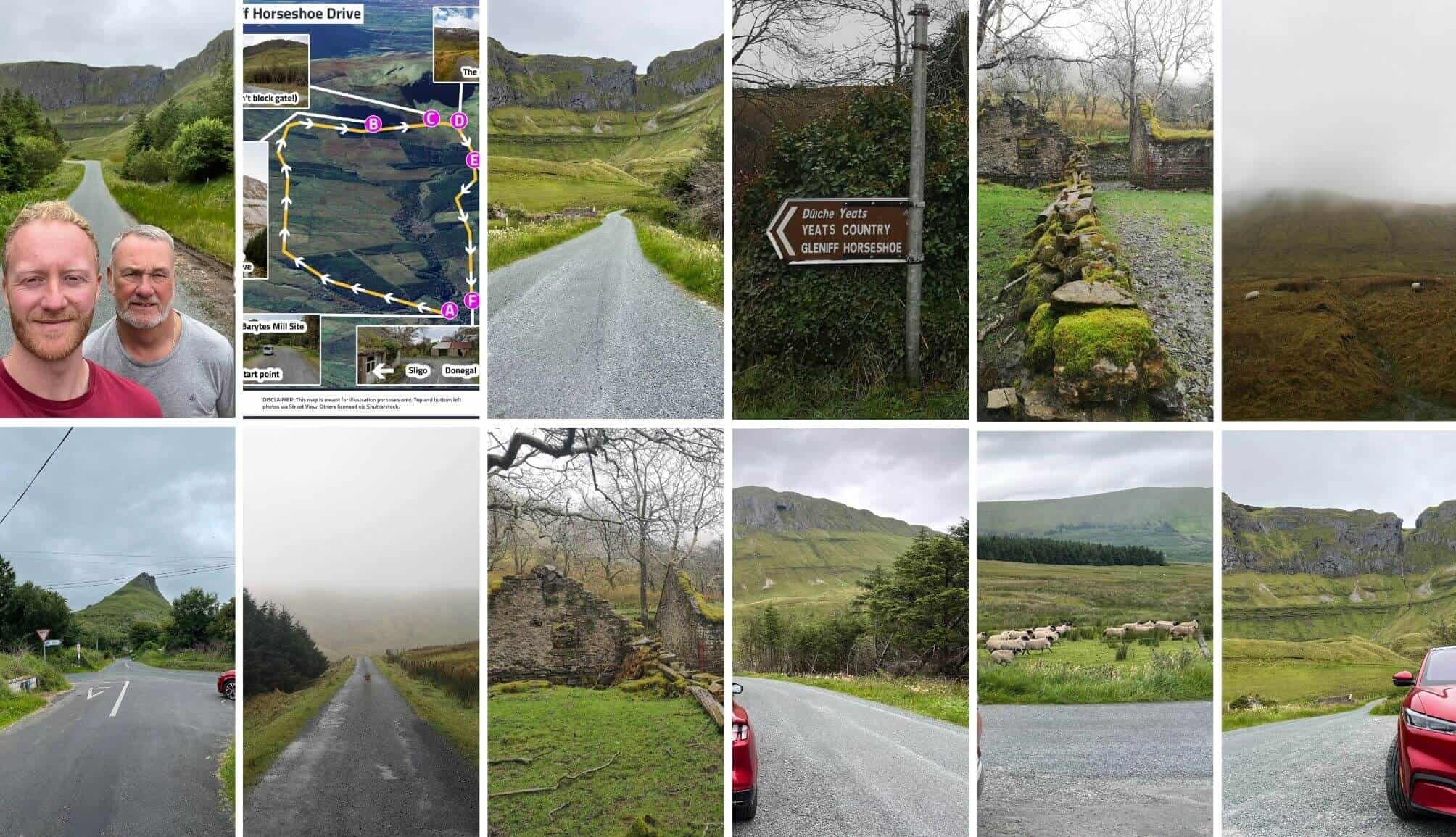
The Gleniff Horseshoe is a 10km loop in north Sligo that takes you through a glacial valley beneath the Dartry Mountains. You can drive it in around 30 minutes or explore it on foot.
It’s one of my favourite places to visit in Sligo, partly because you get such spectacular scenery with very little effort. The road winds beneath enormous cliffs, with views of Donegal Bay and Diarmuid and Gráinne’s Cave high above the valley.
There’s something about this place that feels like stepping back into an older, quieter Ireland. Even when Sligo is busy with tourists, you can often drive through the valley without meeting many other cars.
Warning: Some guides on what to do in Ireland tell you to climb up to Diarmuid and Gráinne’s Cave – please don’t! It’s treacherous and there have been numerous fatalities over the years.
17. The Gap of Dunloe

The Gap of Dunloe is a 10km-long mountain pass that cuts between the MacGillycuddy Reeks and Purple Mountain. Carved out by glaciers over 25,000 years ago, the route runs from Kate Kearney’s Cottage into the Black Valley, passing five lakes connected by the River Loe.
You can explore the Gap on foot, by bike or on a jaunting car and boat tour that takes you back to Killarney via the lakes. I’ve done all three and, while the walk is fantastic, it’s a considerable time commitment.
The full route can take around 4 hours on foot, whereas the boat tour lets you experience the Gap and the Lakes of Killarney in one trip.
My advice: If I only had 2 days in Killarney, I wouldn’t spend half a day walking the Gap of Dunloe. As impressive as it is, I think there are more rewarding ways to spend a short visit, particularly around Killarney National Park.
18. The Doolough Valley

The Leenaun to Louisburgh Drive is my dad’s favourite spin in Ireland, but it wasn’t until we did it together in 2014 that I understood why.
This 30.5km stretch runs between Leenaun in Galway and Louisburgh in Mayo, cutting straight through the Doolough Valley.
The drive takes just 35 minutes, but the scenery and atmosphere here have stayed with me more than those of routes ten times its length. There’s a haunting stillness to the valley, made all the more poignant by the Doolough Tragedy of 1849, when starving people died while walking this route during the Great Famine.
My advice: Start in Leenaun and allow at least an hour for the drive. Stop at the Doolough Famine Memorial along the way and take some time to appreciate the scenery rather than rushing through.
19. Malin Beg Beach

Not all beaches in Ireland are equal, and Malin Beg in Donegal proves it. Tucked at the tip of the Slieve League Peninsula, this horseshoe-shaped bay is reached by 174 steep steps and feels wild, remote and untouched.
The views from the car park alone are worth the journey, but it’s when you reach the sand that you really appreciate the scale of the cliffs surrounding you.
It’s a great place to visit after exploring Slieve League or Glencolmcille, and the clear water makes it popular with scuba divers.
My advice: Visit at sunset if you can, as the beach faces west and the views are spectacular. If you’re not up for tackling the 174 steps (and the climb back up!), you can still enjoy a fantastic view from the car park. There are no lifeguards here, so be very cautious about entering the water.
20. The Aran Islands

I’ve visited all three Aran Islands, but if you’re choosing one for your first trip, I’d go with Inis Mór. Dún Aonghasa is the main reason – an ancient stone fort right on the cliff edge that’s well worth making the trip out to see.
The islands are easily accessible by ferry from Doolin, Rossaveal, or Galway City, or via plane from Galway. Each island offers a different experience:
- Inis Mor: The largest, with Dún Aonghasa and the Wormhole among its main sights
- Inis Oirr: The smallest, with the Plassey shipwreck, O’Brien’s Castle and a beach near the pier
- Inis Meain: The quietest of the three, with ancient forts and a less tourist-focused feel
- My advice: Pay close attention to the forecast. We got drenched on Inis Mór in August 2025, and there’s very little to do indoors when the rain sets in
21. The Caves of Keash
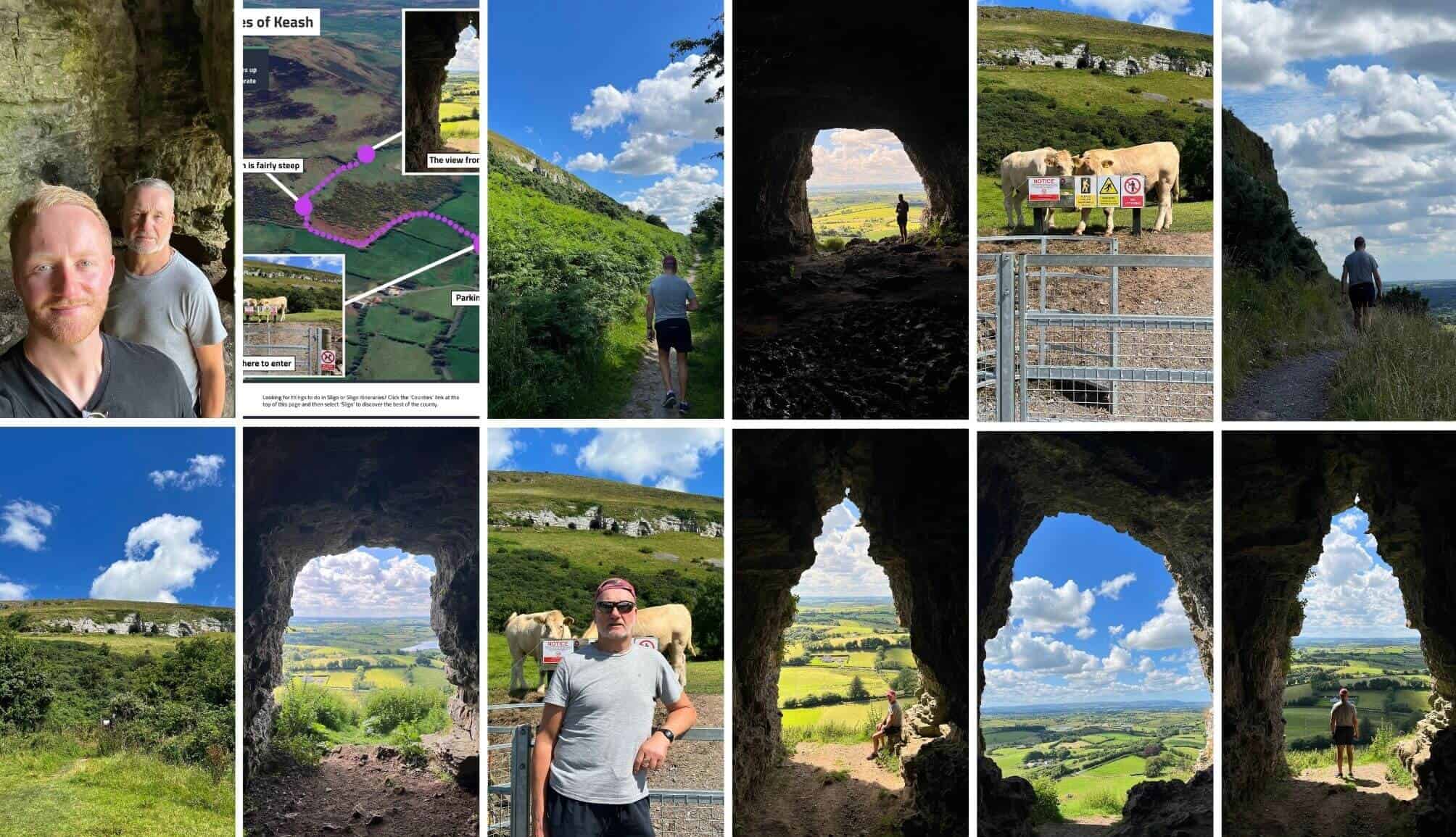
If you’re looking for unique things to do in Ireland, the Caves of Keash in Sligo are well worth adding to your itinerary. Located on the western side of Keshcorran Hill, these 17 ancient caves have a fascinating history.
Archaeological excavations uncovered Ice Age animal bones, including those of bears and wolves, along with human remains dating back to the Iron Age and Early Medieval periods.
I visited in 2025 and, although the walk from the car park took us just 25 minutes, it’s a steep climb that gets the heart going. The reward is a series of enormous cave openings and some fantastic views across the Sligo countryside.
My advice: Wear proper walking shoes, particularly if there’s been rain, as the trail is steep and can be slippery. I’d also recommend sticking to the first few caves. The views are excellent from here, and reaching the caves further along involves much more difficult terrain.
22. West Cork’s Sheep’s Head Peninsula

The Sheep’s Head Peninsula is one of the must sees in Ireland for those looking to step away from the usual tourist trail.
The 70km scenic loop takes you along narrow coastal roads, with views across Bantry Bay, Dunmanus Bay and the neighbouring Beara and Mizen peninsulas.
One of the highlights is the 35-minute walk to Sheep’s Head Lighthouse. A word of warning, though: on my last visit, I left Bantry in glorious sunshine, only to arrive at the car park in thick mist. I’d give the walk a miss if visibility is poor.
My advice: Stay in Bantry and give yourself two days to explore this corner of Cork. Spend the first day driving and walking around Sheep’s Head, then tackle the neighbouring Mizen Peninsula on day two.
23. The Burren

The Burren in County Clare is one of the most unusual landscapes in Ireland, with vast stretches of limestone, ancient monuments, caves and coastal scenery.
Although it’s one of the best things to see in Ireland, I think many visitors leave underwhelmed because they don’t have a proper plan. Some associate the Burren with the Cliffs of Moher and miss much of what makes the region special.
In October 2025, I spent two days following the Burren Scenic Drive I’ve mapped out above, using Doolin as a base. The route takes in the likes of Fanore Beach, Poulnabrone Dolmen, Aillwee Cave and some spectacular viewpoints along the coast.
My advice: Don’t limit your visit to the Cliffs of Moher. Personally, I think one of the most impressive parts of the Burren is the viewpoint above Fanore, where you can look out over the Clare coastline. The road up is steep and narrow, but the views are well worth the detour.
24. The Diamond Hill hike

One of the best views in Ireland is waiting at the summit of Diamond Hill, a 445m-high peak in Connemara National Park. There are two trails here: the 2.8km Lower Trail (45 minutes) and the longer Upper Trail (around 2 hours), which takes you to the summit.
The first time I visited, thick mist rolled in and I had to settle for the Lower Trail. When I returned last June, the skies were clear and I finally got to see what I’d missed.
From the summit, the views stretch across the Twelve Bens, Kylemore Abbey, the Atlantic coastline and Connemara’s lakes and mountains. The landscape laid out in front of you almost doesn’t feel real.
What I love about Diamond Hill is how much you get for relatively little effort. Yes, the Upper Trail is steep in places, particularly along the final ridge, but it’s not a prolonged slog.
My advice: If you have decent fitness and the weather is clear, take the Upper Trail. Allow around 2 hours, wear proper walking shoes and arrive early in summer, as the visitor centre car park gets busy.
25. Kylemore Abbey

Kylemore Abbey, perched on the shores of Pollacapall Lough in Connemara, is a must see in Ireland, both for its remarkable setting and its fascinating history.
Built in 1868 by Mitchell Henry for his wife Margaret, the castle became a Benedictine monastery in 1920 after a community of nuns fled war-torn Belgium.
I’ve been visiting Kylemore Abbey since I was a child, and one of the great things about it is that you don’t have to do the full tour. If you’re short on time, you can park up, admire the abbey from the viewpoint near the car park and grab a coffee (and a toilet break!) in the café.
You can see the restored rooms inside the abbey, visit the beautiful neo-Gothic church built in Margaret’s memory and explore the six-acre Victorian Walled Garden.
My advice: It’s well worth paying in to see the abbey and the church, which is just a five-minute walk away. I’ve also visited the gardens and, while I enjoyed them, I’d skip them if you’re stuck for time.
26. Dursey Island and Bull Rock

Two of the most fun things to do in Ireland are tucked away at the western tip of Cork’s Beara Peninsula. The first is Dursey Island, a remote, 6.5km-long island reached by Ireland’s only cable car.
The 15-minute crossing takes you high above Dursey Sound, where powerful tidal currents once made boat crossings dangerous. The second is Bull Rock, a towering sea stack with a huge tunnel running straight through it.
Boat tours take you around the island and, when conditions allow, through the tunnel itself. I’ve done both and, while the cable car is a great experience, I enjoyed the boat trip to Bull Rock more. Zipping through that enormous opening in the rock is something else!
My advice: For Dursey, bring food and water, as there are no shops or pubs on the island.
27. The Kerry Cliffs

One of my favourite places to visit in Ireland is the Skellig Ring, a 50km scenic route that makes a brilliant detour from the better-known Ring of Kerry. Its biggest attraction is the Kerry Cliffs, which rise over 1,000 feet above the Atlantic.
Formed around 400 million years ago, they offer spectacular views of the Skellig Islands and, although they have plenty of competition, are one of the most impressive attractions in Kerry.
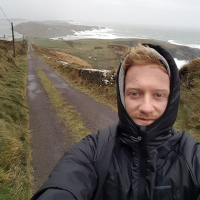
It was back in 2016 that myself and my dad took an unplanned detour from Waterville while driving the Ring (see the photo above with the dodgy haircut!).
We had no great expectations, but that drive started a love affair with a corner of Kerry that’s surprisingly quiet considering how close it is to the main tourist route.
My advice: If you’re following my Ring of Kerry itinerary, allow an extra three hours for the Skellig Ring. You can stop in Portmagee for dinner to break up the drive.
28. Gougane Barra

West Cork makes deciding what to do in Ireland a doddle, with no shortage of beautiful places to explore. One of my favourites is Gougane Barra, tucked away at the foot of the Sheehy Mountains.
Spread across 137 acres, it’s best known for St. Finbarr’s Oratory, a little stone church perched on an island in the lake. It’s said that Cork’s patron saint founded a monastery here many centuries ago.
Beyond the lake, you’ll find Gougane Barra Forest Park, home to five marked trails ranging from easy 30-minute strolls to challenging hikes with views over the Coomroe Valley. There’s also a short, 3km scenic drive through the forest that’s worth doing if you’re not in the humour for a hike.
My advice: Allow at least an hour to admire the oratory, explore the lakeside and grab a coffee at Gougane Barra Hotel. If you’re driving from Dublin to Killarney, you can visit as a detour, although it’ll add around 50 minutes of driving.
29. The Dingle Peninsula

Kerry’s Dingle Peninsula is one of the most popular places to visit in Ireland, and for good reason. It’s home to some of the county’s finest coastal scenery, beaches and mountain passes.
The 93km Dingle Peninsula Drive starts at Inch Beach and follows the coast around the peninsula, taking in the famous Slea Head Drive and quieter corners like the Maharees.
Along the way, you’ll see the Blasket Islands, the winding road at Dunquin Pier, Coumeenoole Beach and Conor Pass, one of Ireland’s highest mountain passes.
I’ve driven this route many times, and one mistake I’d encourage you to avoid is trying to squeeze everything into a few hours. There’s simply too much to see.
My advice: Spend two nights in Dingle Town. On day one, explore Inch Beach and Minard Castle on your way into town, then enjoy an evening in the pubs (Dick Mack’s and Foxy John’s are hard to beat). On day two, tackle Slea Head, Conor Pass and the Maharees before looping back to Dingle for another night.
30. Glencar Waterfall

Glencar Waterfall in County Leitrim is one of those places where you get an awful lot of reward for very little effort. Just a 20-minute drive from Sligo Town, the 15-metre-high waterfall is reached via an easy, 5 – 10-minute walk through mature woodland.
I’ve been visiting Glencar since I was a child, and it’s easy to see why W.B. Yeats referenced it in his poem The Stolen Child. Water tumbles over a moss-covered cliff into a pool below, surrounded by thick greenery that gives the place a lovely, sheltered feel.
There’s also a longer, more challenging 2-hour hill walk with views over Glencar Lough, if you fancy stretching the legs.
My advice: Visit after heavy rain, when the waterfall is at its most impressive. There’s parking, public toilets and a café nearby, making this a very handy stop. If you’re in the area after a downpour, consider visiting the nearby Devil’s Chimney waterfall, too, as it only flows after heavy rainfall.
31. Kinsale

There are plenty of charming small towns in Ireland, each offering its own unique vibe. For those sticking to the tourist trail, well-known spots like Doolin, Cong, Westport, and Kinsale are likely already on your list.
For me, one of the best things to do in Ireland on a fine day is to combine exploring Kinsale with a walk along its beautiful harbour. Start with breakfast at Cosy Café or O’Herlihys, followed by a coffee from The Collector and a wander through the colourful streets. You’ll quickly understand why this is regarded as one of the most colourful small towns in Ireland.
I’d then tackle the 6km Scilly Walk, which follows the harbour to Charles Fort, before stopping at the Bulman for lunch on the way back. Head into Fishy Fishy or Man Friday for dinner, followed by a pint in the Greyhound or the Tap.
My advice: Stay overnight if you can. Kinsale is best enjoyed at a leisurely pace, and its pubs are a big part of the appeal.
32. Skellig Michael

One of the most sought-after things to do in Ireland is a boat trip to Skellig Michael, a towering island off the Kerry coast that’s home to an ancient monastic settlement.
Rising 218 metres above the Atlantic, the island is a UNESCO World Heritage Site, with steep stone steps leading to the remains of a monastery founded over 1,000 years ago.
However, visiting Skellig Michael is far from guaranteed, even with a ticket. You’ll regularly see it recommended in guides on what to do in Ireland as though getting there is straightforward.
It isn’t. In August 2024, I managed to secure a ticket and made the nearly five-hour drive from Dublin. The forecast had looked promising, but bad weather rolled in and my tour was cancelled the night before.
My advice: Book a landing tour well in advance, but don’t build your entire Kerry itinerary around it. Tours generally operate from May to early October, weather permitting, and cancellations are common. Have a backup plan, and consider staying nearby the night before.
33. Killarney National Park

Many people visit Killarney and spend their entire stay using the town as a base for day trips. However, you could easily spend a couple of days here without ever getting into a car.
Killarney National Park, Ireland’s first national park, is home to Ross Castle, Muckross Abbey, Torc Waterfall and some of the finest lake and mountain scenery in Kerry.
In November 2025, a group of us took an early train to Killarney, spent the day exploring the park on foot and finished with an evening in Killarney’s pubs. A great way to spend a Saturday!
My advice: One of the best ways to explore the park is by bike. Rent one in town and cycle between the attractions. You’ll cover far more ground than you would on foot, without having to worry about parking.
34. Glenveagh National Park

Glenveagh National Park is one of Donegal’s top attractions, covering almost 170 square kilometres, making it Ireland’s third-largest national park.
Established in 1984, it’s home to mountains, woodland, the beautiful Lough Veagh and Glenveagh Castle, a 19th-century mansion overlooking the lake.
There are several walking trails to tackle, ranging from gentle lakeside strolls to more challenging hikes into the surrounding mountains.
You don’t have to do a big hike: I visited with friends last June and we rented bikes at the car park. Cycling through the park at our own pace, with the mountains rising around us, was one of my favourite things to do in Ireland in recent years.
35. The North Mayo coast

If you’re deciding what to do in Ireland that’ll take you away from the crowds, North Mayo’s coastline is well worth considering. This remote corner of the country is home to the towering Dun Briste sea stack at Downpatrick Head, the ancient Céide Fields, the rugged Mullet Peninsula and some spectacular beaches.
In early 2026, I was visiting friends in Enniscrone and decided to spend a day exploring the North Mayo coast before meeting them. It turned out to be one of my favourite drives of the year, so I’ve put together this route you can follow.
The highlight for me was Moyne Abbey, a medieval ruin reached via a muddy public right of way. Another memorable stretch was the approach to Kilcummin Back Strand, where the road seems to lead straight into the sea.
A tip: Don’t be put off by the signs near Moyne Abbey. There is a public right of way, although the approach can be very muddy, so bring decent footwear.
What to do in Ireland’s North, East and Midlands
This section combines city sightseeing in Dublin and Belfast with mountain walks, coastal drives and visits to ancient sites. You’ll find everything from Newgrange and Glendalough to the Giant’s Causeway, alongside my advice on which experiences deserve a place on your itinerary.
36. Newgrange

The Boyne Valley, which stretches across Meath and Louth, is home to some of the most impressive historical things to see in Ireland, and I’d strongly recommend dedicating at least a day to exploring it.
You’ll find everything from Trim Castle and the Hill of Tara to the ancient Loughcrew Cairns and the historic village of Slane. However, the standout attraction is Brú na Bóinne, a UNESCO World Heritage Site that’s home to Newgrange and Knowth.
Newgrange is a 5,200-year-old passage tomb that predates both Stonehenge and the Egyptian pyramids. A guided tour takes you inside the monument, where you’ll learn about its construction and its remarkable alignment with the winter solstice sunrise.
My advice: Book your Newgrange tour well in advance, particularly for weekends. On my last visit in 2025, we booked a Saturday tour a month beforehand.
37. Glendalough in the Wicklow Mountains
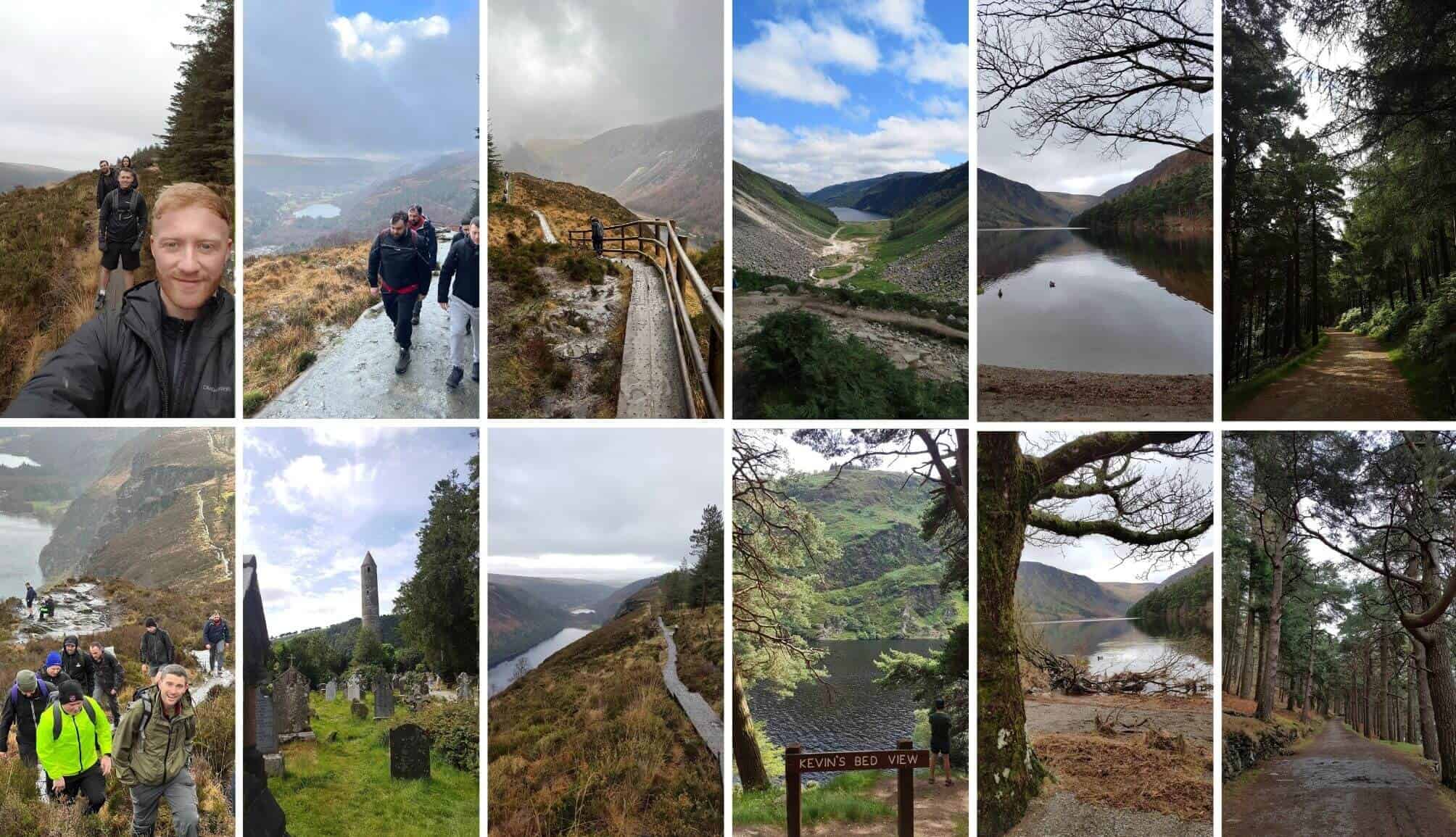
Glendalough, in the heart of the Wicklow Mountains, combines spectacular scenery with over 1,400 years of history. Its 6th-century monastic settlement, with its famous round tower and cathedral ruins, sits a short walk from two beautiful lakes surrounded by mountains.
For many of us living in Dublin, myself included, this corner of Wicklow is a regular day-trip destination, with walks in Glendalough to suit almost every fitness level. You can enjoy an easy stroll around the lakes or tackle something more challenging, like my favourite, the Spinc Loop.
The White Route is a tough, 9.5km hike that takes around 3.5 hours, but the views over the Upper Lake and surrounding valley are worth the effort.
My advice: Arrive early on weekends! Glendalough is one of the most popular day trips from Dublin, and it gets very busy!
38. Glenariff Forest Park

Glenariff Forest Park is one of my favourite stops along the Causeway Coastal Route. Spread across 1,185 hectares in the Glens of Antrim, it’s home to waterfalls, wooded river gorges and four marked walking trails.
The most popular is the 2.5km Waterfall Walk, which follows wooden boardwalks and steep paths through the gorge, passing several waterfalls along the way.
If you fancy a longer ramble, the 9km Scenic Trail climbs above the forest, with views stretching as far as Scotland’s Mull of Kintyre on a clear day.
A good tip: If you’re short on time, park at Laragh Lodge and take the 5 – 10-minute walk to Ess-na-Crub waterfall.
39. Sample Guinness in one of Ireland’s ancient pubs

There are thousands of pubs in Ireland, but some are worth going well out of your way for. Two of the most famous are Sean’s Bar in Athlone, Ireland’s oldest, with origins dating to 900 AD, and Dublin’s Brazen Head, with a history stretching back to 1198.
However, you don’t need to visit a famous pub to have a memorable experience. Some of the best pubs in Dublin, and indeed across Ireland, are smaller, traditional spots with cosy interiors, great Irish beers and plenty of character.
The photos above show some of my favourites from the last 15 or so years. The top-left photo is from the Lord Mayors in Swords, which has sadly since been demolished.
My advice: Keep an eye out for pubs with snugs. These small, often enclosed seating areas are a lovely feature of older Irish pubs. Bowes in the capital is a personal favourite, with a lovely snug and, in my opinion, some of the best Guinness in Dublin.
40. Tollymore Forest in the Mourne Mountains

Tollymore Forest Park sits at the foot of the Mourne Mountains in County Down, around 50 minutes from Belfast. Opened in 1955 as Northern Ireland’s first state forest park, it’s home to towering trees, winding rivers, old stone bridges and scenery that wouldn’t look out of place in a fairytale.
There are four walking trails to choose from, ranging from an easy 0.7km stroll through the arboretum to a challenging 13.6km hike with views of the Mournes. My go-to is the 5.2km River Trail.
At around 1.5-2 hours, it’s a good middle ground, following the rivers past old stone bridges, waterfalls and the park’s unusual stone hermitage.
My advice: If you’re exploring the Mournes, set aside a couple of hours for Tollymore. Every time I visit, I get the feeling that I’ve stepped into another world, especially along the quieter stretches of the river.
41. The Sally Gap Drive

The Sally Gap Drive is one of my favourite scenic drives in Ireland. It’s a 26km (16-mile) route that takes in Guinness Lake, vast stretches of open mountain scenery and Glenmacnass Waterfall.
I usually start with a coffee from The Roundwood Stores. You’ll need to backtrack a little to reach the start of the route, but it’s worth it. From there, I head towards Lough Tay.
There are only a handful of safe places to pull in along this stretch, so don’t be tempted to stop on the narrow road. If you fancy stretching your legs, the short Ballinastoe Woods Walk is a great addition. At the Sally Gap crossroads, take a sharp left towards Glenmacnass Waterfall.
My advice: Allow at least two hours, arrive early on weekends and check the mountain weather before leaving. I usually finish the drive with lunch at The Wicklow Heather in Laragh.
42. Belfast

I avoided visiting Belfast until my mid-20s, partly because of things I’d read and heard over the years. When I finally made the trip, I realised how much I’d been missing out on.
Northern Ireland’s capital (see my guide on the differences between Ireland and Northern Ireland) is packed with history, great pubs, excellent restaurants and enough to keep you busy for several days.
One of the best things to do in Belfast is the Black Taxi Tour. It’s a fascinating introduction to the Troubles, taking you through the city’s neighbourhoods and past its famous political murals and peace walls.
My advice: Spend at least 2 days in Belfast rather than squeezing it into a quick visit. I’ve mapped out a tried-and-tested weekend itinerary above that combines the main sights with some of my favourite places to eat and drink.
43. Waterford’s Copper Coast

Many who visit Waterford stick to the city, which is understandable. It’s the oldest city in Ireland and it’s packed with history. However, a short drive away, a fantastic drive awaits.
The Copper Coast Drive follows 25km of coastline between Tramore and Dungarvan, taking in secluded beaches, towering cliffs, sea stacks and the remains of old copper mines.
My favourite thing about this drive is how much the scenery changes along the way. You’ve the unusual rock formations at Kilfarrasy Beach, the sheltered cove at Kilmurrin and the towering cliffs and sea stacks at Ballydowane, all within a relatively short stretch of coast.
A tip: My favourite part of this drive is near Bunmahon Beach. There’s a large car park and public toilets, and from here you can follow the coastal trail towards Trá na mBó and Trá na Stella. The two beaches are separated by a rocky headland, and the views from above are spectacular. Keep well back from the cliff edges, as the ground is very uneven.
44. Kilkenny

Kilkenny is one of Ireland’s smallest cities, but there’s a huge amount packed into its compact, walkable centre. Most visitors make a beeline for Kilkenny Castle, and rightly so.
However, some of the best places to visit in Kilkenny are just a short stroll away. I’d recommend following the Medieval Mile towards St Canice’s Cathedral, where you can climb the 30m-high round tower for views across the city.
Make time for the Black Abbey, too. Founded in 1225, it’s home to an enormous stained-glass window that’s well worth seeing. If you’re staying overnight, there’s no shortage of good pubs. O’Riada’s, Tynan’s and Cleere’s are three you’ll find hard to leave!
My advice: Give Kilkenny a couple of nights. I’ve put together this 2 day Kilkenny itinerary that includes the main sights, a guided walking tour and my favourite places for food and pints.
45. Dublin

Many first-time visitors planning a trip to Ireland debate skipping Dublin and heading straight for the west. While I can understand the temptation, I think the capital deserves at least a day or two.
I’ve lived in Dublin my entire life, and there are still places I find myself returning to regularly, from the historic streets of the city centre to the Howth Cliff Walk.
There are plenty of excellent things to do in Dublin, but I’d prioritise Kilmainham Gaol, Trinity College and the many walks in Dublin, like Killiney Hill. You could also nip into the Storehouse or the Jameson Distillery and sample one of the world’s most famous Irish whiskey brands.
- Itineraries: Here’s how to spend one day in Dublin and 2 days in Dublin
- Useful visitor info: Where to stay in Dublin, areas of Dublin to avoid and getting around Dublin
46. The Ring of Hook

The Ring of Hook is one of the more off-the-beaten-path places to visit in Ireland, taking you around a wild and windswept corner of County Wexford.
I’ve explored this peninsula in both glorious sunshine and miserable weather, and the difference between the two experiences is enormous. The big attraction is the 800-year-old Hook Lighthouse, one of the world’s oldest working lighthouses.
The walk around its base is spectacular, particularly when the waves are crashing against the rocks. There are plenty of other stops worth making, including the medieval ruins of Tintern Abbey, the Knights Templar connections at Templetown and the beautiful Dollar Bay.
My advice: I’d avoid doing this drive in poor weather. On a fine day, the beaches here are like another world, particularly Dollar Bay, with its pale sand and sheltered setting, and the striking stretch of coast beneath Duncannon Fort.
47. The Coumshingaun Lough hike
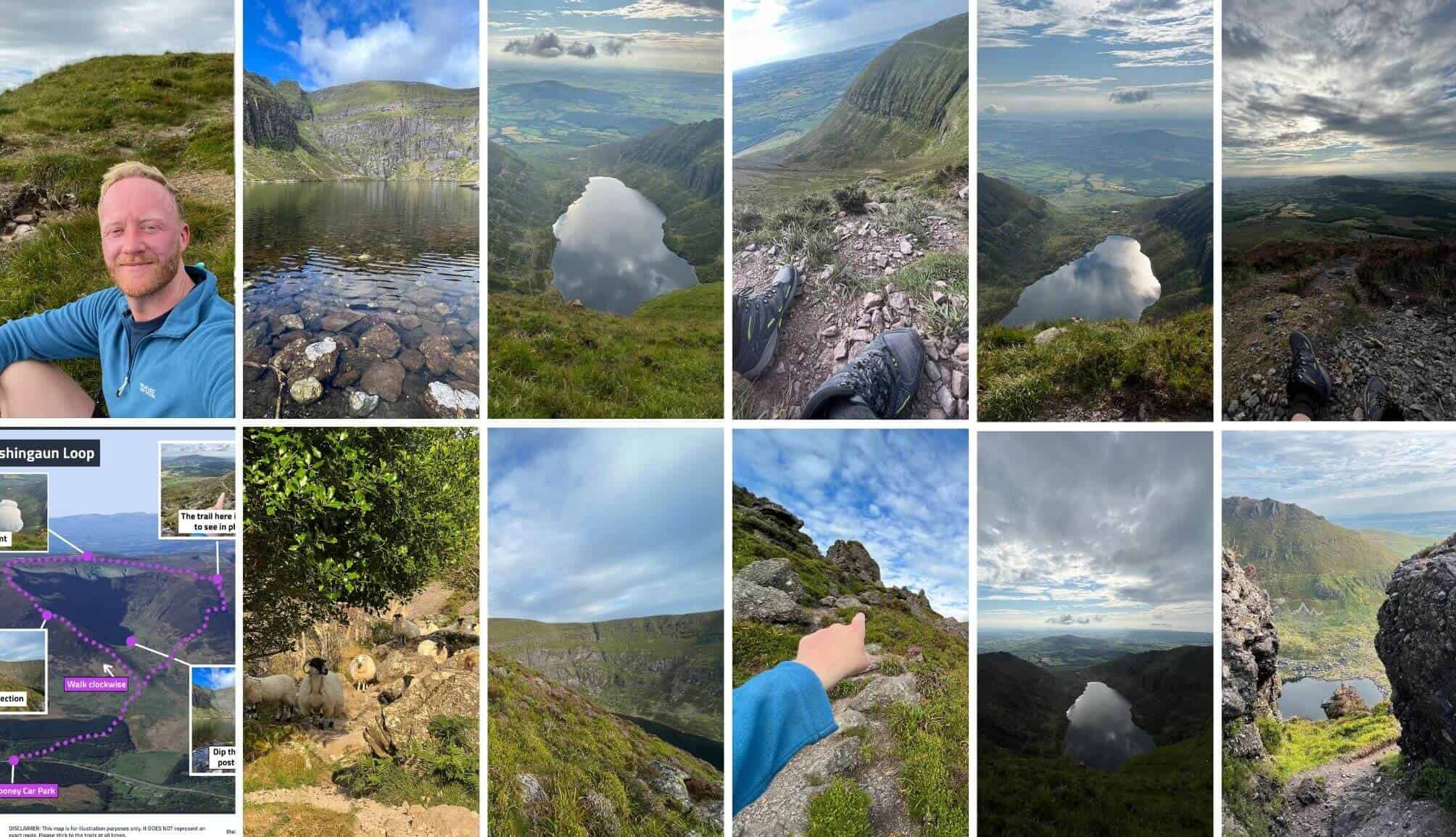
The Coumshingaun Lough Loop in Waterford’s Comeragh Mountains is one of the best things to do in Ireland for experienced hikers, but it comes with a massive warning.
I’ve tackled this 6.13km loop several times and, despite being reasonably fit, I’ve always found it extremely tough. The first 2.3km involves a relentless climb, followed by rocky sections where scrambling is required.
The reward is the view down over Coumshingaun Lough, a spectacular lake surrounded by steep cliffs. However, the exposed sections and sheer drops mean this isn’t a hike to take lightly. It’s no Carrauntoohil, but it requires proper planning all the same.
My advice: Only attempt the full loop if you’re an experienced hiker, confident navigating and have clear weather. If you’re not comfortable with heights or scrambling, take the shorter 1.8km trail to the lake instead.
48. The Giant’s Causeway

The Giant’s Causeway is one of the most famous things to do in Northern Ireland, and for good reason. This UNESCO World Heritage Site is home to around 40,000 interlocking basalt columns, formed between 50 and 60 million years ago by volcanic activity.
According to legend, however, the stones were laid by the giant Fionn MacCumhaill, who built a path to Scotland to confront his rival, Benandonner.
I’ve visited the Causeway many times, and although the famous hexagonal stones are the main attraction, the surrounding coastline is every bit as impressive.
My advice: You don’t need to pay for the visitor centre to see the Causeway. I’d recommend walking in from Portballintrae or Dunseverick instead. Both approaches offer spectacular coastal scenery, and you can avoid the visitor-centre admission charge. Just allow extra time for the walk and check your parking options before setting off.
My favourite places to stay around Ireland

People often get caught up deciding what to do in Ireland and then stumble when it comes to picking where to stay in Ireland. In the photo above, you’ll see a mix of my favourite stays in recent years.
Of all the places I’ve stayed in Ireland, Adare Manor in Limerick is the one that stands out most. It’s an incredible hotel, but a night here costs an arm and a leg, as it does at many of the castle hotels in Ireland, including Ashford Castle in Cong.
Thankfully, you don’t need to spend a fortune to have a memorable stay. Ireland has some excellent B&Bs, and one I’d happily recommend is Shearwater Country House in Union Hall, West Cork, which has beautiful views over Glandore Harbour.
Glamping in Ireland has also come a long way in recent years. I stayed at the adults-only Killarney Glamping at the Grove and found it a brilliant, slightly different base for exploring Kerry.
If you’re after a relaxing night or two, Kilkea Castle in Kildare and Monart in Wexford are two of the best spa hotels in Ireland. For those with kids, I’ve also visited Newpark Hotel in Kilkenny and Kelly’s Resort in Rosslare, both of which are two of the finest family hotels in Ireland.
My advice: Don’t choose your accommodation based on star ratings alone. Some of my favourite stays have been in smaller, independently run places. Decide whether you want somewhere to relax or simply a good base for exploring, and book accordingly.
Great Ireland road trips I’ve done in recent years

Now that you’ve seen some of my favourite things to see in Ireland, it’s time to piece together your own trip. Several years ago, I published the world’s largest collection of Irish road trip itineraries, based on years spent exploring the country.
The itineraries take the hard work out of planning. You can choose your starting point, how long you’re visiting for and whether you’re travelling by car or public transport. If you’re not sure where to begin:
- Most popular: How to spend 5 days in Ireland, 7 days in Ireland and 10 days in Ireland
- Visitor tips: See the cost of a trip to Ireland, when to visit Ireland, my Ireland travel tips and how to go about renting a car in Ireland
My Google Map of things to see in Ireland
I started putting this Google Map of things to do in Ireland together back in 2015 or 2016, mainly as a way of keeping track of places I’d visited and wanted to return to. Sometimes I’d add somewhere I’d heard about and wanted to visit.
Other times, I’d drop a pin on a place simply so I wouldn’t forget about it. Over the years, I’ve continued adding to it, and it’s now packed with hundreds of must sees in Ireland, from famous attractions to spots that are well off the beaten path.
How to use it: This map is a handy travel companion if you’re wondering what to see in Ireland. Save it to your Google Maps before your trip and, whenever you’re exploring somewhere new, open it up to see what’s worth visiting nearby. It’s particularly useful for finding places you might otherwise drive straight past.
Final thoughts on what to do in Ireland

This guide is, in many ways, a diary of the places I’ve visited around Ireland since I was a child. Some are places I first explored with my family and have returned to time and time again.
Others are more recent discoveries that have quickly become firm favourites. What they all have in common is that they’re places I’ve enjoyed visiting and that I think you’ll enjoy just as much.
I hope this guide has given you some inspiration for your own trip to Ireland, whether you’re visiting for the first time or returning to explore somewhere new.
And if there’s somewhere you think deserves a spot on this list, let me know in the comments. I’m always looking for an excuse to get out and explore! Cheers!
Keith O’Hara has lived in Ireland for 37 years and has spent much of the last 13 creating what is now The Irish Road Trip guide. Over the years, the website has published thousands of meticulously researched Ireland travel guides, welcoming 40 million+ visitors along the way. Recently, the Irish Road Trip team published the world’s largest collection of Irish Road Trip itineraries. Keith lives in Dublin with his dog Toby and finds writing in the 3rd person minus craic altogether.
Wow, this is brilliant! Thank you so much!
I completely missed this comment, sorry! Cheers!
Love it!!!!!!!!!!!
Wow, this is the best! Thank you for all the great info, this will definitely be my go to while I’m visiting!
Thanks Jessica – glad you found it useful!
Thanks Keith! This is my go to list!
Wow, what a fantastic list! Will definitely use it. Thank you so much.
This is an amazing compilation of the best things to do in Ireland. Thank you
Did I miss Skellig Michael on your list??
Wow what a list! Looking for some inspiration for once Lockdown ends and this was VERYYY useful 😀 Still a few I’ve yet to tick off 😀
thanks so much this will help out on my school project
Fantastic ideas – won’t be lost for something to do for many a year! thanks for this
Great article Keith! Leave the website! If it’s ok with you I shared it with my network of doctors on facebook in an attempt to ‘pitch Ireland’ and convince international doctors and their families to move here. Keep it up and I’ll keep sharing!
Thanks – super helpful overview of lots of cool places to visit. Much appreciated.
Hi Keith, The first half of my life I spent in Ireland (born in Cork city) and the other half in Australia. I have been to many places you mentioned while I lived there and more on return visits. I would love to visit again as it’s been 10 years and will visit some of the alternative places you suggested, hopefully in the near future. I have to commend you highly on this article. It is brilliant.
Thanks for this…..
Very helpfull for planing our Trip….
Manfred/Austria
Thanks for the information. Really useful.