
How to Plan a Trip to Ireland Easily (Local’s Guide)

Over the last decade of running this website, I’ve found that planning a trip to Ireland becomes much easier when you ask yourself nine very simple questions.
Together, they form a planning framework that helps you tackle the important decisions first, creating the foundations for a realistic and enjoyable trip.
As of 2026, I’ve shared this planning process with more than 15,000 visitors to Ireland. I’ve been refining it for over a decade based on reader feedback, and it’s helped thousands of people plan trips that are realistic, well-paced and tailored to what they actually want to see.
How to plan a trip to Ireland

The graphic above will give you an overview of how to plan a trip to Ireland – these are the steps I’ll take you through below.
I’ve refined this over the years and it’s now my go-to process. Take a few minutes to look through it – it’ll save you time, hassle and money in the long run.
Question 1: What can’t you change?
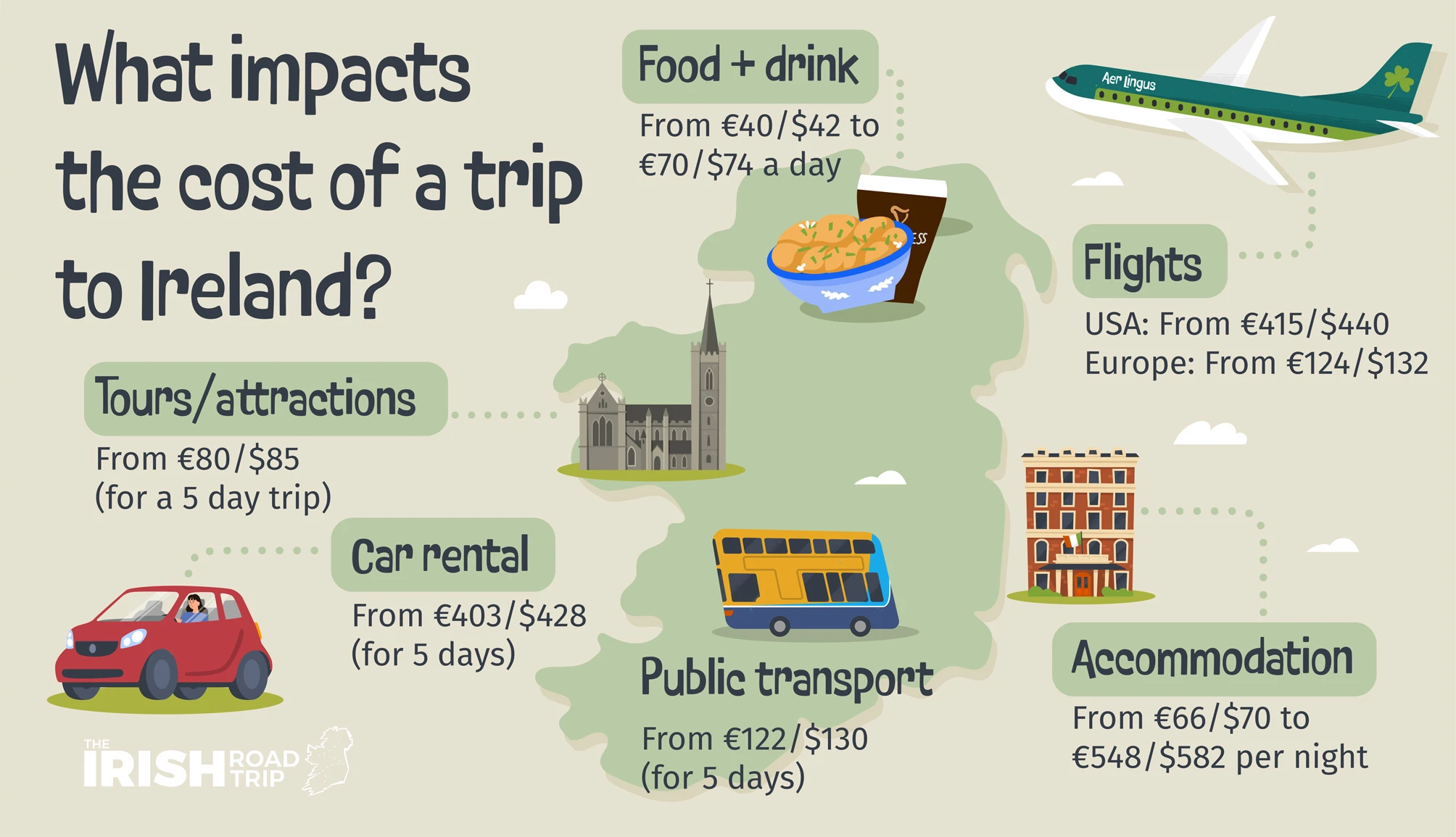
The first step in planning a trip to Ireland is to identify the things you can’t change. These are the decisions that will shape every other part of your trip, so it’s important to get them clear before you start thinking about itineraries and attractions.
While this might feel like the “boring” part of planning, getting these fundamentals in place first will make every decision that follows much easier.
For most people, the uncontrollables are:
- Visa requirements: Whether you qualify for a tourist visa (explained here)
- Budget restrictions: The cost of a trip to Ireland creeps up each year
- Trip length: The more time you have the better but most people have a limited amount of time here
- Entry/exit points: The ferry terminals or airports in Ireland you can enter/exit from massively impact your itinerary
Question 2: When can you visit?
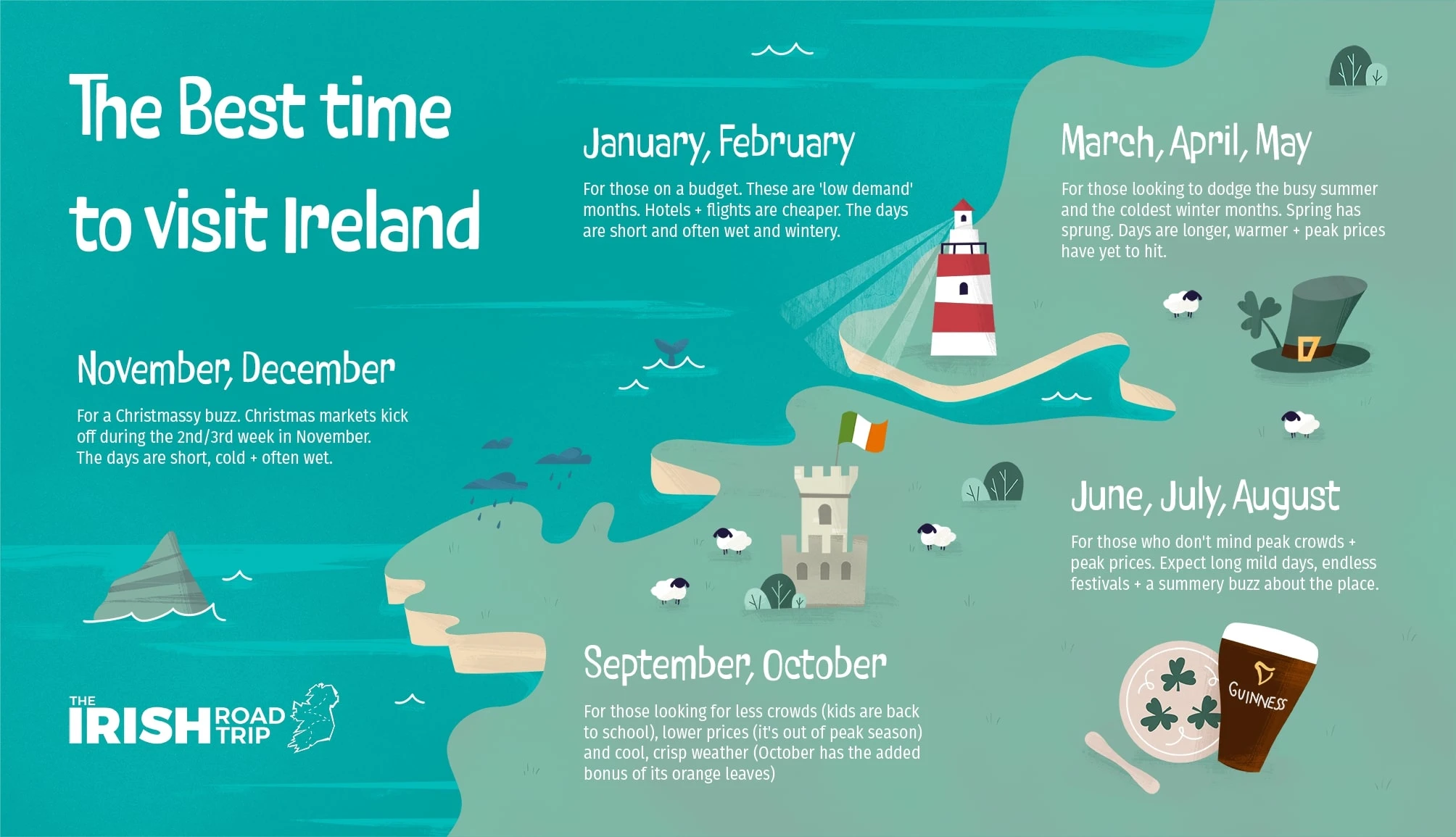
The next stage of my how to plan a trip to Ireland process involves picking the best time of year to visit Ireland.
Deciding when you’re going to visit at this stage puts you in a good position for the itinerary planning step (e.g. in the summer you’ll have many more hours of daylight to explore in).
Some factors worth thinking about at this point are:
- Your budget: Off peak (Autumn and Winter) will be cheaper than peak (Summer and Spring)
- The weather: Daylight hours and likely weather conditions (see the weather in Ireland by month)
- What’s on: Some people like to plan around the different festivals in Ireland
- Your availability: In an ideal world, you’d visit whenever you like, but you may have to plan around work, school etc
Question 3: What do you really want to see/do?
This is the step where most people have their ‘ah-ha’ moment. I started using attraction clusters when helping readers plan trips around six years ago, and it’s the part of the process that usually makes everything click into place.
Once you can see where your must-see attractions are grouped together, your Ireland itinerary starts to build itself. You’ll quickly spot which areas are worth using as bases and which places are too far out of the way to fit into your trip.
Goal 1: To help you understand where the attractions in Ireland that you want to see are located, goal 2: To identify clusters of attractions (these will help you map out your route) and goal 3: To rule places in or out (the clusters will help you do this).
How I do it
Look at the Google My Map above. At first glance, the attractions appear to be scattered across Ireland and Northern Ireland. However, once you zoom in, you’ll notice clear clusters around places like Kilkenny, Cork and Kerry.
These clusters form the backbone of your itinerary, helping you decide where to base yourself and in what order to visit each area. Here’s how you can try it for yourself:
- Step 1: Open a Google ‘My Map’ and create a new map
- Step 2: Plot everywhere you want to see on the map
- Step 3: Look for clusters of attractions (i.e. areas where you have a build up of attractions)
Question 4: How will you get around?
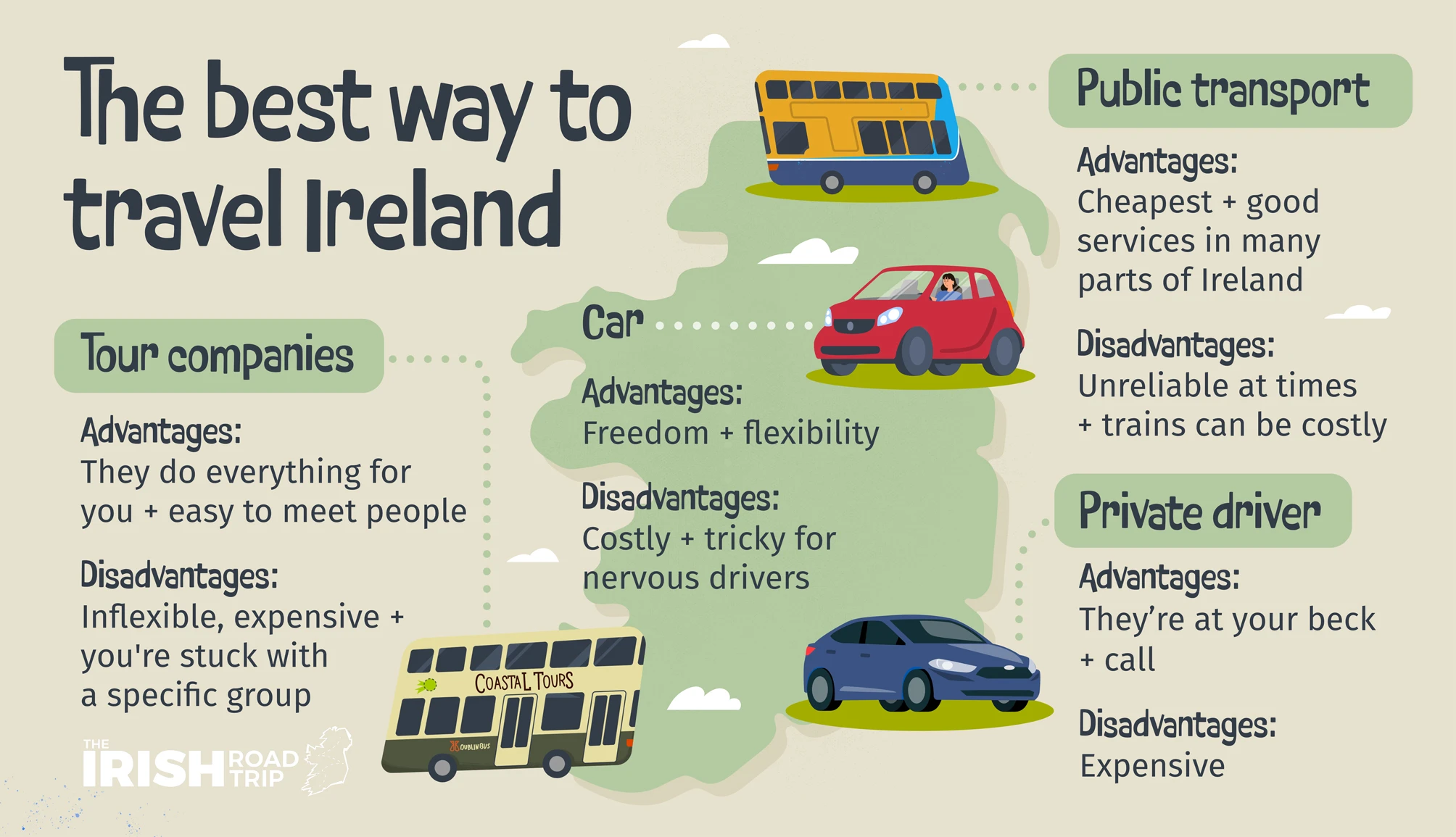
The next step in planning a trip to Ireland will have a massive effect on both your experience and the cost of your trip. Deciding how to get around Ireland can be a sticking point for many people when planning an Ireland vacation.
If you’re sticking to main towns and cities (check your map from step 3!) there’ll be good public transport options, and you likely won’t need a car.
If you want to step off-the-beaten-path and like flexibility, a car is your best bet. Here are the pros and cons to both:
Getting around by car
Renting a car in Ireland is a good choice if you want to step off-the-beaten-path and like flexibility.
- The advantages: You’ll have more freedom to explore and you can travel at your own pace
- The disadvantages: It can be very expensive and, for some, driving in Ireland can be stressful.
Getting around by public transport
Getting around Ireland without a car is possible. Yes, using public transport in Ireland is less flexible than using a car but it has its advantages.
- The advantages: It’s relatively affordable, it’ll be less stressful for some and it’s easy to combine it with day trips
- The disadvantages: You won’t be able to get to many rural attractions, some places have poor public transport and you have to stick to predetermined schedules
Question 5: What will your itinerary look like?

The next step in planning an Ireland vacation is to map out a rough itinerary.
Now, if you don’t want the hassle of this, I have hundreds of ready-made itineraries in my Road Trip Hub (like the ones in the image above), ranging from 3 days to 4 weeks.
However, you can of course map out your own itinerary. Here are some things to consider if you’re planning a trip to Ireland yourself:
Be realistic
The biggest causer of stress amongst people planning a trip to Ireland is that they try and fit everything into one trip.
You need to be realistic about what you can and can’t do during your visit. Yes, this’ll mean not visiting some places but it’ll ensure that you enjoy the time that you’re here for.
Prioritise attractions
Go back to the map you made during step 3. It’s time to prioritise. If, for example the Ring of Kerry and the Cliffs of Moher are absolute musts for you, leave them in.
If there’s somewhere you’re only half interested in, remove it. Whittling down to your ‘must-sees’ will help massively.
Look at your clusters
The next step is to look at the clusters on the map near your starting point. If you find a group of places that you want to see while touring Ireland, take note of the county in your spreadsheet.
This will help you build up a list of places that will form your various different bases. When you’ve run through the whole map, it’s time to bring it all together. Take your starting point and find the nearest cluster to it. That’ll be your first base.
Decide how long to stay there for and then move onto your second cluster, AKA base two. Keep following this process for planning your trip and you’ll eventually have an itinerary to follow.
Example itinerary for one week in Ireland
If you look at the image above, it details several different ways of spending 1 week in Ireland. Out of all of the itineraries above, the following is the most popular:
- Day 1: Arrive/start in Dublin
- Day 2: Cashel, Blarney and Kinsale
- Day 3: West Cork
- Day 4: The Ring of Kerry
- Day 5: The Dingle Peninsula
- Day 6: Clare and Galway City
- Day 7: Connemara or home
Question 6: Which airport should you fly into (and out of)?
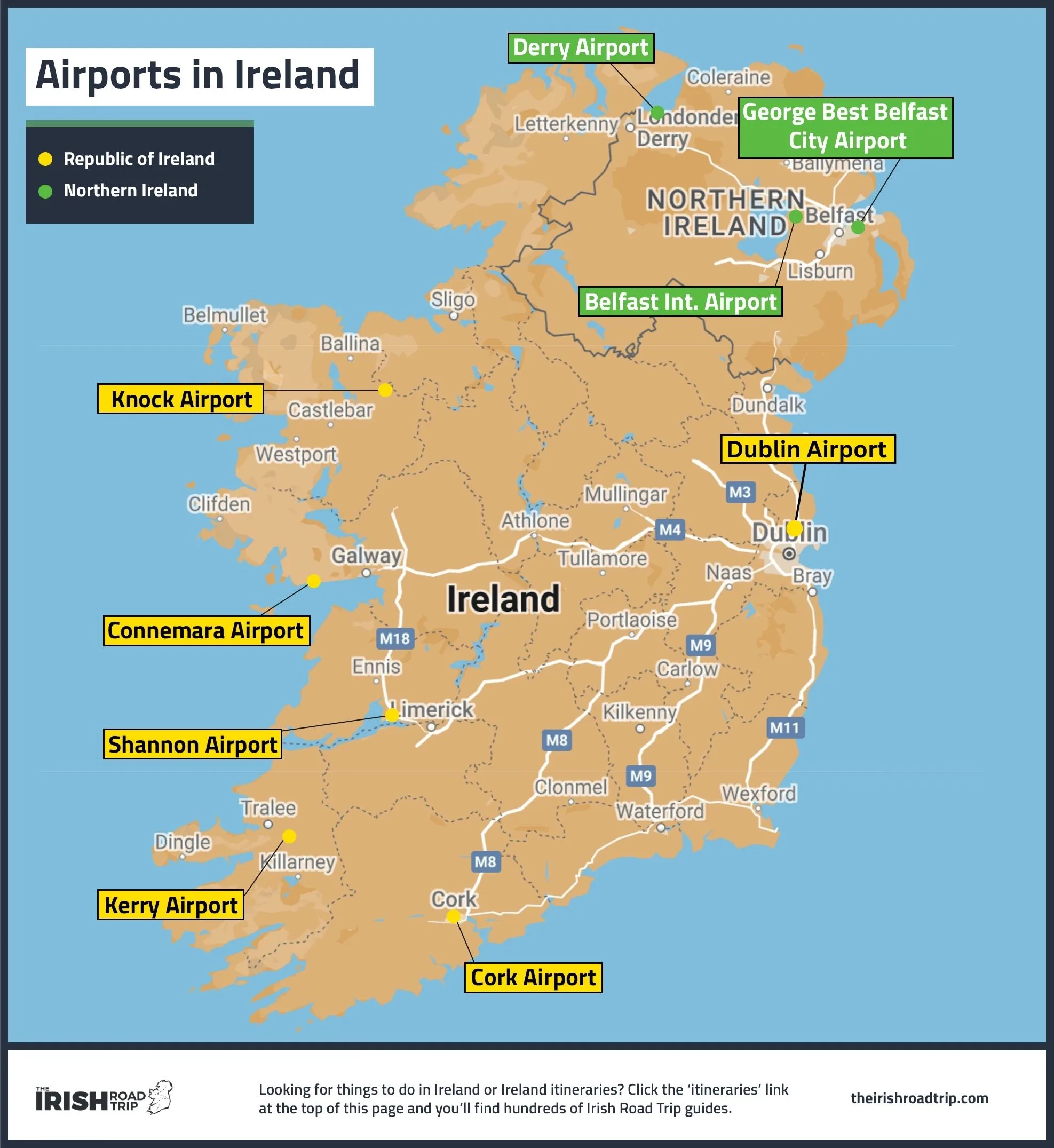
The sixth step in my how to plan a trip to Ireland process is where things get real. At this point, you know where you’ll visit, when you’ll visit and you have a rough overview of your itinerary.
It’s now time to lock in your start point and book your flights. Sometimes, your start point is decided for you based on where you’re travelling in from. If you have the flex to choose, you need to choose wisely!
Take a look at the map that you’ve used to plot down all of your ‘must-sees’ and plot the various different airports/ferry terminals that you have the option to fly into.
If all of your ‘must see’ places to visit in Ireland are in Galway, Clare, Limerick and Kerry, it makes sense to use Shannon as the starting point for your trip to Ireland. Then get those flights booked!
A handy tip: On Skyscanner, search for your route and travel dates, then click the ‘Get Price Alerts’ button. Skyscanner will email you whenever the fare changes, making it much easier to spot a good deal.
Question 7: What needs to be booked and when?
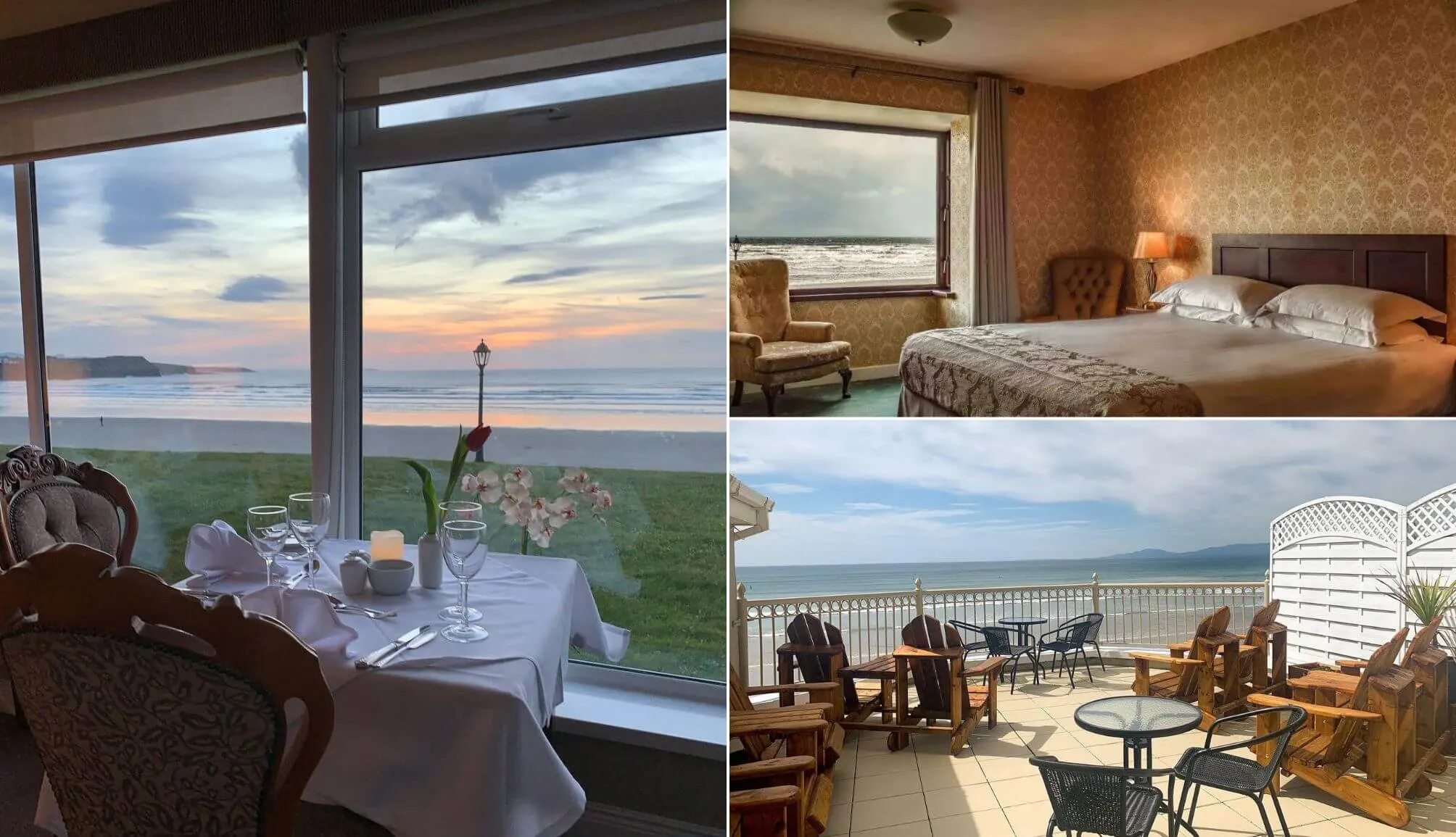
Now that the flights/ferry have been booked, it’s time to finalise your itinerary. At this point, you should have a fair idea of the route you’re going to take.
Now, it’s all about tightening it up and mapping it out. Decide on a final itinerary and commit to it. Once you have your plans set, it’s time to get booking:
- Accommodation: The best places to stay often fill up months in advance, particularly during summer and around bank holiday weekends. If possible, choose accommodation with free cancellation so you have some flexibility if your plans change
- Rental car: If you’re renting a car in Ireland, I’d also recommend booking it as early as possible. Rental prices in Ireland can rise sharply as availability decreases, particularly between May and September. Again, if you can find a booking with free cancellation, all the better
- Tours: Finally, book any attractions that require advance reservations. Some of Ireland’s most popular experiences have limited daily capacity and regularly sell out, including Newgrange in County Meath and Kilmainham Gaol in Dublin. If either is on your itinerary, book as soon as tickets become available
Question 8: What do you need to know before you go?
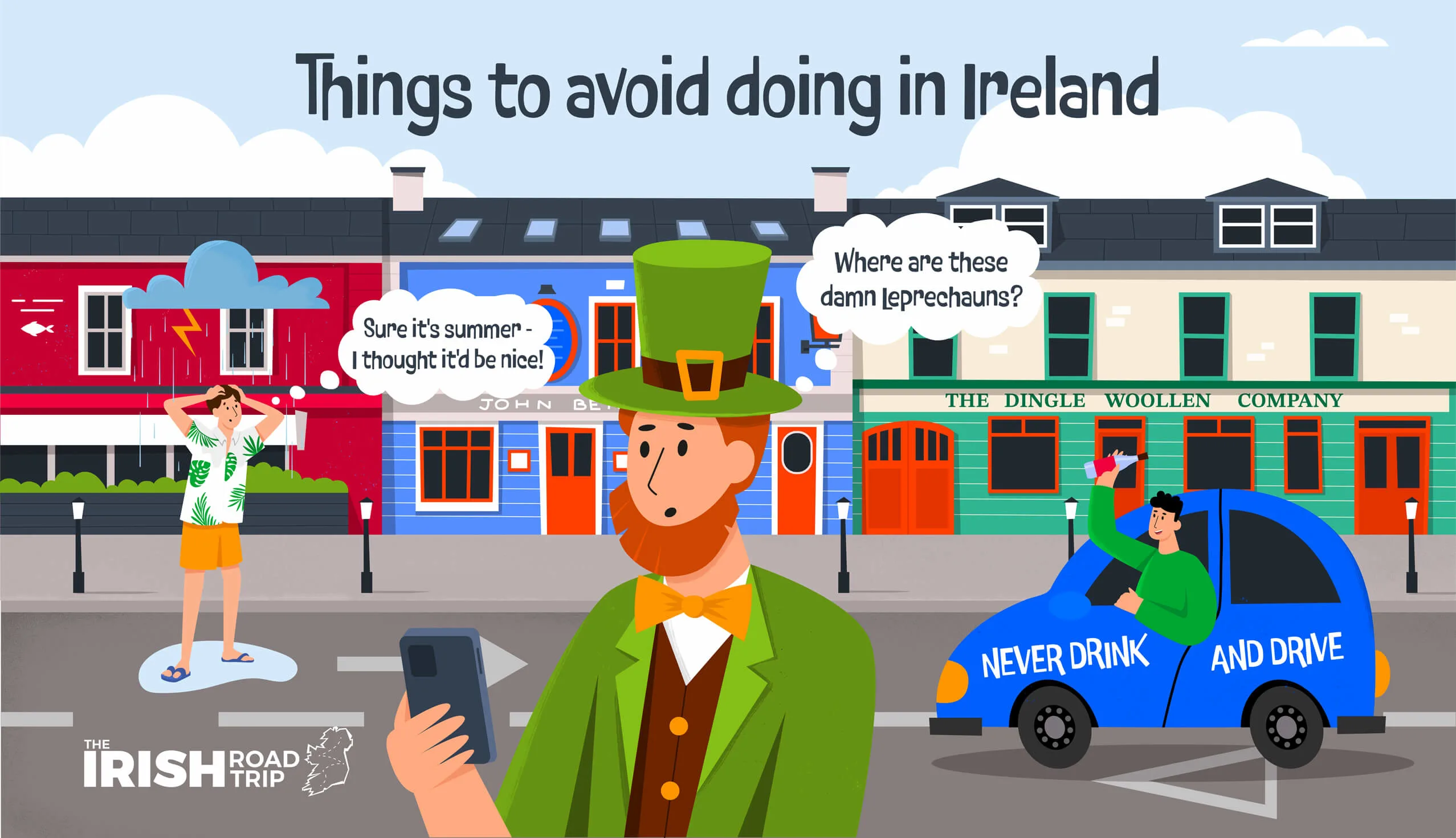
Below, I’ve popped in some handy Ireland travel tips that’ll hopefully save you time and money.
It’s worth reading my guide on what not to do in Ireland at this point, too!
1. Laws

There’s plenty of different laws in Ireland that tourists need to be aware of.
Two that people tend to get caught with are the drinking age in Ireland and the fact that it’s illegal to smoke indoors.
2. Tipping in Ireland
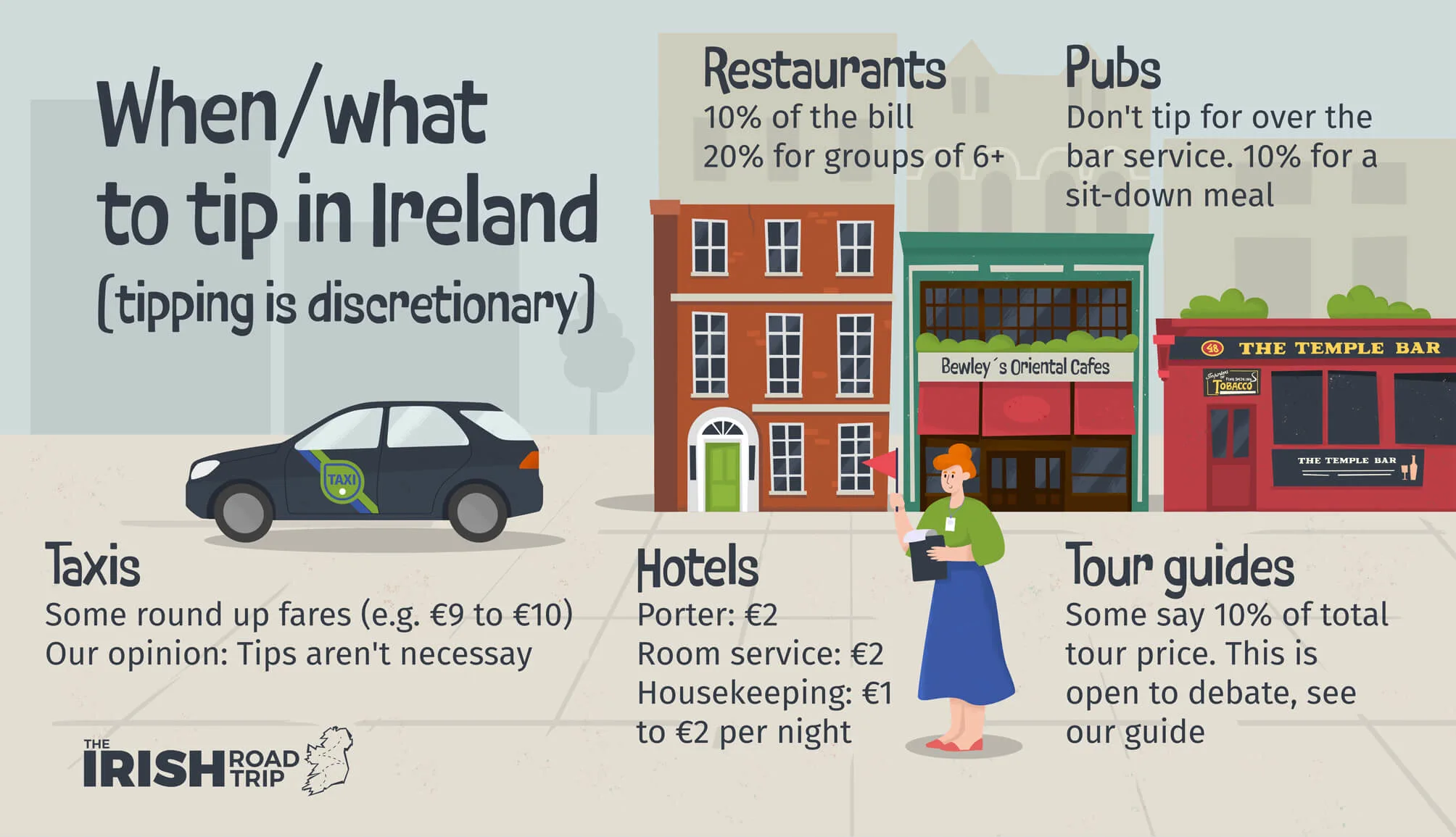
Tipping in Ireland, for the most part, is optional – don’t be fooled into believing that you need to tip for everything.
It’s fairly standard to leave between 10 and 15% in places where you’ve had a meal.
3. Northern Ireland vs the Republic of Ireland

Some people are surprised to discover that there are differences between the Republic of Ireland and Northern Ireland.
Yes, they’re separate countries on one island. There are 32 counties in Ireland.
The Republic of Ireland is made up of 26 counties and Northern Ireland is made up of the remaining 6. The currency in Ireland is Euro and in NI it’s Pound Sterling.
4. Money savers

There’s plenty of ways to save money but you need to be aware of them while planning a trip to Ireland and not after. Some handy options are:
- The VAT refund: If you’re travelling to Ireland from outside the EU, you’re entitled to a refund on some purchases
- The Heritage Card: This is a handy way to save on admission to state-managed Heritage Sites like Kilmainham Gaol
- The Dublin Pass: This can give you solid savings when visiting the main attractions in Dublin
The Ireland trip planner for every type of itinerary

I spent €15,000+ creating the world’s largest collection of free Irish Road Trip itineraries.
You can choose how you’ll get around (car or public transport), your starting point, your fitness level and how fast you like to travel!
1. Every itinerary length
My Ireland trip planner has itineraries ranging from 3 days to 3 weeks.
2. Itineraries for those with a car and those using buses/trains
If you’re driving in Ireland, great – you can pick an itinerary that’s made for those with a car. Relying on buses/trains?! No problem – there are hundreds of public transport itineraries, too (browse the itineraries)!
3. Choose where your trip starts
My Ireland trip planner has itineraries that start in Dublin, Shannon, Belfast, Mayo, Cork, Donegal and Wexford.
4. Pick how fast you like to travel (and how fit you are/aren’t)
Like to explore at a leisurely pace? My ‘Slow-Trips’ will be right up your street! Prefer to see as much as possible? Opt for one of my ‘Fast-Trips’.
You can also select an itinerary based on your fitness level (handy if you’re wondering how to plan a trip to Ireland with an elderly family member, for example!).
5. Everything is done for you… for free
You can pay someone to plan a trip to Ireland for you, if you like, and there are plenty of people that do it well.
With My Irish Road Trip Hub, I wanted to create a library of meticulously researched and logical itineraries packed with local knowledge (I’ve lived here for 37 years) that are available to all.
Ireland vacation planning checklist

The steps above will make planning an Ireland vacation very straightforward once you take the time to work through each of them in order.
One of the biggest mistakes I see people make is that they rush straight to what they want to see and then become overwhelmed when they realise that the attractions are dotted all around the island.
At The Irish Road Trip, I approach the topic of how to plan a trip to Ireland afresh every year and constantly refine my process.
The steps above are the most up-to-date process that I use and it has helped me map out hundreds of trips.
Keith O’Hara has lived in Ireland for 35 years and has spent much of the last 13 creating what is now The Irish Road Trip guide. Over the years, the website has published thousands of meticulously researched Ireland travel guides, welcoming 40 million+ visitors along the way. In 2022, the Irish Road Trip team published the world’s largest collection of Irish Road Trip itineraries. Keith lives in Dublin with his dog Toby and finds writing in the 3rd person minus craic altogether.


Going to do a roundtrip this summer with my girlfriend, to show her the beauty of Ireland! This is going to be our route.. (these are our headlights)
Any recommendation on what to visit/must see, or where to stay?
Femke – thanks for commenting – I can’t actually see what your route is?
Really enjoying the content of the emails as well as on the Instagram stories. I’m doing a solo two week road trip in August and I’ve basically got my plan made but I have one day that I feel I might be over planned and I’d appreciate your advice. I’ll be starting out in the morning from my Aunt’s house about 20km east of Killarney. I’d like to drive round the Beara Peninsula (will be referring to your recent guide!), then stop In Kinsale and Cobh then on to Cashel where I’ll be staying the night.
Is that too much for one day? Should I think about staying the night in Cobh instead and head for Cashel the following day? I don’t mind a long day of driving – say on the road before 9, and I’d like to be at my b&b by around 6 but This will be my first time seeing Beara, Kinsale and Cobh so don’t want to shortchange myself by trying to see too much in a single day. Would really appreciate your input!
God = that’s a good distance you’re covering in one day even if you don’t mind driving.
I made a mistake of skipping the Beara Peninsula on several visits. It’s a gorgeous part of the country.
Personally, I’d spend a good chunk of time on the Beara Peninsula (unless it’s raining and you don’t fancy getting wet), then head for Mizen Head, Brow Head and spend the night in Skibbereen.
Otherwise you’re stretching yourself quite a bit.
I’m not sure how you’d fit in Kinsale and Cobh – you may have to leave them out.
Alternatively, you could do a quick spin around Beara, head to Mizen, and then power on towards Kinsale and Cobh.
Tough one! When’s the trip?
Glad you’re finding it useful!
Cheers,
Keith
Thanks Keith. You confirmed what I was already thinking. I’ll be over the last two weeks of August. I like your suggestion of adding Mizen Head and Brow Head and staying in Skibereen.
I don’t want to be so focused on a checklist that I’m rushing through. I’ve had to skip Beara,Kinsale and Cobh past few trips because of family obligations so I really don’t want to miss them again. So I’ll stay in Skibereen that night and head off in the morning.
Thanks again for helping with this and just in general with sharing the benefits of your own experiences!
Karen
No worries. Glad it was useful.
Planning a trip in Ireland when you’re living here can be just as tricky as planning one when you’re visiting from abroad.
Enjoy the few days and safe travelling.
Keith
Hey! Can you recommend any nice reasonable hotels with walks/outdoor activities can you can get to from Dublin without a car? Thanks ?
Hey Nsyn,
Does it have to be a hotel?
I’d recommend staying somewhere near Glendalough in Wicklow, but the hotels out that way can be really pricey. That being said, there are plenty of places to rent for the night on Airbnb. There are also several B&Bs.
If you do decided to visit Wicklow (handy spin/bus journey from Dublin – here’s a load of info on getting there https://www.rome2rio.com/s/Dublin/Wicklow), there are plenty of walks and hikes in the area.
Have a look here – http://visitwicklow.ie/all-walks/
Cheers,
Keith
Hi! Do you happen to know some good 3-5 day hiking trails in Donegal? I have never been to Donegal so I’m planning to go there this summer.
Thanks in advance and thanks for the awesome work you’re doing!
Hi Lian,
I hope you’re well.
I don’t have any Donegal hiking guides created at the moment, but we do have a 3-day road trip guide that contains some walks that you can do (here it is – https://www.theirishroadtrip.com/the-best-things-to-do-in-donegal/
If you’re specifically in search of walks, outsider have a nice little guide here – https://outsider.ie/ireland/walks-donegal/
Cheers,
Keith
I just wanted to ask 1-2 question about a weekend trip that I’m planning with a friend. I’m from Germany, working in Cork for 3 months now. Next week, a friend from Germany is coming over for the weekend.
We would start Friday afternoon to Galway, spend a night there and go see the Cliffs of Moher early Saturday. From there we want to make our way down on the west coast and I wanted to ask about 1-2 must see’s on the way or even a good place to stay from Saturday to Sunday. If you have any ideas, I would be very thankful.
Have a good day 🙂
Weird – I replied to this yesterday, but the comment seems to have vanished.
OK, just so I have this right:
– Galway on Friday night
– Somewhere in Clare on Saturday
– Home on Sunday
Option 1
– Friday afternoon in Galway
– Head out to connemara in the late afternoon/evening (the evenings are bright until 8 or so, so you’ve plenty of time to explore)
– Spend the night in Clifden or Roundstone
– Here’s a guide to the best things to do in Galway in 48 hours that you might find handy
– Saturday morning make your way to Clare
– Spend the night in Doolin
– Sail below the cliffs and take a ferry over in Inis Oirr
– Here’s loads of things to do in Clare
Option 2
– Spend Friday in Galway City
– Get up early on the Saturday and head down to Clare to see the cliffs
– If you have a car, definitely head out to the cliffs at Kilbaha, after, they’re brilliant
– Refer to the guide in option one for other things to do in the area
– Spend the night wherever you fancy. I find Doolin is handy as it’s a good base for seeing a lot of Clare’s attractions, but there are other great towns in the county
I hope this helps.
Cheers,
Keith
Hey. Myself my partner and two boys are heading to Clare in two weeks for 4 days. We have a few things we want do, cliffs of moher etc. is there something that you’d recommend that is a must do over that neck of the woods?
Hi Brian,
Thanks for getting in touch.
If it was me, I’d take a spin out to Inis Oirr island. It’s a handy ferry from Doolin, although I’m not sure how suitable it would be for very young children.
Definitely take a spin out as far as the cliffs at Kilbaha. They’re a bit out, but well worth checking out. Just be careful with the little fellas as it gets insanely windy out that way and the cliffs are unguarded.
The Aillwee Cave is another great spot, especially if you’re looking to keep the pair of the amused. The Doolin Cave is another solid shout.
I’ve a two day guide to Clare here along another one for people looking to make Doolin their base.
Hope this is useful.
Enjoy the trip.
Keith
We are traveling Next Spring 2020 and I am hoping most things will be open. 20th of March to the 11th of April. We are a mixed bunch, my husband and I, out 11 year old daughter, and my 75 year old mom. We have 4 days in Castletown Geoghegan, 5 in Portstewart, 5 in Murroogh, 6 in Nengah and two to finish in Dublin. My two questions right now are, can we get car service from Doolin to Murroogh? For a night out? It’s about a 30 min drive. And can we (mom and I are Hacketts) do a day trip from Nengah (Silvermines) to Baltimore and Schull?
Thanks for getting in touch, Jenna.
Sounds like a great trip in the making.
On the Doolin query
I found the below taxis online that service the doolin area. You’d need to ring in advance to ensure that they’ll be able to accomodate.
– Sean Cullinan +353 (0)864029997
– Peter Mooney +353 87 2069019
– John Sheedy Doolin Taxi +353 86 2353100
– Joe Burke +353 (0)863702652 email: burketaxe@gmail.com
– Dennis +353(0)86 6066996
On the Silvermines to cork query
I’ve never heard of a day trip from Tipperary to Baltimore and Schull – would you be able to rent a car? It’d make things a fair bit easier.
You could get a train and bus from Tipp to Baltimore, but you’re taking a 6 hour plus journey one way https://www.rome2rio.com/map/Tipperary/Baltimore-Ireland
Hi Keith!
We love your advice and are planning our trip around it. We have visited Ireland before and loved it but only a week and we felt we were in the car way too much so now we have two weeks and will travel Connemara, Donegal and Northern Ireland. I would love your insight if we are missing something or if it doesn’t make sense and you could speak into our plans it would be greatly appreciated! Our plans are:
Land in Dublin
Drive to Galway for the night- Maldron Hotel
Tour Connemara and stay two nights at the Delphi with
one day to visit Clifden, do the higher Diamond Hill walk and Sky Road and one day to relax and do the seaweed bath
Newport for two nights with plans of biking the Greenway and hiking Crough Patrick
Four nights at Jackson Hotel in Ballybofey and take our time exploring Donegal with our homebase at the hotel
Two nights at the Marine Hotel in Ballycastle
One night in Belfast at the Titanic Hotel
Last night in Dublin and haven’t booked the hotel yet.
Does this sound insane? Or too laidback?
Thanks so much!!
Hey!
Haha! That is one long aul comment!
Thanks for the kind words – glad you’re finding it useful.
OK, let me trying and organise this in my own head. So, this is your plan:
one day to visit Clifden, do the higher Diamond Hill walk and Sky Road and one day to relax and do the seaweed bath (this all sounds great – you’re giving yourself loads of time to explore at your will)
All of the above sounds spot on.
The only thing I’d change if it was my trip is the Donegal section.
I’d space out where I was staying, so do two nights where you are and explore the area around it and then another two up near Dunfanaghy.
It’ll save you having to drive so much and it’ll give you a different taste of the county.
I hope this helps!
Keith
Keith,
First off, your instagram (love the vids of you messing with your old man) and this site are both amazing! My mom, myself and a few friends are heading to Ireland for two weeks in late May/early June. I’ve been before (my dad is from Finglas) but my friends haven’t so we have a lot on the itinerary. We are going to attempt to squeeze in a counterclockwise trip around the country. I’ve explored your site and took a lot of suggestions from your guides! I was wondering if you had any must see spots/sites in the Waterford/Wexford area? Or any suggestions in general?
Thanks!
Hi Hannah,
Haha! I’ll tell the aul lad that he has another fan (he hates the videos, as you can probably tell from his reactions!).
Wateford has a mountain of different places that you can explore.
Personally, I love the Copper Coast. It’s regurally missed by people visiting Waterford and it’s one of the best stretches of road in the country.
Here’s a guide on the best things to do in Waterford if you’re only visiting for a couple of days.
Fo Wexford, make sure to visit the Hook Peninsula. Hook Head lighthouse is one of the oldest operational lighthouses in the world and well worth checking out.
Curracloe Beach (used during the filming of Saving Private Ryan) is also well worth dropping by for a stroll.
There’s a forest right next to it which is great for a ramble through, also.
I hope this helps. Have a great trip.
Keith
HI Keith,
I’m planning a trip along the Wild Atlantic Way starting in Cork – i love walking and cycling but i also really want to experience the pub music and maybe join in on the mandolin. I am wondering if you can offer any advice on some pubs that welcome (or don’t mind) people joining with the music making.
While in have a mandolin in NZ i am also hoping to buy one in Ireland – a flat back with a pick up would be great. Do you know of the music shop in Cork or the chain of music shops in Ireland
Thank you Keith,
Looking forward to hearing from you
Virginia
Hi Virginia,
I hope you’re well!
I’ve been to a lot of bars in the past where people have had a quiet word with the barman or one of the band and they’ve been allowed up to play.
However, I’ve been to just as many where someone just storms up on stage and tries to join in, without consulting those playing in advance.
My advice would be to google ‘live music in x town/village’ that you’re staying in and ring the pub in advance and check with them.
They’ll be able to tell you whether or not it’s ok to do.
Have a great trip.
Keith
Hi Keith,
Love all your information and chatting . Thank you
I’m heading to Cork and the Wild Atlantic way in August and really wild love to know of some pubs that might allow musicians join in the music making. Do you know of any please.
Many thanks
Virginia
Hey Keith,
Love your site – always get great inspiration from it! Just noticed Donegal Airport isn’t on the airport map above – flights to and from Dublin and Glasgow Mon, Wed, Fri, Sat and Sun. I have yet to fly into it but the take off is just as spectacular – well worth the price, particularly if you are stuck on time for a visit!
Keep up the good work!
Maeve
Thanks for the recommendation Maeve and the kind words.
I’ll get this added in today.
Cheers,
Keith
Hey! Absolutely love your page. We’ve got a road trip coming up in August for 2 weeks and we’re so excited! Love the 25 day guide you wrote and will be taking lots of inspiration from there! We’ve got a few things we have to do (visit family, a wedding) but for the rest of the time, would you recommend planning things properly or going more with the flow? We’re bringing a tent so can be flexible with where we stay! Thanks so much – love your work!
Our route in case you’d like to know – sail into Dublin, but head straight to Belfast (been to Dublin a few times)! Up to the Giants Causeway, visiting family in Leitrim for a few nights then on to a wedding in Mayo for 3 nights, Galway, Clare (pit stop at Father Teds House obviously!) Then Kerry and Cork before leaving from Rosslare.
Hey! Absolutely love your page. We’ve got a road trip coming up in August for 2 weeks and we’re so excited! Love the 25 day guide you wrote and will be taking lots of inspiration from there! We’ve got a few things we have to do (visit family, a wedding) but for the rest of the time, would you recommend planning things properly or going more with the flow? We’re bringing a tent so can be flexible with where we stay! Thanks so much – love your work!
(Our route at the mo is Belfast – Giants Causeway – visit family in Leitrim – wedding in Mayo – Galway – Clare – Kerry – Cork)
Hey! I’d definitely recommend having a decent idea of what you want to do and when.
It’ll just give you that extra bit of comfort knowing that the trip has a structure and that you’ll see everything you want to see during your time there.
That being said, I often just head off without any real plan, but I can do that as I live here and I know I’ll have plenty more chances to get out and about and see the places that I want to see.
When you’re visiting family in Leitrim, definitely take some time to drop into Sligo. There’s a mountain of stuff to do out that way. This Sligo itinerary should help.
Have a great trip.
Keith
Hi , I’m planning a trip to Kerry , Monday 28th October , 5 nights , 2 adults & 3 children , adults plan to climb Carrantuohill , can you recommend a cottage preferably, Rossbeigh maybe , needs to have a sea view ,any help would be great , thanks Linda
Hi Linda,
This cottage looks like it would fit the bill. Great views and a reasonable price.
Cheers,
Keith
Hey Keith!
Going to be traveling to Ireland for 5 days in late August through early September with my girlfriend and it’ll be our first time in the country. Would love to get your thoughts on our rough itinerary and see if you think we’re trying to fit too much in or if there’s something we’re missing that we should really hit. Sorry in advance for the longer comment!
Day 1:
– Arrive early AM in Dublin
– Spend morning in Dublin and take mid-morning bus to Galway
– Afternoon/evening in Galway
Day 2:
– Breakfast in Galway and pick up a rental car
– Trip to Cliffs of Moher
– Midday trip to Limerick for lunch and walking around the city
– Afternoon trip to Kerry to spend the afternoon and night in the area (possibly stay in Killarney?)
Day 3:
– Morning in Kerry
– Midday trip to Cork
– Afternoon/evening in the area and spend the night near Kinsale
Day 4:
– Breakfast in Kinsale
– Morning trip through Cobh to Waterford
– Day/afternoon in Waterford
– Evening/night in Wicklow
Day 5:
– Morning in Wicklow
– Hit Glendalough and Wicklow Mountains National park during the day
– Return rental car and take bus/taxi to Dublin for the evening
Day 6:
– Breakfast in Dublin and departure flight at 11:30
We really haven’t ironed out the finer details and know that there are days worth of things to do in each place we’d like to stop, but are really just hoping to be able to wander through the south side of Ireland and see what we see while hitting a handful of specific things.
Any specific areas we should try to plan in or look for? We’ll ideally book our lodging a month or two before our trip so we’ll have some structure to where and when we will need to be at our destinations, but other than that are very open to suggestions.
Thanks for all the help!
Hey,
No hassle. OK, I’ve had a look through it. It’s definitely way too much squeezed into such a short space of time. I’m not even sure how physically possible it’d be. Yes, you’d visit loads of counties, but you wouldn’t spend anywhere near enough time in them to enjoy them.
I’ve added comments in beside each day of the itinerary you sent and made some suggestions.
Day 1
– Arrive early in Dublin, spend morning there and take mid-morning bus to Galway, afternoon/evening in Galway.
Verdict: depends how early your flight is, but you’ll be getting very little in in Dublin. That’s cool if you want to get straight out of the city.
Day 2
– Breakfast in Galway (GO TO DELA – it’s amazing!!) and pick up a rental car, trip to Cliffs of Moher, midday trip to Limerick for lunch and walking around the city, afternoon trip to Kerry to spend the afternoon and night in the area (possibly stay in Killarney?)
Verdict: this one has me a little confused – you’re planning on waking up in Galway, driving to Clare, then on to Limerick for lunch and then to Kerry?! This would be craaaaaaaazy. You’ll be driving all day and literally leaving a place as son as you arrive.
Recommendation: There’s a tonne of things to do in Clare. Spend the day there and enjoy it. You won’t regret it.
Day 3
– Morning in Kerry, Midday trip to Cork, Afternoon/evening in the area and spend the night near Kinsale
Verdict: Same as above. You’ll see a handful of things in Kerry and then you’ll be leaving it. You physically can’t spend this little time there.
Recommendation: Spend day 3 and 4 in Kerry. Here’s a 2-day guide to help you plan your time there.
Day 5:
– Breakfast in Kinsale, Morning trip through Cobh to Waterford, Day/afternoon in Waterford, Evening/night in Wicklow.
Recommendation: Spend day 5 exploring West Cork. A day isn’t nearly enough here but you’ll get to see some of it.
Day 6:
– Head back to Dublin
I hope this helps!
Keith
Keith,
If you had time for only one…Aran Island or Blasket Island?
TY!
Marcus
At this moment in time, I’d say Blasket, as I’ve never been and I’m going mad to visit.
That being said, I’ve many a fond memory from Inis Oirr over the years.
This proooooooably won’t help you make a decision…
What’s up Keith! Love the page, I’m 25 and will be traveling to Ireland alone this July 16-31. Flying in and out of Dublin, I plan on merging two of your “5 day trips” to make a 10 day trip. (Give or take a couple days) which two would you recommend for a young guy looking to see the country and mix in a little night life too? Any suggestions would help! Thanks man ??
Hi Trevor,
Sorry that it’s taken me so long to get back to you.
If it was me, I’d do the Cork and Kerry route and combine it with Clare, Galway and Mayo.
The reason that I’d recommend that combination is that I’ve done something very similar as a solo traveller – and loved it.
That being said, a combination of any will work.
On the nightlife side of things, if you’re after nightclubs and that kind of thing, you’d be better placed spending the night in the larger towns and cities.
That being said, you’ll find plenty of pubs in most towns. They may be quiet midweek (this’ll depend on the town) but should be far busier at the weekend.
Anything else I can help with?
Cheers,
Keith
Hi Keith, was hoping you might be able to guide me. Have been to Dingle a few times, all summer visits and with kids in tow. Planning a three day break this December after our wedding and Dingle is calling. I know parts of Kerry are virtually dead and places close for certain periods…. we have a romantic notion of long walks and all the Guinness we can drink and although it’s a “honeymoon” we don’t really want to be alone as such. Would you think there would be a bit of craic in the pubs? That’s a long winded explanation of a simple enough question…. sorry for the ramble!
I’ve been to Dingle 4 times over the past two years.
Once in the summer and three times during the ‘off-season’.
The most recent visit was back in April. Any time I’m down that way I usually drink in Dick Mack’s. It’s a deadly little pub.
To this day I’ve never found it empty.
The quietest that I’ve found it was one Wednesday evening in October. We managed to get a seat in the front area, though, which was still buzzing, but much quieter than you’d get at the weekend (or even towards the latter end of the week).
I wouldn’t worry if I was you 🙂
Have a great trip.
Cheers,
Keith
That’s great. Thanks so much for your help! You’ve put my mind at ease. Appreciate you taking the time to respond!
Hi Keith, we are planning a trip to Ireland with my husband and 19 year old son, we have 12 or 13 days and we are thinking about doing the road trip around the island. We don´t know how to go about it and how many days is best to stay in each place. What do you recomend us to do? We love nature, waterfalls, cliffs, ancient monuments and castles, and nice towns and cities too. Thanks
Hi Fabiana,
Where are you flying into? And what time of the year are you visiting?
Also, without going into too much detail, what kind of budget are you working with?
Cheers,
Keith
Hi Keith,
I am planning a trip for me and my sister for 5 days, 4 nights in Ireland in September. It will be our first time there. I find it difficult to choose what to see in this short period of time. My plan is:
day 1: fly to Dublin, arrive in the morning, rent a car and drive to Cork and spend 1 night over there.
Leave on day 2 and drive along the coast (Kinsale, Baltimore, Skibbereen, Mizenhead) and spend the night maybe in Bantry or Glengarriff?
Day 3 en 4: drive ring of Kerry in the morning, spend 2 nights in Killarny, visit Dingle on day 4.
Day 5: Drive back to Dublin, stop for lunch in Limerick.
Is this a reasonal itinerary?
Thank you for your advice!
Dionne
Hi Dionne,
Sorry – I’ve been away on holidays for the past week and I’m only catching messages here now.
So, from reading through your itinerary, the must-hit spots are Cork and Kerry.
Day 1 looks fine. It’s a decent drive from Dublin to Cork, but it’ll finely place you for the places that you’ve outlined that you want to see. There’s loads to see and do in Cork!
Day 2 looks OK, also. You’ll be packing a good bit into the day but if you’re anything like me and don’t mind a busy itinerary, you’ll be grand. I’ve stayed in Bantry before and liked it. Anywhere in the neck of the woods will do the job, though.
Day 3 and 4 is where I’d probably switch it up a bit.
Spend day 3 doing the Ring of Kerry (here’s a guide to follow) and spend the night in Killarney.
I’d personally aim to spend night 4 in Dingle. If you want to visit Limerick, you’re better off spending night 4 in Dingle, as Limerick is a bit of a detor if you’re staying in Killarney.
You can take the N21 from Dingle to Limerick and then make your way from there to Dublin.
I hope this helps.
Cheers,
Keith
Question. I love your website and Instagram and really want to plan a road trip.
Is there any option that you know of for someone not willing to rent a car and learn driving on the left side of the road?
I am older and, although I could probably do it I think it would add an unnecessary level of anxiety to the trip.
I have explored all of the traditional tour companies and realize that is not the way I wish to spend my visit.
I crave quiet, space and independence and that is not the way of the established tours.
I look forward to your response.
Annie
Hello Keith! Your website is wonderful, and I only wish I would have found it sooner. We will be in Ireland next May for 21 days. Following roughly the same Rick Steve’s Ireland itinerary with a few tweaks. We were wondering what there was to see between Waterford and Kinsale?
Hello Keith, let me start by complimenting on your site, the tons of information are so useful!. We are visiting Ireland next summer with our 2 children (4 and 7). We are used to travelling around with them but now I fear that I have tried to squeeze in too many things. We want to enjoy the nature and not spend too much time in our car.
This is what I have so far:
– arrive at Dublin Port in the evening, overnight around Wicklow Mountains for 2 nights
– head to Lahinch for 2 nights
– clifden 2nights
-Ballina 1night (I thought to stay here to avoid the long drive between Clfiden and Ardara)
-Ardara 2 nights
– 2 nights to explore north Donegal (arouond LetterKenny) or Inishowen (where would be the best base?), what would you prefer if you had too choose?
– 3 nights Ballycastle
– 2 nights Warrenpoint
then back to Dublin to take the ferry
I still have one night to squeeze in but I don’t know where to put it. Any suggestions?
Do you think our itinerary would be good, or are we missing out on some better parts?
I think it’s better for us to save the south-west for another trip.
Thanks so much for your time!
Elke
Hi Elke,
Thanks for the kind words! That actually sounds like a pretty nice itinerary. Love Ardara. Such a brilliant little town. I randomly got stuck in the middle of their St. Patrick’s Day Parade last March… some bloke told me it was OK to drive through the town… it most definitely was not.
Make sure you nip into Nancy’s – great food!
OK, if it was me and I was following the below itinerary and I had an extra day, I’d extend the time in Mayo and pick a different base. Make Westport (here’s a great spot to stay) or Newport (I’ve stayed in this place and loved it) your base and spend two days exploring Mayo.
Achill Island, Downpatrick Head, the Mullet Peninsula, Louisburgh and the Lost Valley are all solid options for 2 days in Mayo. Here’s loads more things to do in Mayo that’ll keep you occupied.
On the Donegal question, the only place that I’ve ever stayed in on the Inishowen Peninsula is a place called Carndonagh, and it was perfect as a base. I’m pretty sure this is where we stayed.
Everything else looks good, though. To be honest, in comparison to many of the itineraries that get sent in, this is If you need any other help with the planning, hop into our guide to planning a self drive Ireland itinerary. Or feel free to fire on any other questions.
If you’re looking for things to do in each of the places you mentioned above, hop into our guide to the different counties in Ireland. I’ve tried to add in as many unique attractions as possible.
Cheers,
Keith
Hey, Keith,
My name is Ekaterina.
First of all let me express my warm gratitude to the work you’ve done for all of us by creating this AMAZING site! Be sure you have already saved our time by publishing detailed routs and, of course, best pubs 😉
We have a crazy idea of road trip in winter. Is Wild Atlantic Route safe enough? We will be approximately on 25 Jan – 7 Feb. FYR – we are Russians who got used to severe weather conditions with great experience of driving abroad. What are the main warnings while experiencing Wild Atlantic Route during winter?
Best Regards, Ekaterina
Hi Ekaterina,
If you’re used to driving in Russia in winter, you’ll be fine!
Here’s a guide to visiting Ireland in January and another for visiting Ireland in February.
If you’ve any other questions, just ask!
Cheers,
Keith
Hello Keith.
Love your site! Thank you. My family (4 people, 2of which at 21&23year old guys) along with another family of 4 with boys the same ages. Are planning a trip in May 2020 for 8 days. Dublin to Dublin. I really like the Giants Causeway but don’t want to miss the cliffs of Mohre and Galway. I also want to keep it interesting for our adventurous crew. We tend to prefer “off the beaten path” our budget is moderate. We don’t mind splurging for memories, (a castle stay?) but we are fine in a hostel too. We will be renting cars to get around. I’d appreciate any help you can give. Happy New Year. And thank you in advance. Lora
Hey Keith,
Great site! For sure I am already stressed about planning the ideal trip for my son’s highschool graduation. It is not until June 2021, but I like to plan way in advance. Key word is “ideal”, I found your post on an itinerary for 5 days….like 5 different routes and thought that would help me determine what I should do on our trip as its actually for 10 days….thinking we for sure can do it, but now it just offered a slew of other points of interest. May I give you what I think our “our” main things we want to do/see collectively and you offer up something?
Skellig Michael Tour, this is #1 for my son to see the Island from Star Wars.
Climbing the highest point in Ireland, Carrauntoohil
Fota Wildlife
Trinity College/Book of Kells
Cliffs of Moher/Slieve League…we favor Slieve League
Having his first beer with his dad, a Guinness, in Ireland…in the oldest bar in the world “Seans bar”
Kayaking in caves
Loftus hall
These points of interest are all over the place, Dublin, Galway, Portmagee, middle of Dublin/Galway for the beer, Cork/Fota, Loftus hall on southeast, etc….then there is giants causeway, etc.
Then there is the driving…lots of driving, jetlag from Dublin to consider. So for now my plan looks like:
Galway (2 nights)
Killarney (3 nights)
Killkenny (2 nights)
Dublin (2 nights)
Day 1, 2, Galway
Day 3, 4, 5 Killarney
Day 6, 7 Killkenny
Day 8,9 Dublin
Day 10 Fly Home?
1. Day 1 Arrival Dublin, drive to Galway, stop at Seans bar, oldest bar in the world, Athlone (2.5 hours)…stay at Air BnB or Connacht Hotel
a. When in Galway for that day
i. The Lighthouse, vegetarian café (breakfast or lunch)
ii. TGO Falafel Bar
iii. Moran’s (dinner)
iv. Wander around Latin Quarter
v. Eyre Square
vi. Walk the river corrib
vii. The Dough Bros, best pizza
2. Day 2 (Daytrip, stay at Galway again)
a. Kylemore Abbey & Victorian Walled Garden
b. Lough Corrib/Ross Errily Friary/Killary Fjord/Cong
3. Day 3, Drive to Cliffs of Moher, the Burren, see Doolin, then drive to Killarney, overnight
4. Day 4 (Skillig Michael/Ring of Kerry, Dingle)
a. Ancient Monastery, nesting spot of Puffins, Stars Wars force awakens
5. Day 5, Hike Carrauntoohil, overnight Killarney
6. Day 6, Drive to Kilkenny
a. See Rock of Cashel, Hore Abbey, Plains of Tipperary on way
7. Day 7 Kilkenny day trip to Hook head
a. Loftus hall
b. Kayak caves
8. Day 8, drive to Dublin
a. Trinity College to see Book of Kells
b. Kilmainham Gaol, famous prison
c. Saint Patrick’s Cathedral
9. Day 9 Dublin
a. Kayak with seals
b. Glasnevin Cemetery, Dublin, see tomb of Daniel Oconnell, the holiest grave in Ireland
10. Day 10 fly back to home
what do you think?…..I was also toying around with taking a bus from Dub to Gal…to help with initial drive after plane ride…I dunno…can I drop rental car off at different destination?
Brandon
Haha! Hey Brandon – this is hands-down the longest comment that I’ve received here… ever!
OK – let’s try and tackle the itinerary. You’re trying to squeeze in a lot. Allow 2 days in Dublin at the beginning to banish the jetlag.
Day 1 and 2: Dublin (you said you want to see Trinity College/Book of Kells. Add the GPO 1916 tour to your list and check out our guide to Dublin for more things to do)
Day 3 and 4: Galway (make a detour to Athlone on the way to see Sean’s Bar – you could do a day trip to Connemara one day and another to Clare to see Moher the next)
Day 5, 6 and 7: Killarney
Day 8, 9 and 10: Kilkenny (Stop and see Cahir castle on your way from Killarney. When you finish at Cahir, visit the Rock of Cashel. Make Kilkenny your base for the three days. You can visit the Hook Peninsula from here on day 9 and it’s a handy spin back to Dublin on day 10).
One thing to note: You have Fota Wildlife Park included – you’ll need to cut this out to make the below work
I hope this helps (spread the word about this website and I’ll owe you a pint!)
Cheers,
Keith
Hello, Keith!
I just found your site and am enjoying reading all of the information. My husband and I will be in Ireland the last week of March. Ireland has been at the top of my travel wishlist for a while so I’m very excited. So far, our plans include:
Arrive in Dublin from Chicago on Tuesday morning, grab some brunch after getting our car.
Tuesday – staying in Athlone at Shannonside B&B.
Wednesday- driving to Doolin to catch a ferry to Aran Islands, seeing Cliffs of Moher on the way back.
Staying at Kinvara Guesthouse on Wednesday and Thursday
Staying at O’Brien’s Cashel Lodge on Friday
Staying at Clifford House in Rosslare on Saturday
Staying at Clontarf Castle on Sunday
Monday afternoon flight home to Chicago out of Dublin.
Any advice on places to see as we go? Any pubs we must try?
Thanks much,
Shannon
Hi Keith! I love your website and have found it very helpful! I would like some advice on the plans I have so far. I am not able to walk long stretches so hiking and such is out for me unfortunately. My husband and I will be visiting right after Christmas to celebrate his (New Years Eve) birthday! We are both so excited because this has been a bucket list trip for us for a very long time! I’m sorry if this message is crazy long. I have a rough itinerary but I’d like advice about if I’m trying to squeeze too much in or if I’m missing things that I absolutely MUST see. If you could check it out for me and give me any pointers I would be forever grateful!
Fly in Dec. 26Day
1 Dec. 27
Dublin
Guinness Storehouse
Jameson Distillery
St.Patrick’s Cathedral
Kilmainham Gaol
Walk over Ha’Penny Bridge
Day 2 Dec. 28
Meath
Bru na Bionne Visitors Centre/New Grange Monument
WestMeath
Kilbeggan Distillery
Sean’s Bar
Offaly
Birr Castle
Day 3 Dec. 29
Tipperary
Cahir Castle
Rock of Cashel
Waterford
Dungarvan Castle
Cork
Blarney Castle
Jameson Distillery
Dursey Island
Possible Sightseeing
Old Head of Kinsale
Cape Clear Island
Mizen Head
Day 4 Dec. 30
Kerry
Killarney National Park
Limerick
King Johns
Castle Clare
Cliffs of Moher
Bunratty Castle
Day 5 Dec. 31
Donegal
Malin Head
Grianan of Aileach
Doe Castle
6 Jan. 1
NorthernIreland
Giants Causeway
Dunluce Castle
Belfast Castle
Old Bushmills Distilery
Down Cathedral
Titanic Belfast
Fly home Jan. 2
Thank you so much for all of your advice on your website. It has really be so helpful!
Cheers,Mary
Hi Mary,
I’m not trying to be condescending or anything here, so I hope it doesn’t come across that way – have you plotted out any of the days above on a Google Map?
There’s a crazy distance between some of the places. On day 3, in particular, it’d be physically impossible to squeeze all of that in.
It’s worth using the distance/time feature on Google maps and plotting in point A to point B and so on to see what’s feasible.
I know that’s probably not much help, so apologies!
Keith
Anyone wanting yo know the best times to visit Ireland. In general it’s best to come any time between first of January and end of December!
There’s different beauty in every season and there’s always a bit of “Craic”
Hi Keith,
I will be staying a week at Corrymeala in Ballycastle, UK from July 27-Aug 2nd and I’d like to spend a few days before or after that leg of the trip in Leitrim. If I fly in and out of Dublin (because it’s cheaper and non-stop flight from USA) what would you recommend? Do I take public transportation or rent a car to go to Leitrim from the airport? Are there places to see between Dublin, Leitrim, and Balleycastle I should put into the agenda? Any help would be appreciated!!! Thank you!
St. Patrick’s day (also my birthday) is right in the middle of my trip to Ireland. I have 10 days there. March 13th-22nd, 2020. I land in Dublin on the 13th and have to be back there on the evening of the 16th until the morning of the 18th. So…I have about 3.5 before at Pat’s day to explore and about 4.5 days after St Pat’s day explore. My thoughts are to see as much of the northern half of the island as I can on the first half of the trip and as much of the southern half on the second half of the trip. Can you help me out with this? I’ll rent a car as needed but would like to travel by bus and train most of the time since I do drink. I’ll be 29 and I like a good pint (or 18). I also like the outdoors, ancient history, and anything unique !
We are sailing into Belfast on 24th May with car and caravan in tow, we sail back from Dublin on 24th June ( return date flexible). My question is this, does your ‘Ultimate Road Trip’ itinerary use routes suitable for caravans? We want to do and see as much as possible, we haven’t booked any sites yet, so we are open to suggestions from the experts!
Hi Keith!
Thank you for all of your advice and the detail that you give. We are doing a 7 day/ 8 night trip to Ireland. Flying into and out of Dublin. The first 2 days are Dublin and from there we get to pick B&B’s and where to go will be renting a car. I know a few things we want to see and do are the Cliffs of Moher, Ring of Kerry, and Killarney and Wicklow national parks. What kind of Iterniary would be best to end the trip close to the airport? We love history and the beauty of Ireland.
Thank you!
Cora
Hopefully coming to Ireland September 28th through October 8th. 7. Mayo
1. Dublin Airport- Kilkenny 28th 8.Mayo- Wicklow 5-6th
2.Kilkenny-Cork 29th-1st 9.Wicklow-Dublin 6-8th Leave Dublin on the 8th
3.Cork.
4.Cork-Limerick 1st-3rd
5.Limerick
6.Limerick-Mayo 3-5th
Love to see the scenary! Try to stay away from roundabouts, drive off the beaten path
Never driven on the left getting an automatic. small car. Two females traveling. Wanting your recommendations. WANTS: Kylemore Abbey, Cliffs of Moher, Down Patrick head,English market, Glendalough, Rock of Cashel in Tipperary??? , Northern Lights???Aran Islands. Like to purchase another sweater if I can afford.
We’re looking at bringing around 2,000 american money? if there is any where you think we should see let me know. Blarney castle Photos. Other than that I could care a less about the gift . Powerhouse gardens is on the list as is a few other places. Thanks!
Liz Ryan
Hi Keith,
I’ve planned my trip to Ireland but I am stuck on Donegal.
Is it possible to have 1 central base for 8 days and see most of Donegal or should i choose 2 locations. Where to stay? I would prefer 1 location as my trip is already long with many different stops. But if I have to choose 2 , would Donegal town and then Derry for north Donegal be a good choice? Still, I don’t mind driving so 1 location would be preferable. Please advice.
Thank you. Erika
Hey Erika! Donegal can be a tricky one given it’s size alright.
If it was me, I’d spend half of the time in Ardara and explore around and then half in Letterkenny, as it’s well placed for both inishowen and the adjacent peninsulas.
I hope this helps + safe travels!
Love the county guides Keith. Some great tips and tonnes of excellent information to read through. I always refer to these when visiting any county in Ireland. What I want to know is when will you do one reviews on Co. Tyrone and Co. Monaghan?
Hey Colin! Cheers for the kind words! We’re (slowly…) working our way through every county in Ireland (currently on Meath with Louth next!). Going off the Google Doc in front of me, Tyrone will be fully live on the site by August with Monaghan by October… so, not soon… but not a million miles away either.
Thanks again and have a great 2022!
Brilliant suggestions. Thanks. Just starting to plan a trip…. I was born in cork and am looking forward to going back. I live in Wales. So it should be straightforward 👍👍
Having said that. After reading your suggestions…I am going to do a bit at a time … just so I don’t miss anything
Thanks again
Kay x
Thanks Kay. Have a lovely trip!
Hi
We are planning a trip based on your 11-Day Wild Atlantic Way Itinerary starting last week of May.
Do you recommend on making hotel reservations in advance ?
Hey – yes, definitely book in advance! Otherwise you could end up either paying very high prices for a place to stay and/or having to stay outside the town/village/city that you want to stay in. Have a lovely trip and safe driving!
Thanks so much for getting us started with these basic facts. Looking forward to spending our 40th anniversary in your country.
Can you park your car at Glenmacnass Waterfall In Wicklow Parking overnight? We are planning to go wild camping around there.
Hi Alex – We camped at Lough Ouler a few years back and debated parking there or on the other side at Turlough Hill. We ended up bottling it as we’d heard reports about break-ins along the Sally Gap. Parking in the village nearby and got a taxi up. Not ideal, but was good for peace of mind!
Thank you so much Keith for all the time and effort you put into this site! It’s amazing!!
I hope you are still answering questions here. The latest post I saw was 2019 but I really need some help!. My husband and I Had an opportunity handed to us free of charge to go to Ireland over Christmas (23rd – 30th). Are airfare and lodging aren’t costing us anything which is great and I am very appreciative but the cottage is in Tulla which I gather is remote. We will be staying there all 7 nights so we would need day trips returning each night to Tulla. We are also there over Christmas. I am having a hard time finding anything open on the 24th and 25th. I was hoping to book some bus tours but I can’t find one open the entire time we are going to be there. It’s probably just that I don’t know where to look. I would really appreciate it if you could steer me in the right direction. Thanks!!!
Trish
Hey Trish – You won’t find any (to my knowledge) fee-paying attractions open on Christmas Eve, Christmas Day or, possible, Stephen’s Day (26th). To be honest, I’d be surprised if any organised tours are operating during that times, as Ireland to an extent shuts down during the Christmas to New Years period. Are you renting a car?
Thank you Keith for all your help. We just returned from a 12 day trip and I used your input for planning what turned out to be a fantastic trip. I could not have done this without your knowledge. Wishing
you all the best. Sincerely, Jim Lynch
I just wanted to leave a comment here – I used your site to plan a trip to Ireland, and I absolutely cannot recommend this website ENOUGH. I found myself googling questions about Ireland with ‘Irish Road Trip’ tagged on to the end of it, because I knew your website would help me with the most up to date answers. Helpful, succinct info in a variety of itineraries to help every soul who plans a trip instead of hiring an agent.
Thanks again and again – and I hope your website continues to get the recognition it deserves!
P.S. I ended up visiting Cork, Killarney, Athlone, Galway, Connemara County, and Dublin. It was a lovely time, and I hope I’ll return to see more and more 🙂
Hi Keith, my husband and I are currently planning a trip mainly using the train to travel around and booking tours in areas we will be staying. I have studied your Ring of Kerry routes and we would definitely like to do the 2 or 3 day one – but by car, so we could stop when and where we wanted as opposed to an organised tour. What extra documents would my husband need to hire a car for this stretch? He is 75, drives a VW Arteon 2ltr and usually we tow a caravan when going on holiday but thought it would be a change for him to see more of the country. Also would it be easier to book a car in Killarney or Kemare? Hoping you are still answering questions.
Kind regards
Hi Margaret – For hiring a car in Ireland your husband will need a full valid driving licence, a credit card in the driver’s name for the deposit and a passport for ID. The main thing to check is the age limit. Many rental companies allow drivers up to 75 or 79, but some may ask for a short letter from your insurer confirming no recent claims. On collection location, Killarney is the best option. Check out my guide to
renting a car in Ireland
for handy tips – all the best!
Hi! Your site is incredible, thanks for all the work here! I do wonder though, is there a best route or stopping point on the way between Carrickfergus/Belfast and Galway? I’d love any advice you have for finding a scenic route vs. going direct as possible? Or anyplace along in that middle section to break up to drive for an hour? Cheers!
Hey Emily! I think the best route road wise would be back to Dublin and then across to Galway (around 4 hours post-rush hour). A more scenic route would be to head to Enniskillen Town first, then Sligo and then Cong before Galway. It’s around 5.5 hours (post-rush hour) but you’d have plenty of stops along the way to break up the drive. It all depends on how much time you have to play with/how much of a rush you’re in to get to Galway. I hope this helps!