7 Day Trip From Dublin (Fast Trip Using Public Transport For Those With Good Fitness)
Planning a 7-day Ireland itinerary using only public transport can be a pain in the backside… So, we’ve done all of the hard work for you!
We’ve spent 25+ years travelling around Ireland…
The itinerary below has taken that experience (and the many mistakes we made along the way) to create an itinerary that we’re confident you’ll love!
In a nutshell, this 7-day itinerary:
- Has been meticulously planned for those only using public transport
- Has an hour-by-hour itinerary for each day to save you time/hassle
- Follows logical routes that take you to hidden gems, tourist favourites and great pubs and restaurants
Who this itinerary will suit
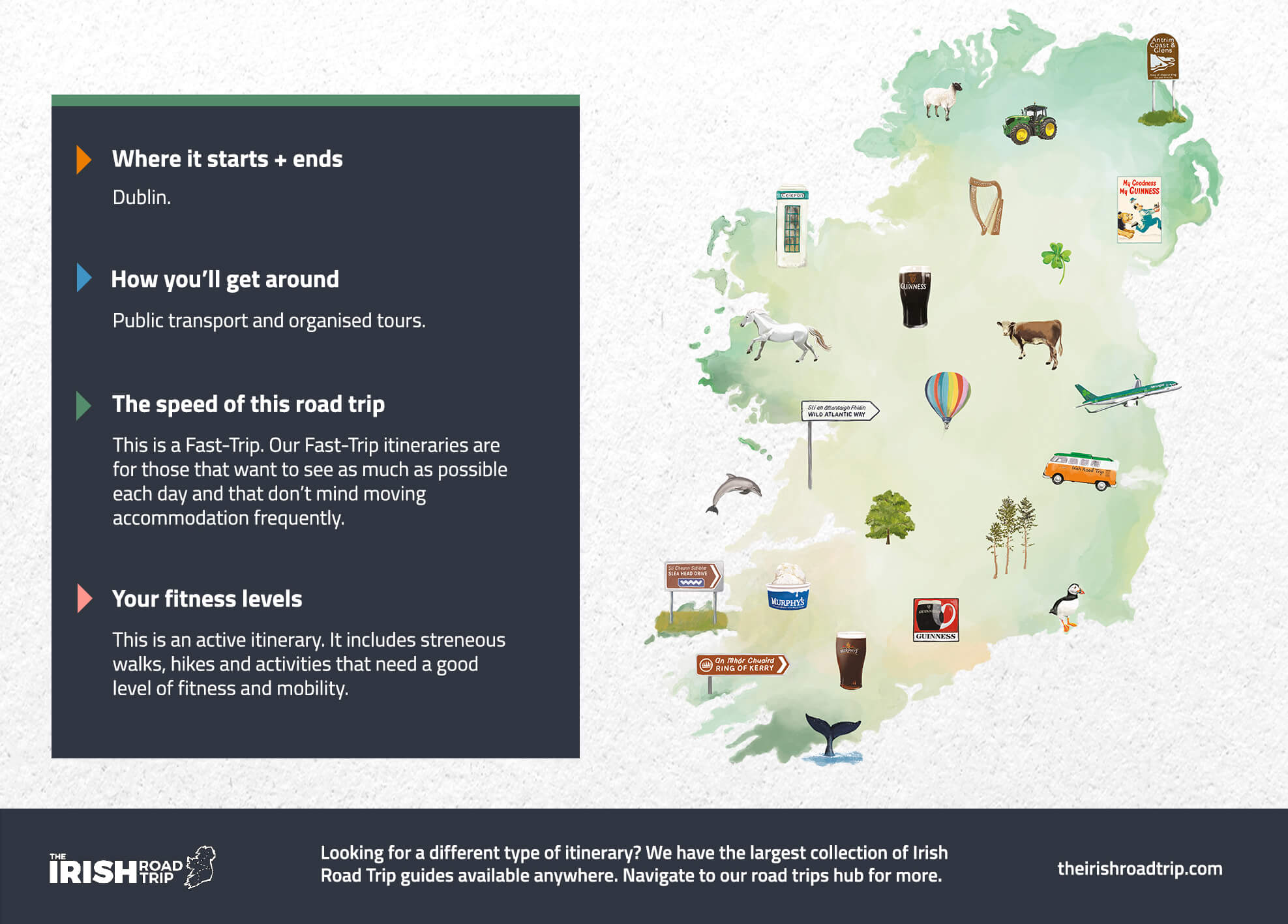
It’s important that you take a look at the graphic above as each of our road trip itineraries have been tailored to specific needs.
This road trip is specifically for those of you:
- Starting in/near Dublin
- Using public transport and organised tours
- Looking to explore at a fast pace
- With a good level of fitness (i.e. it includes long walks and hikes)
- Remember, we have hundreds of different itineraries here if this one doesn’t suit you
Day 1: Arrive in Dublin
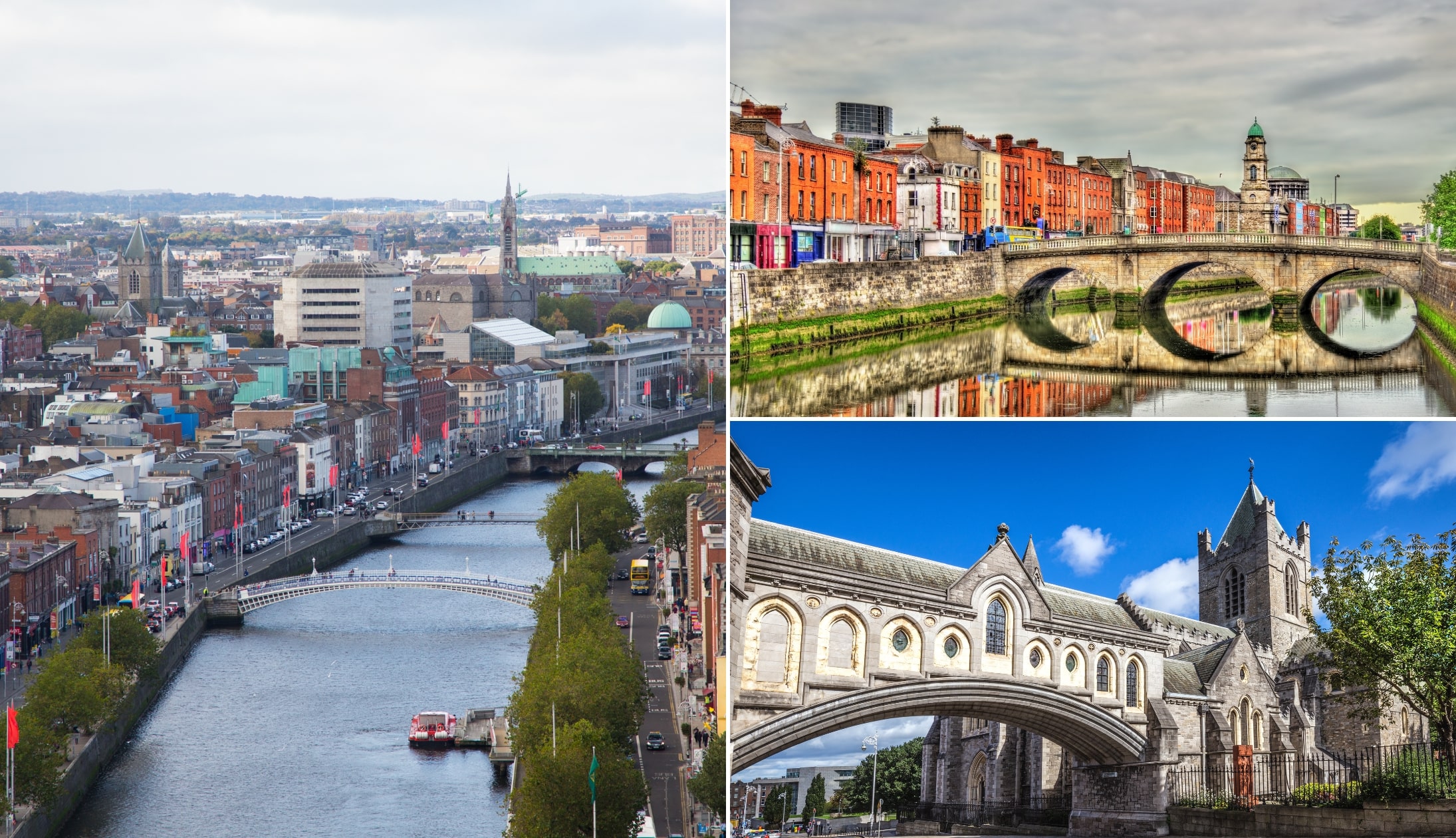
Day 1 of this 7-day Ireland itinerary is going to be very dependent on the time that you arrive into Dublin.
For this itinerary, we’re going to make an assumption that you’ve landed in the morning and are ready to explore from mid-afternoon.
Recommended accommodation in Dublin
- Budget: Abigail’s Hostel (Temple Bar), Jacobs Inn (central hostel) and the Generator Hostel (short walk from the city)
- Mid-range: Dublin Skylon Hotel (just outside the city), Wren Urban Nest (Temple Bar) and the Harding Hotel (very central)
- Luxury: The Merrion (St. Stephen’s Green – very central) and The Westin (just off Grafton Street)
Getting around Dublin + money savers
- Time savers: If you want to avoid walking where possible, it’s worth getting a ticket for the Hop On Hop Off Bus around Dublin. It goes to or near all of the main sites on this itinerary plus plenty more.
- Money saver: If you’re visiting the ‘main’ Dublin attractions, the Dublin Pass can save you €€€ (here’s how)
Stop 1: Lunch
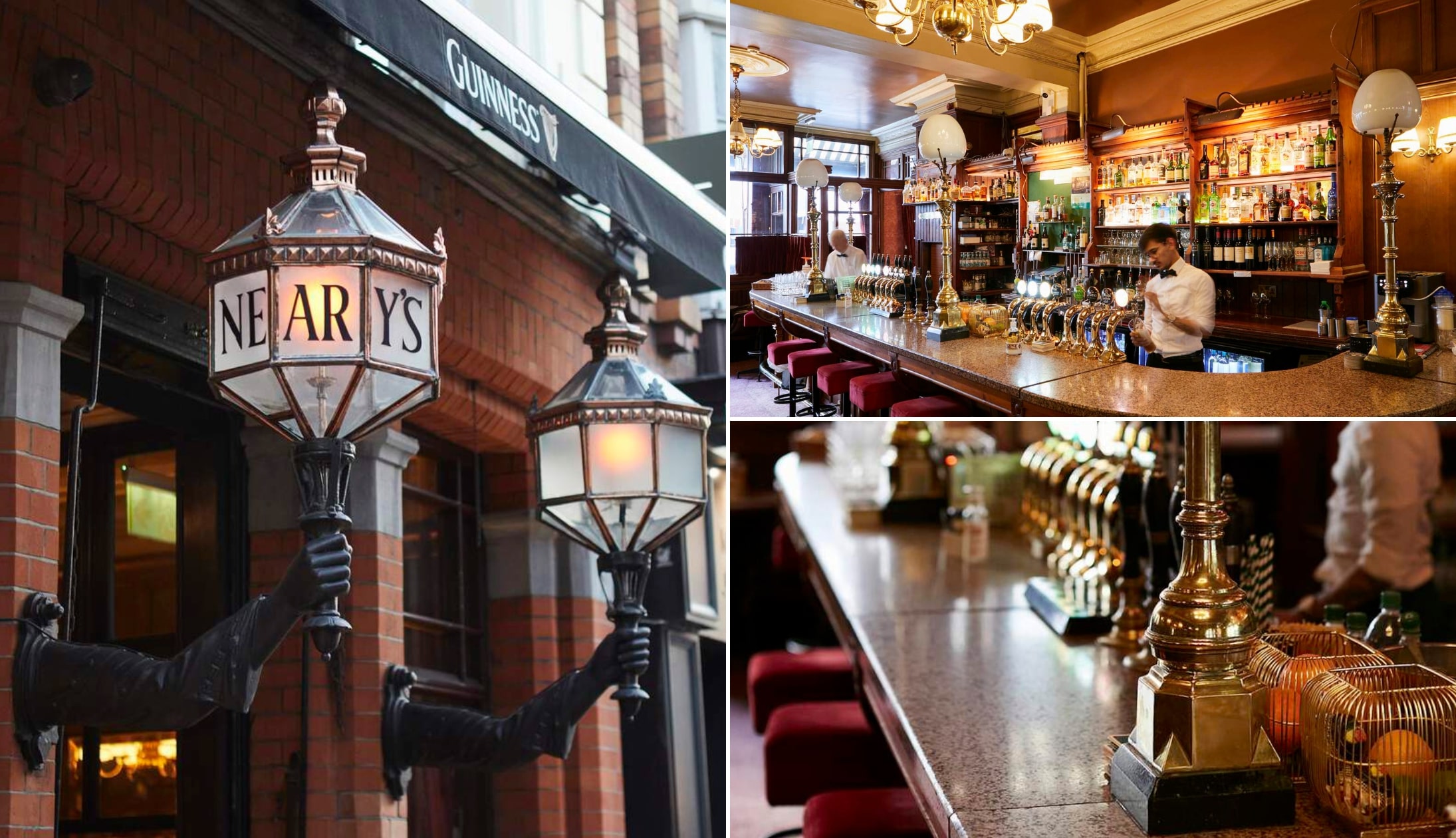
There’s plenty of great restaurants in Dublin that serve up a delicious lunch, but if you fancy a tasty bite in a lovely old-world-style pub, Neary’s just off of Grafton Street is hard to bate!
They serve simple dishes (like soups and sandwiches) that are packed with flavour and great value for money. Alternatively, Sprout and Co. on Dawson St. is also a great choice.
They have a range of hearty salad bowls, with good options for vegetarians and vegans.
Stop 2: Trinity College
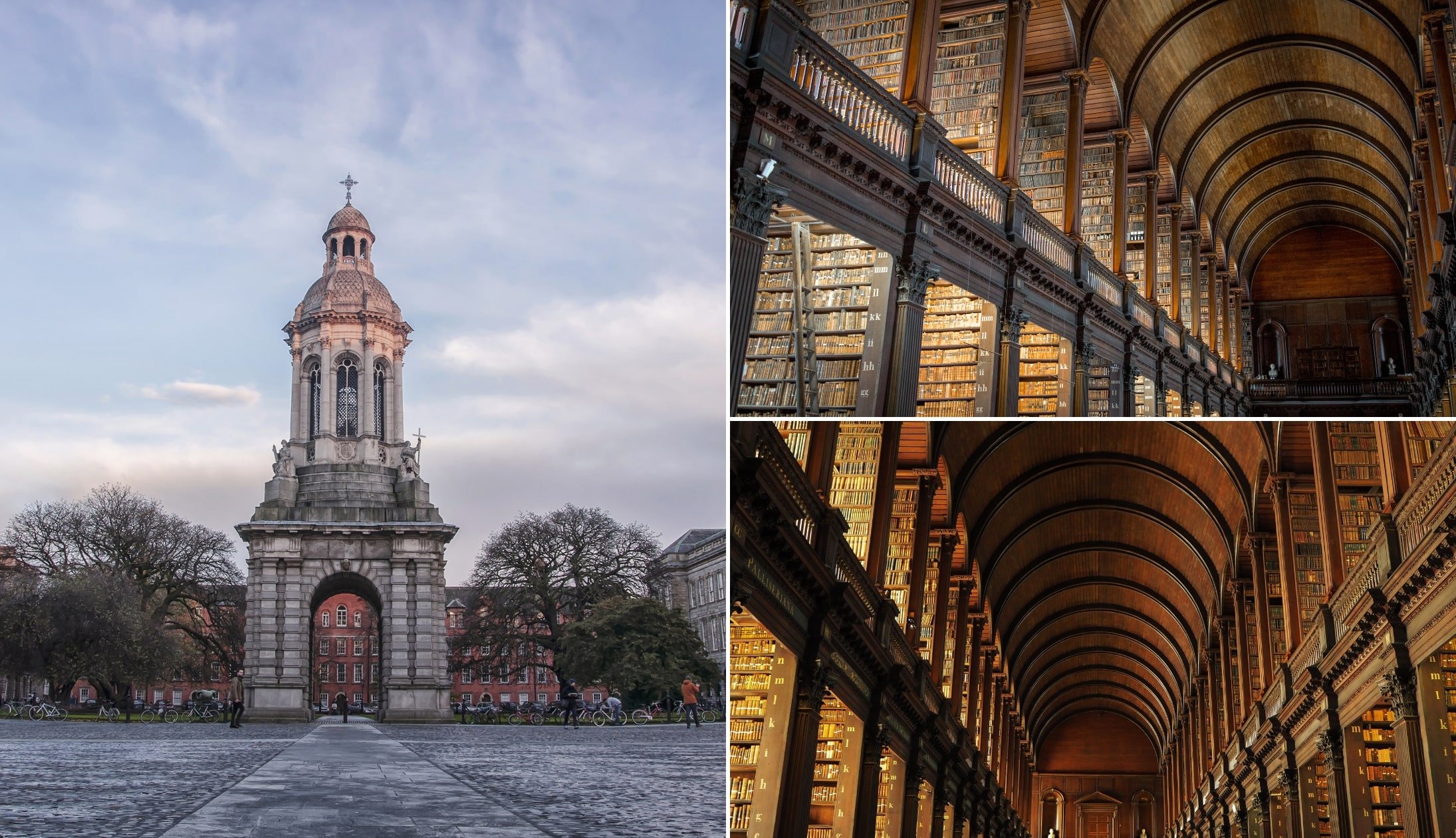
Now you’re all fuelled up, it’s time to head to Trinity College to see the Book of Kells, arguably the most famous cultural attraction in Dublin.
If you can, we highly recommend pre-booking your tickets online, as the queues can get really long (bordering on ridiculous!). This fast-track ticket allows you to dodge the queue and gets you into Dublin Castle, too!
Spend around one hour seeing the Book of Kells, walking around the exhibit, and taking in the beauty of the Old Library. After that, give yourself another 20 minutes or so to walk around the university campus.
Stop 3: The Ha’penny Bridge (via Temple Bar)
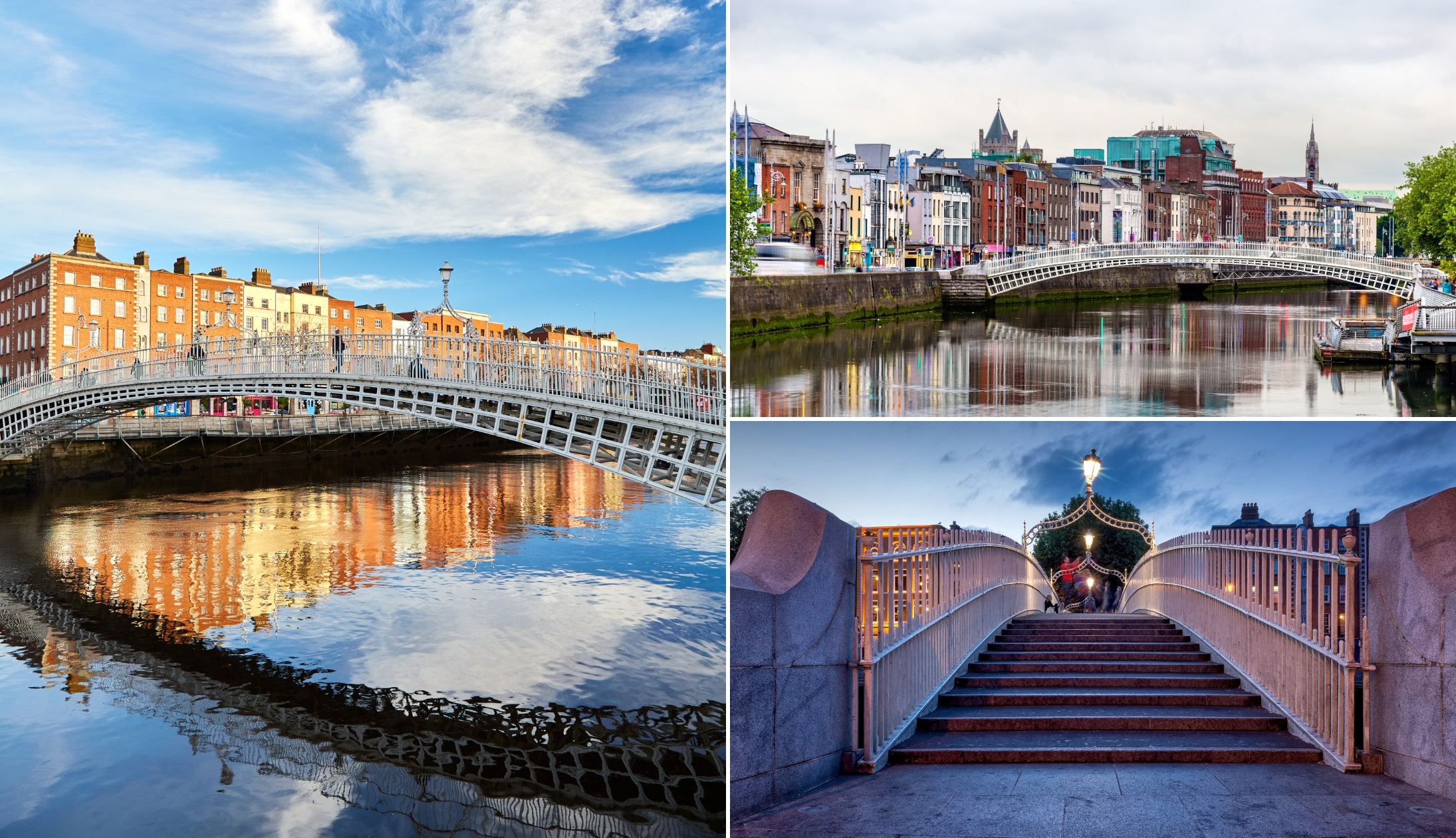
The Ha’penny Bridge (officially named the Liffey Bridge) dates back to 1816 and was the first pedestrian bridge over the River Liffey!
It’s a seven-minute walk from the Trinity Gates, but feel free to take your time as you make your way through the lively streets of Temple Bar.
Now, Temple Bar can be a bit of a tourist trap. If you fancy a pint, here are several pubs in Temple Bar worth trying (the Palace is our go-to).
If you feel like an afternoon coffee, there are some great cafes in the Temple Bar area or on the other side of the river. Joe’s Coffee and Vice Coffee are two of our favourites across the water.
They’re both just a short stroll from the north side of the Ha’penny Bridge.
Stop 4: Dublin Castle
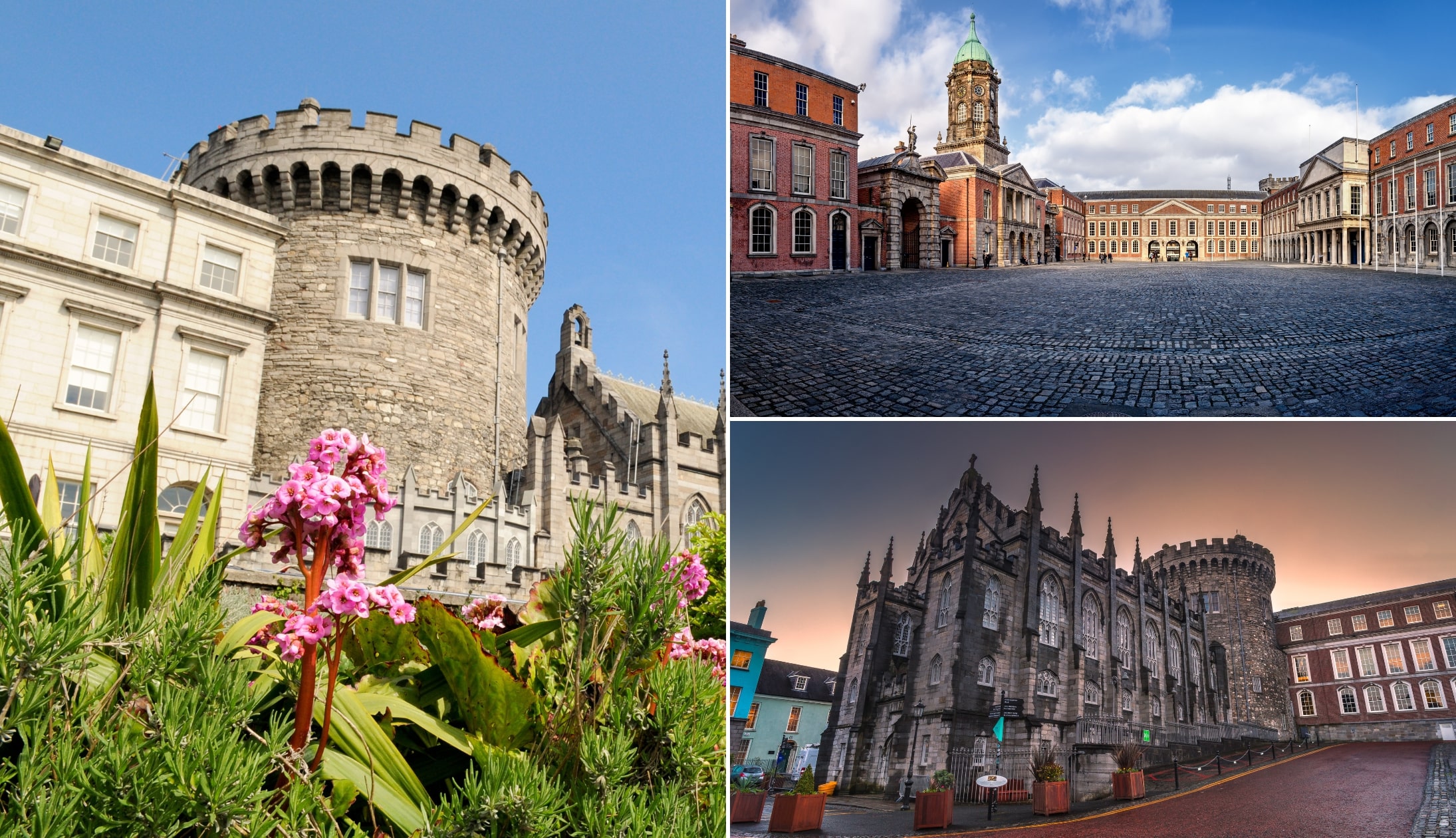
Next on the itinerary is Dublin Castle. Nestled in the city centre, the castle dates back to the 13th century and was the seat of the English for over 700 years.
Today, it’s an important government complex and the site of Presidential Inaugurations and key State events. The castle is around 10 minutes from the Ha’penny Bridge on foot.
There’s no admission fee to explore the grounds, but if you want to have a look inside you’ll need to purchase tickets for either a self-guided tour or a guided tour.
Guided tours include access to the State Apartments, Exhibitions, Chapel Royal, and the Mediaeval Undercroft. Self-guided tours include access to the State Apartments and Exhibitions only.
Tickets for guided tours can be purchased on the day of your visit at the ticket booth.
Stop 5: Christ Church Cathedral
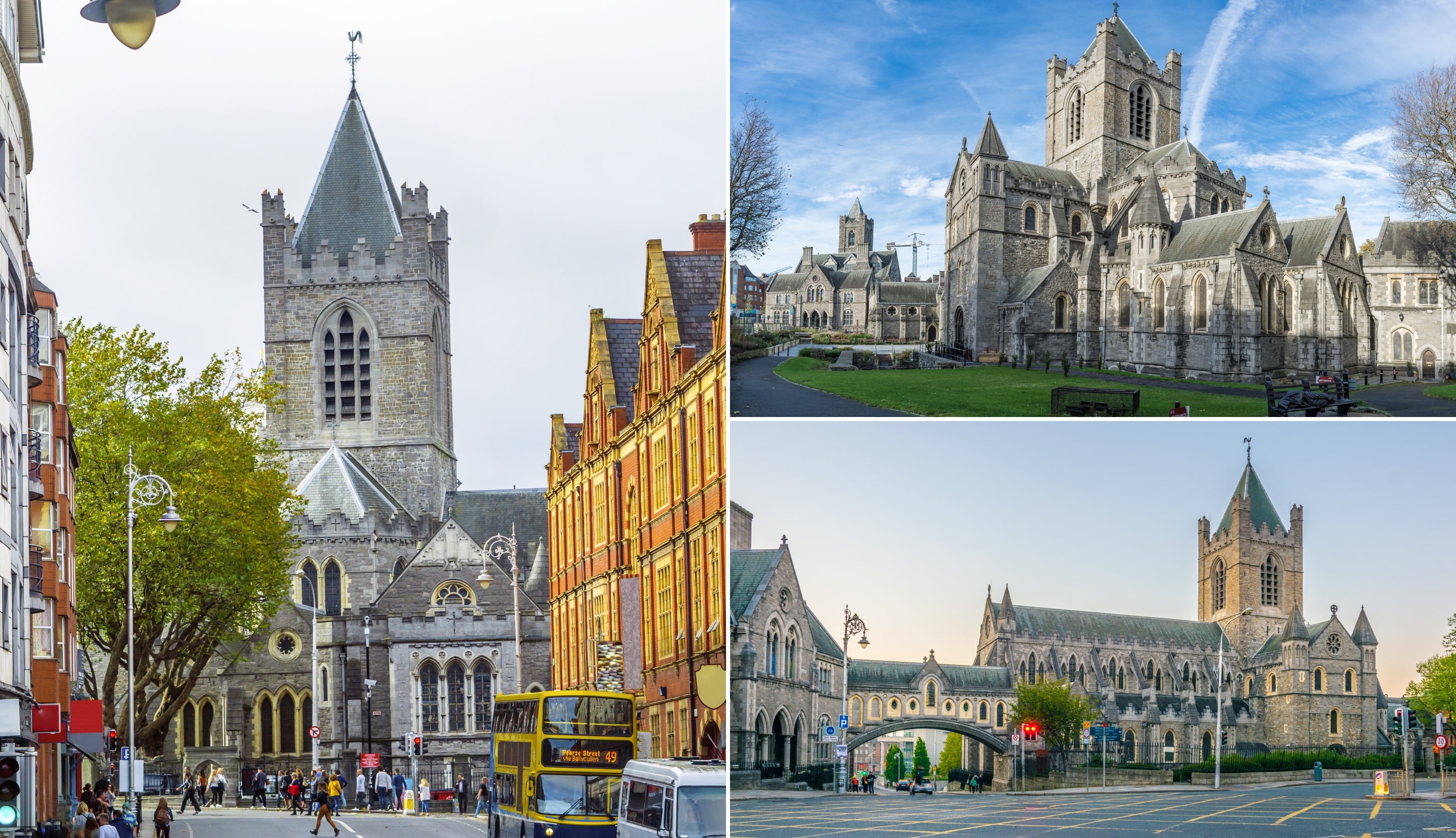
Christ Church Cathedral dates back to the early 11th century when it was founded under Sigtrygg Silkbeard, a Norse King of Dublin. It was rebuilt later in stone, largely thanks to the first Anglo-Norman archbishop, John Cumin, in the late 12th century.
The cathedral is only a 4-minute walk from Dublin Castle and a really interesting place to visit. Some highlights are the restored crypt houses, Strongbow’s tomb, and the Treasures of Christ Church exhibition.
You can grab a ticket online here – these include an audio guide that comes in several languages, with three themes to choose from – ‘Power and Politics’, ‘Music and Spirituality’, and ‘Christ Church and the City’.
Self-guided tours with an audio guide usually last around one hour.
Stop 6: St. Patrick’s Cathedral
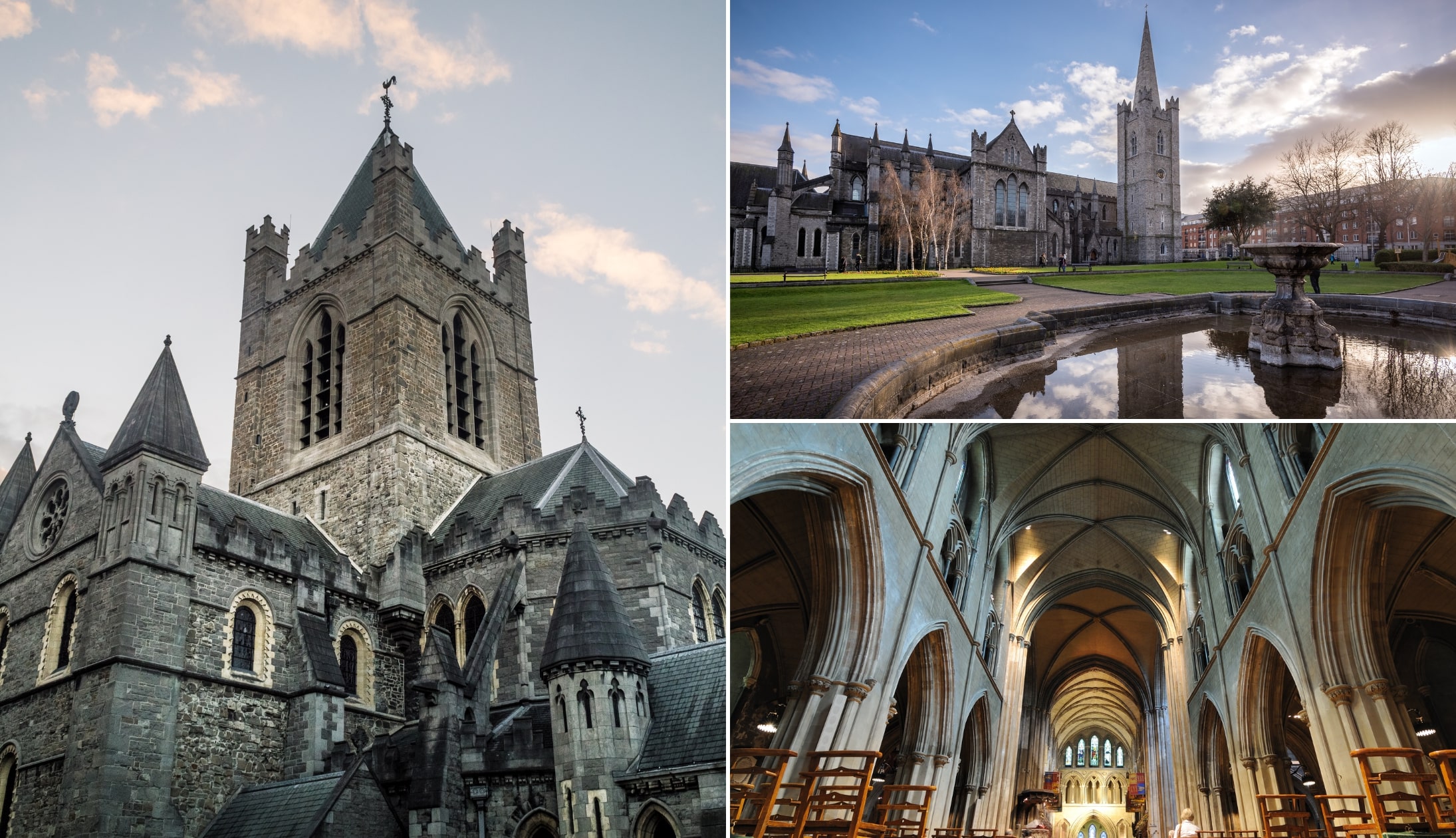
St. Patrick’s Cathedral is just a short 7-minute walk from Christ Church Cathedral. The magnificent cathedral is one of the city’s top attractions as well as one of the few remnants of Medieval Dublin!
It dates back to the 12th century and is Ireland’s largest cathedral. As you may expect, St. Patrick’s Cathedral has a long and rich history. The cathedral has fallen into disrepair and has been damaged several times, most notably in the early 19th century.
During this period, it was restored by none other than Benjamin Lee Guinness (the first Lord Mayor of Dublin and owner of Guinness).
Stop 7: Teeling’s Distillery
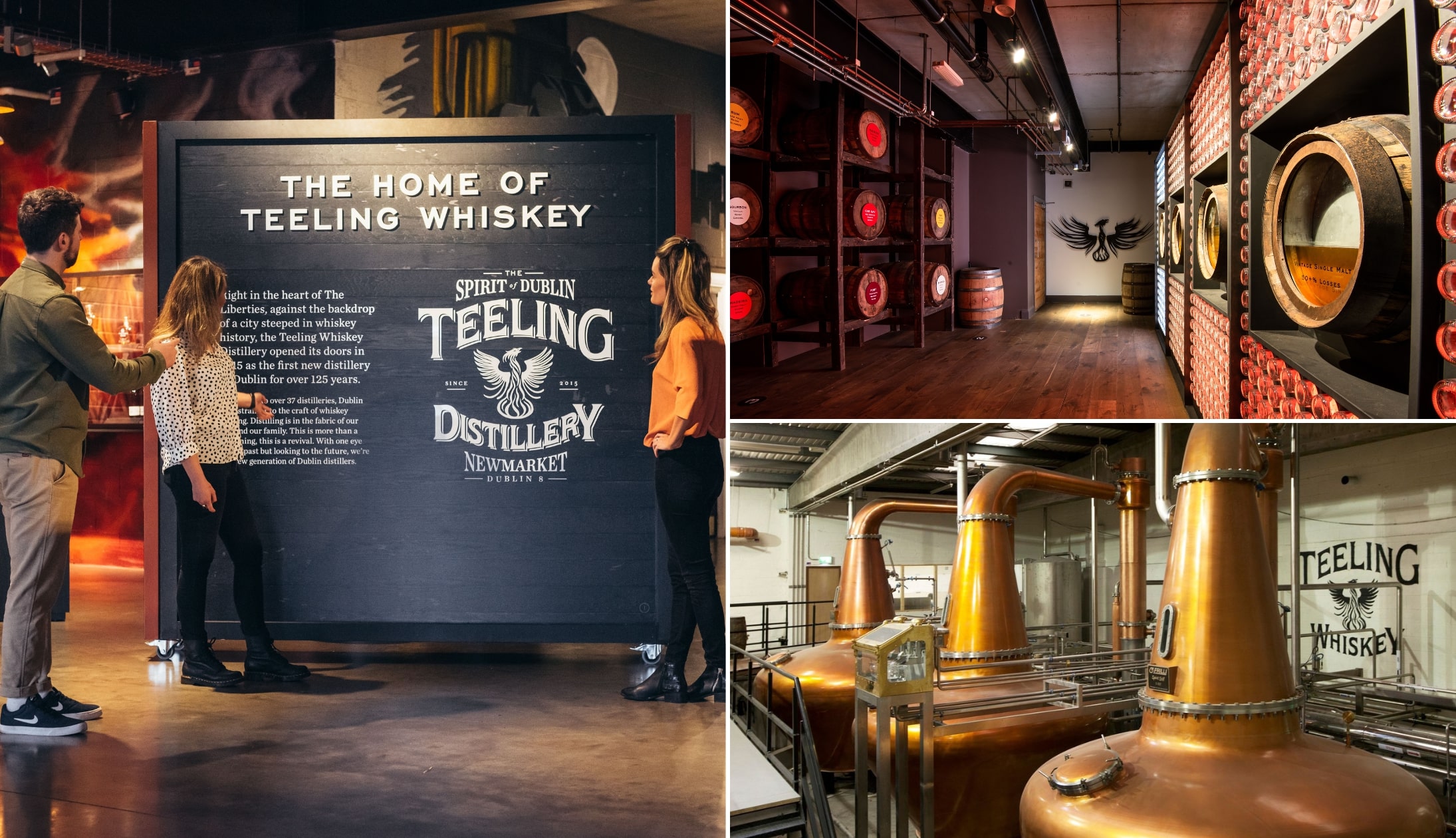
Once you’ve had your fill of St. Patrick’s, head on over to the Teeling Distillery, an 8-minute walk away. Founded by the Teeling family in 2015, the Teeling’s Distillery was the first new distillery to open in Dublin in over 125 years!
However, the family’s expertise span back generations, as they established a small craft distillery on Marrowbone Lane in 1782. Today, the new distillery stands just a few streets away from the family’s ancestral distillery.
They have several tours available, each of which has great reviews online. You can grab a ticket online before you go that includes a fully-guided tour of the distillery, followed by a tasting.
Stop 8: Dinner, drinks and live music
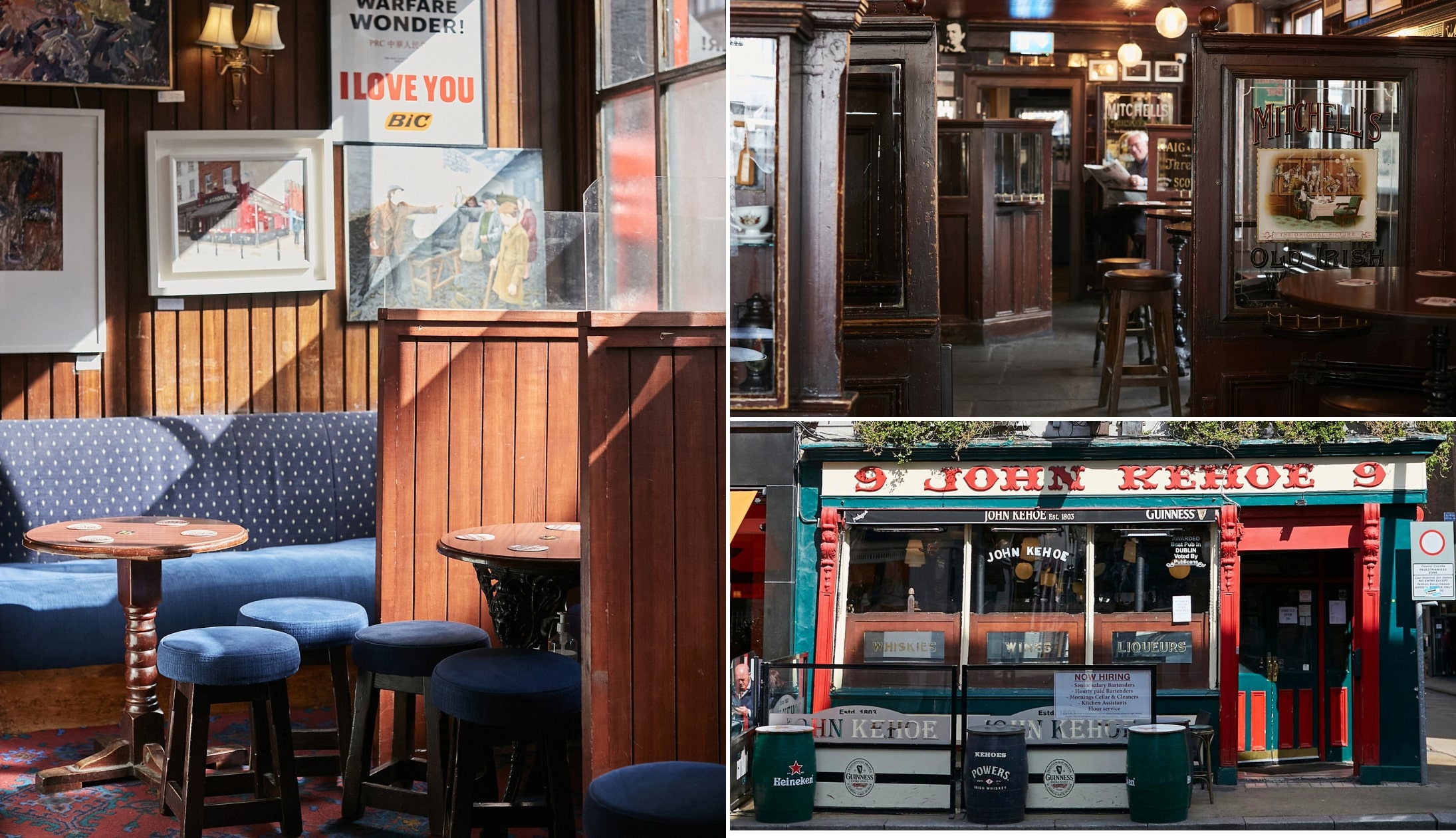
By now, you must be getting hungry.
Dublin has heaps of options for dinner, but we’ve got a couple of suggestions for you!
Our dinner recommendations
If you’re looking for something close by, Spitalfields is a stone’s throw from the Teeling’s Distillery. It’s a little bit pricey, but the atmosphere is great and the food is top-notch!
However, Spitalfields is 16+ only, so it’s not suitable for young families. Otherwise, check out The Bull and Castle across the street from Christ Church Cathedral.
Their menu has F.X. Buckley Steaks (renowned in Dublin), plus a great selection of local craft beers. The restaurant can get booked out pretty quickly, but you can always eat in the bar upstairs, which also has steak on the menu.
Live music and trad bars
If you want a taste of what Dublin’s best pubs are, see our detailed Dublin pubs guide. If you’re solely looking for places that do exceptional Guinness, see our guide to Dublin’s best pints.
If you fancy a bit of live music, there’s plenty on offer. Pipers Corner on Marlborough St. has some great tunes, with live music from 9pm every Tuesday to Saturday, and from 8pm on Sunday.
The inside has more of a modern feel, but you’ll be guaranteed authentic Irish music.
For the full experience, O’Donoghues Bar on Merrion Row has live music every night of the week. It’s about as traditional as Irish pubs get, with a brilliant atmosphere.
The Celt is another fantastic pub with live music every night from 9pm, although it’s not always traditional.
Day 2: Walks on Dublin’s coast
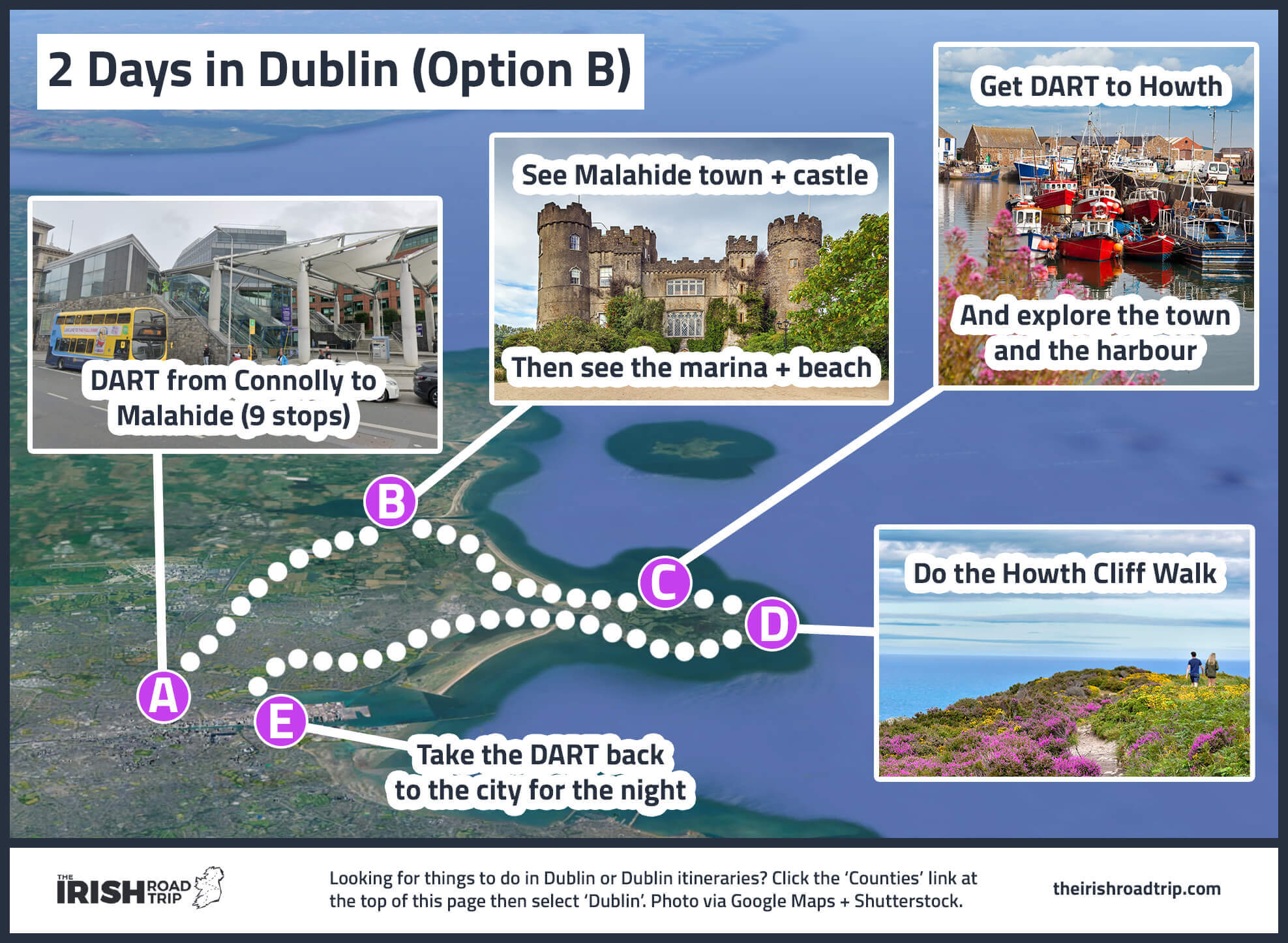
Day 2 Option B shows you what to do in Dublin if you want to escape the city centre.
This makes a great day trip to Dublin for those that have visited the city and that want to explore the wider county without having to travel too far.
1. Catch a train from Dublin City to Malahide

Malahide is one of the more popular day trips from Dublin, and it’s very straightforward to get to.
Here’s what to do:
- 1: Go to Connolly Station. Buy a ticket for the DART (train)
- 2: Get the DART heading in the direction of Drogheda
- 3: It’s 9 stops to Malahide and it takes around 30 minutes
- Tip: Try sit on the right-hand side of the carriage for glimpses of the sea
2. Malahide Castle and village
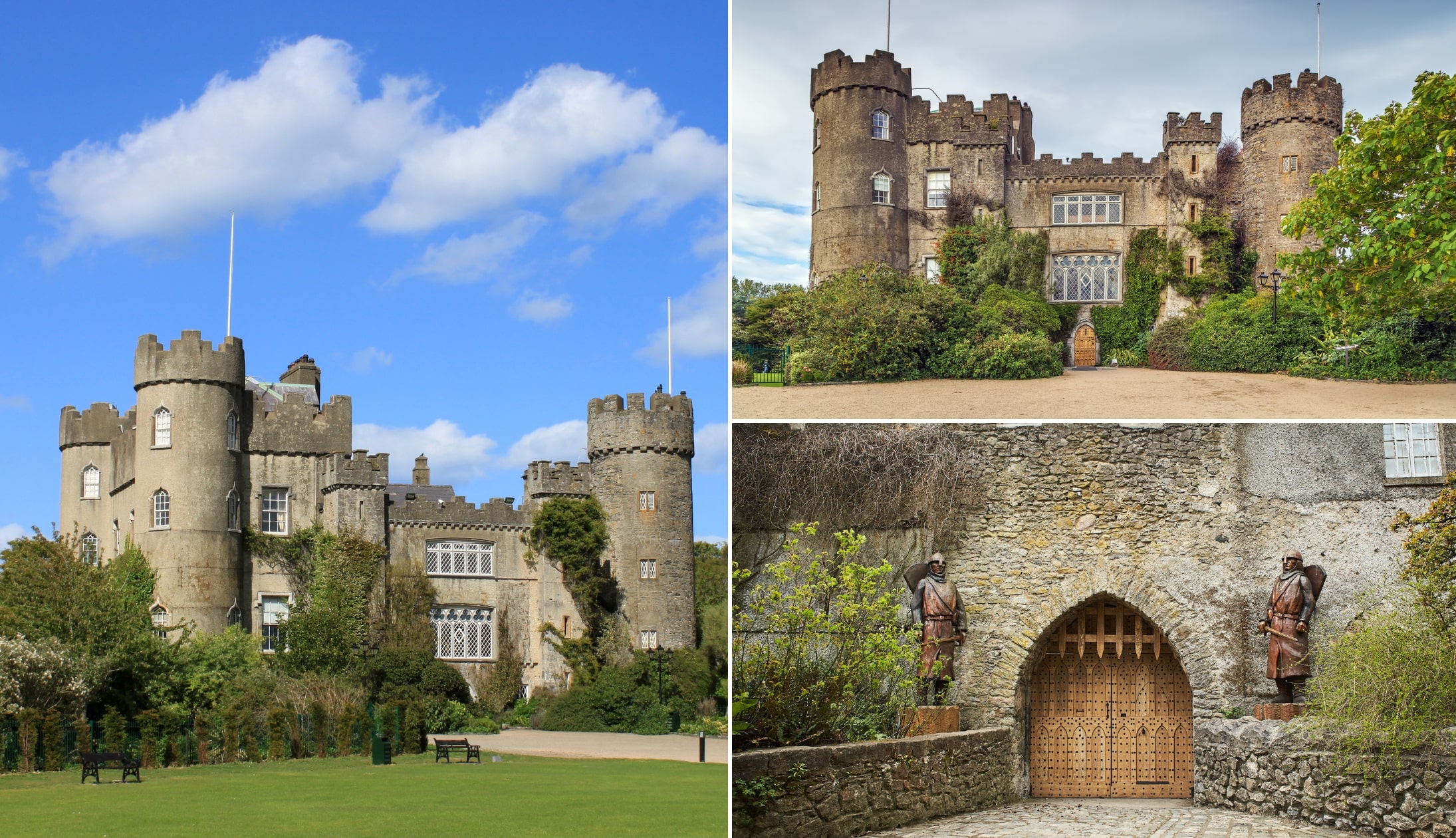
When you leave the DART station, take a right and you’ll see the entrance to the grounds of Malahide Castle.
You have the option to join a guided tour of the castle, or you can admire its stunning architecture from a distance.
After exploring the castle, make your way into the town center. Enjoy a coffee or some breakfast, then stroll down to the Marina for a look around.
If you’re inclined to spend more time here, there are plenty of things to do in Malahide, including the coastal walk to Portmarnock.
3. Take the DART from Malahide to Howth

Howth is accessible from Malahide, although you should be aware there’s no direct train connection; a transfer is necessary.
- 1: Board the DART at Malahide heading towards Bray
- 2: Alight at Howth Junction after three stops
- 3: Switch to platform 2 for your DART connection to Howth
4. Grab a light bite at Howth Market

As you exit the station, Howth Market is directly across the road.
You’ll find a variety of offerings here, from coffee and sweet treats to savoury snacks.
Although small, the market is a perfect spot for a quick stop before you embark on your upcoming walk.
Related read: Have more time to play with? See my guide to 1 day in Dublin or 3 days in Dublin
5. Tackle the Howth Cliff Walk

The Howth Cliff Walk is one of the most scenic walks in Dublin, and it begins right from the village.
- Start/finish: Howth DART station
- Length: 6 km / 2 hours
- Difficulty: Moderate
If cliff walks aren’t to your liking, consider a pleasant stroll along the pier instead.
This walk offers scenic views of Ireland’s Eye and the Church of the Three Sons of Nessan. The journey along the pier takes about 25 minutes.
6. Sample the seafood in Howth village

After a good wander and soaking up those stunning views, it’s time to grab a bite.
As you’ll be right by the sea, you’ve gotta try the local seafood—and there are some excellent restaurants in Howth for a feed!
For a fancy sit-down, head to Aqua.
If you’re in the mood for something quick and classic, swing by Beshoff Bros for fish and chips—just watch out for those cheeky seagulls!
7. A cosy pint
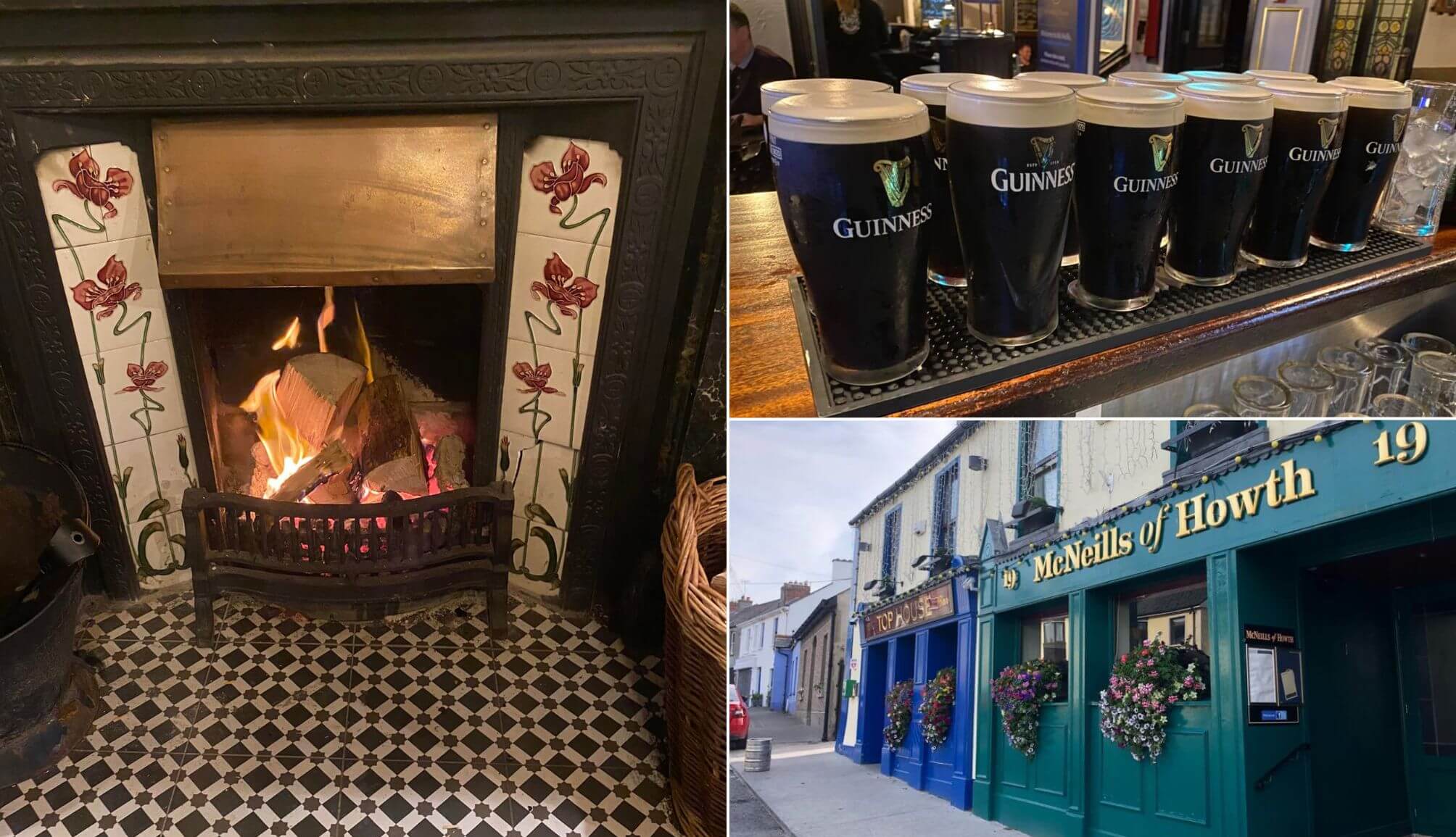
It’s after 16:00 and you’re on your holidays, so it’s time for a tipple.
There are some mighty pubs in Howth. The ones I return to over and over are:
- The Abbey Tavern: A traditional Irish pub with an extensive menu
- McNeills of Howth: A lovely, cosy pub that does great Guinness
8. Get the DART back to the city

There’s a direct DART from Howth to the city centre, which takes just 30 minutes and stops at Connolly Station.
Now, a warning – the area around Connolly is one of the areas to avoid in Dublin City, so don’t hang around here!
If you fancy heading out for a night cap, here’s some recommendations:
- Nearys: A wonderful pub that’ll make you feel like you’ve stepped back in time
- Kehoes: A lively, traditional pub that does great Guinness
- The Palace: One of Dublin’s most beautiful pubs (and one of the only pubs in Temple Bar I’d drink in)
Day 3: Wicklow
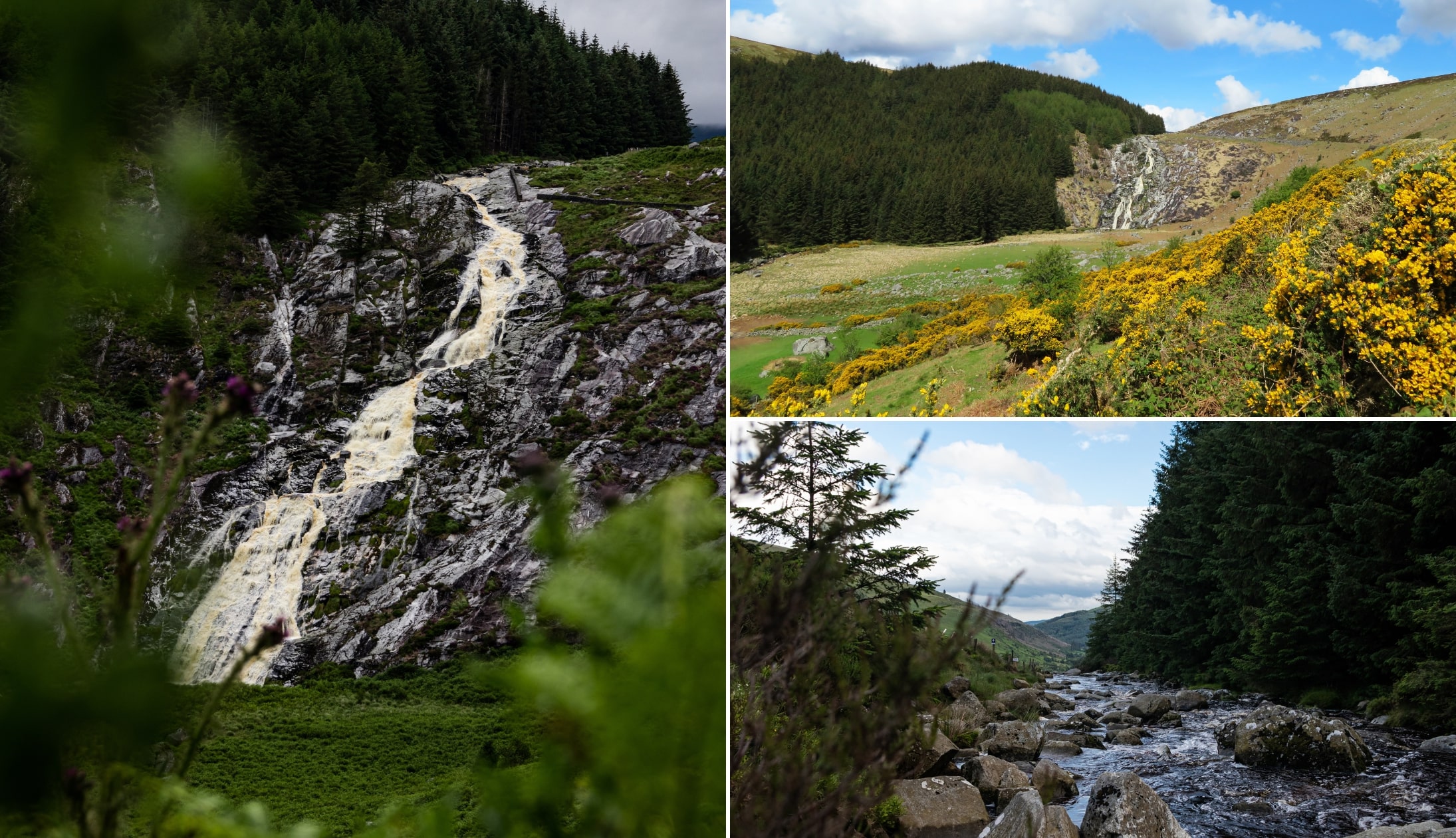
On day 3 of your 7 days in Ireland itinerary, and today, you’ll be exploring Wicklow, also known as the Garden of Ireland.
You’ve got a big day ahead of you, so make sure to grab a hearty breakfast before you head off on your bus tour.
The tour leaves near the Molly Malone Statue on Suffolk Street, so if you’d rather eat out, we recommend heading to Keoghs Cafe (just around the corner from the statue) for breakfast and a coffee.
Getting to Wicklow option 1: For those that want to hike

We definitely think a guided tour is the best way to explore Wicklow without a car, but if you can’t book onto the tour above, we suggest using St. Kevin’s Bus to get to Glendalough.
This is a good option for those that want to try a hike, like the Spinc Loop pictured in the map above. Please do check the return times for the bus before you set off!
Getting to Wicklow option 1: A guided day trip
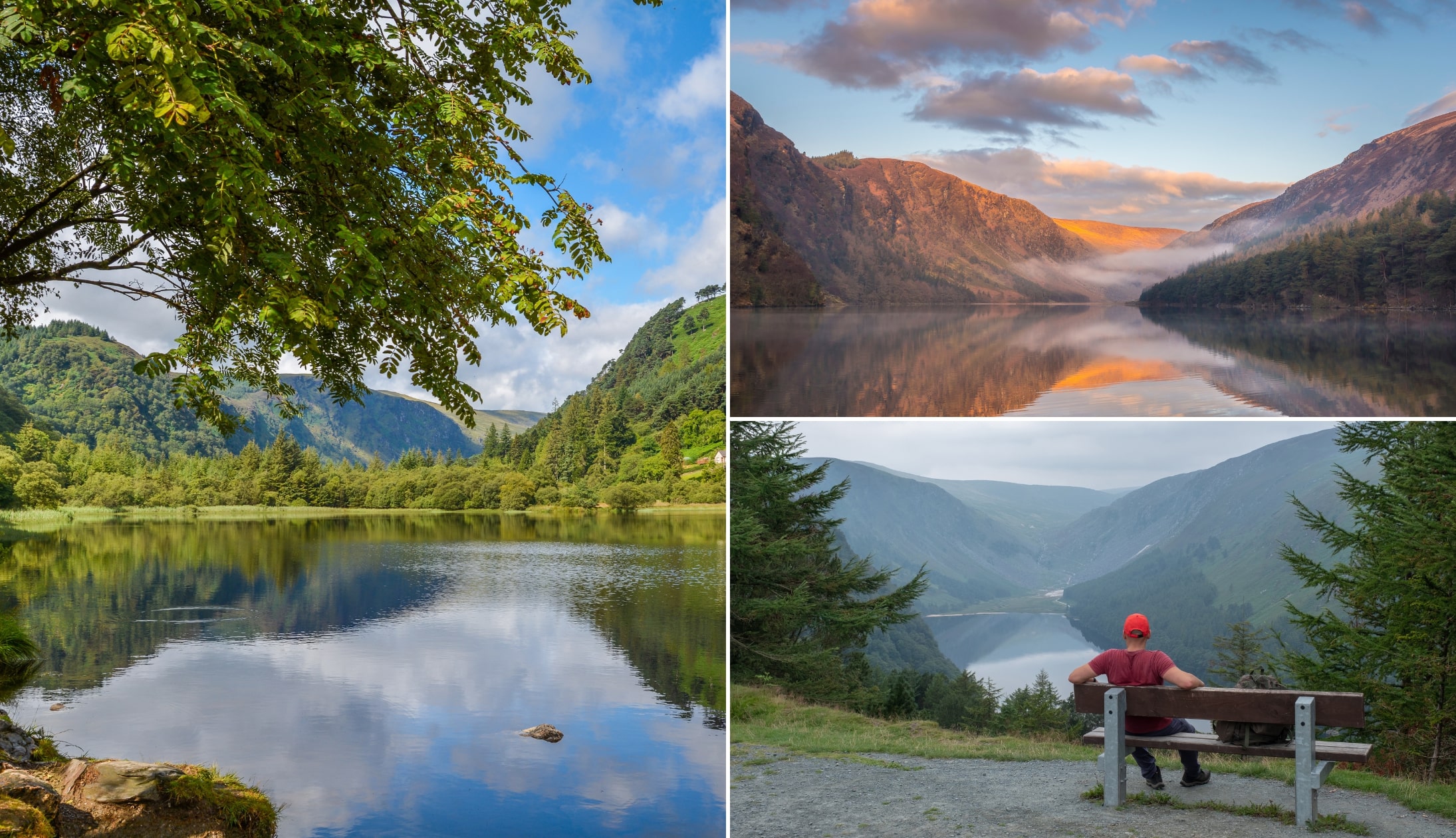
This 8-hour day trip includes a fully-guided day tour of Wicklow’s best sights and includes a visit to Powerscourt Gardens (you’ll need to pay into the gardens separately)!
You’ll be driven along the Sally Gap, see iconic film locations used in P.S. I Love You, Brave Heart, and Vikings, and explore an ancient 6th-century settlement. I’ll take you though the main stops below.
Stop 1: The Sally Gap Drive
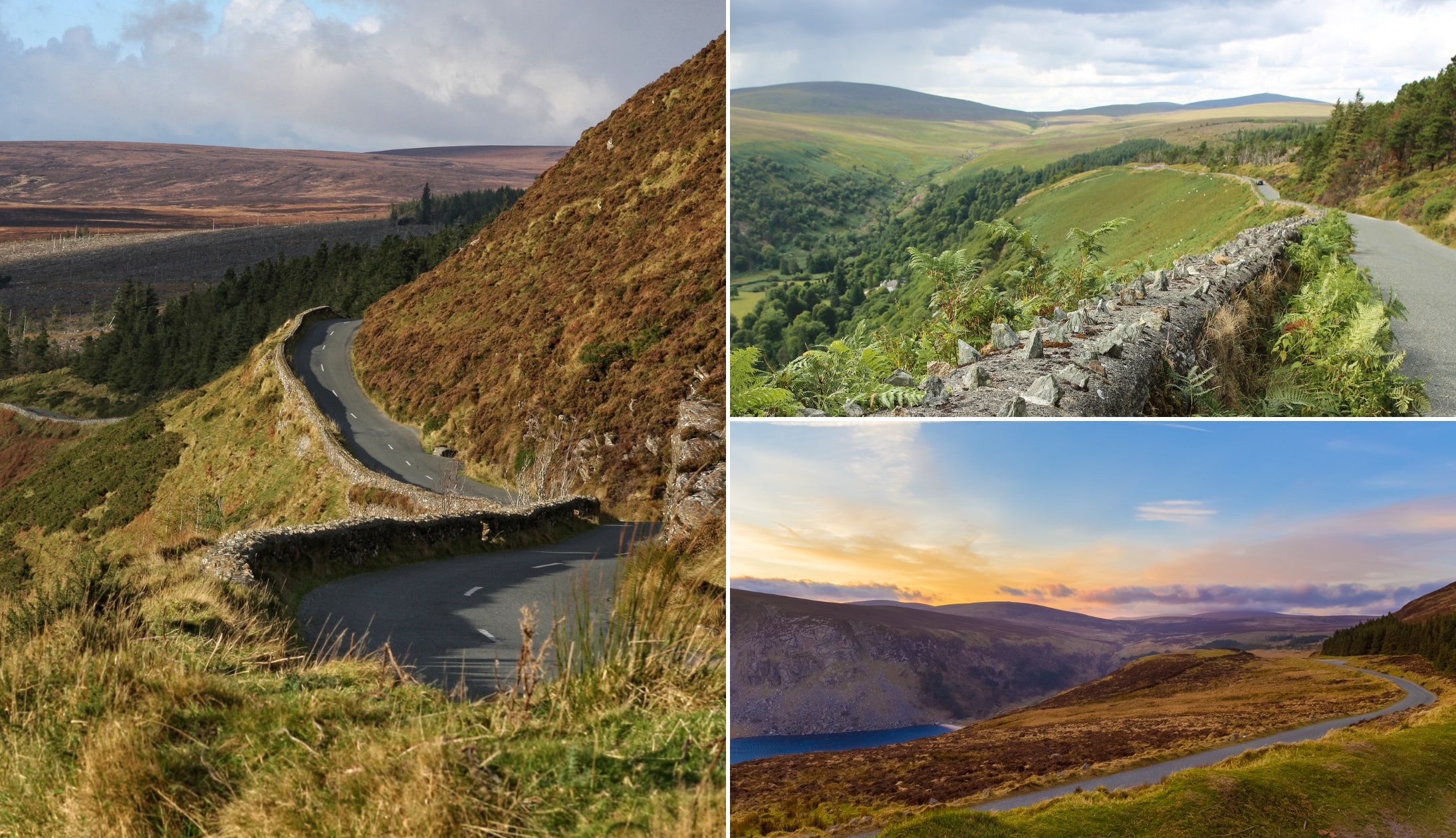
OK, this isn’t really a stop. The Sally Gap is a famous crossroad on the Old Military Road through the Wicklow Mountains. The road was built in the early 1800s following the Irish Rebellion of 1798.
It’s a beautiful drive, with spectacular views of the mountains and blanket bog. One of the most notable attractions in this area is Lough Tay (AKA Guinness Lake).
Another is Glenmacnass Waterfall. However, the mountain views and the narrow roads that you drive along are what’ll really make this a corner of Ireland that you won’t forget.
Stop 2: Glendalough Monastic City
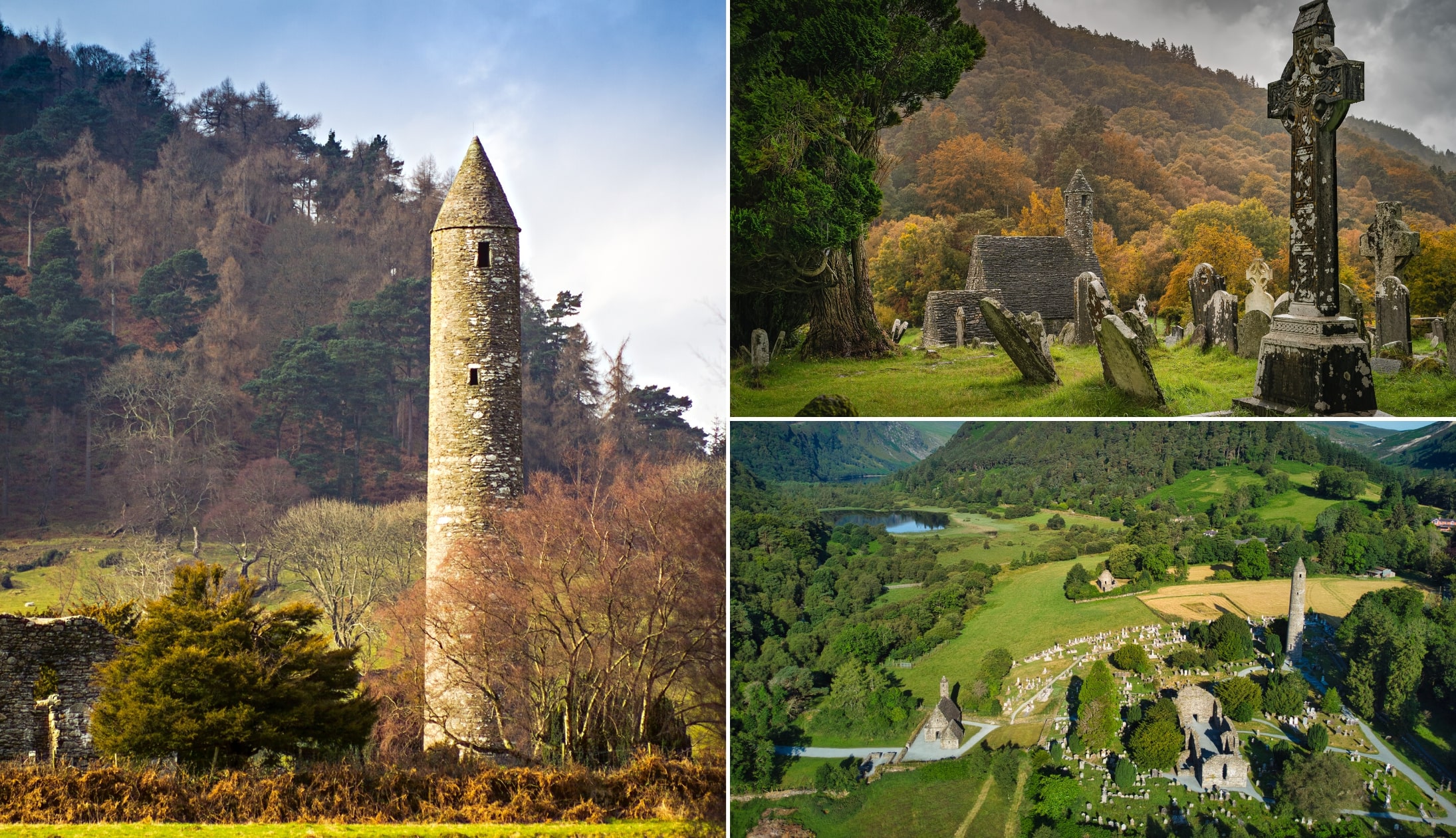
The Monastic City was one of the most important monastic sites in this part of the country. The city was founded by St. Kevin in the 6th century and went on to become one of Europe’s most famous religious sites!
Right next to the settlement, there’s a visitor centre where you can enjoy the exhibits and learn more about the site and what made it so important.
After you’re all clued up, walk the 2 minutes to the monastic site and admire the Glendalough Round Tower, Cathedral, and St. Kevin’s Church.
Stop 3: The Lakes at Glendalough
Along the way, you’ll be passing by Glendalough Upper Lake and Lower Lake. Carved out by a melting glacier long ago, the upper lake is spectacular, nestled between trees and mountains.
It’s home to St. Kevin’s Bed, a small cave where St. Kevin lived as a hermit for several years before he founded the monastic city.
The lower lake is the smaller of the two, but equal in beauty, with gorgeous views of the mountains and forest.
Stop 4: Powerscourt Gardens
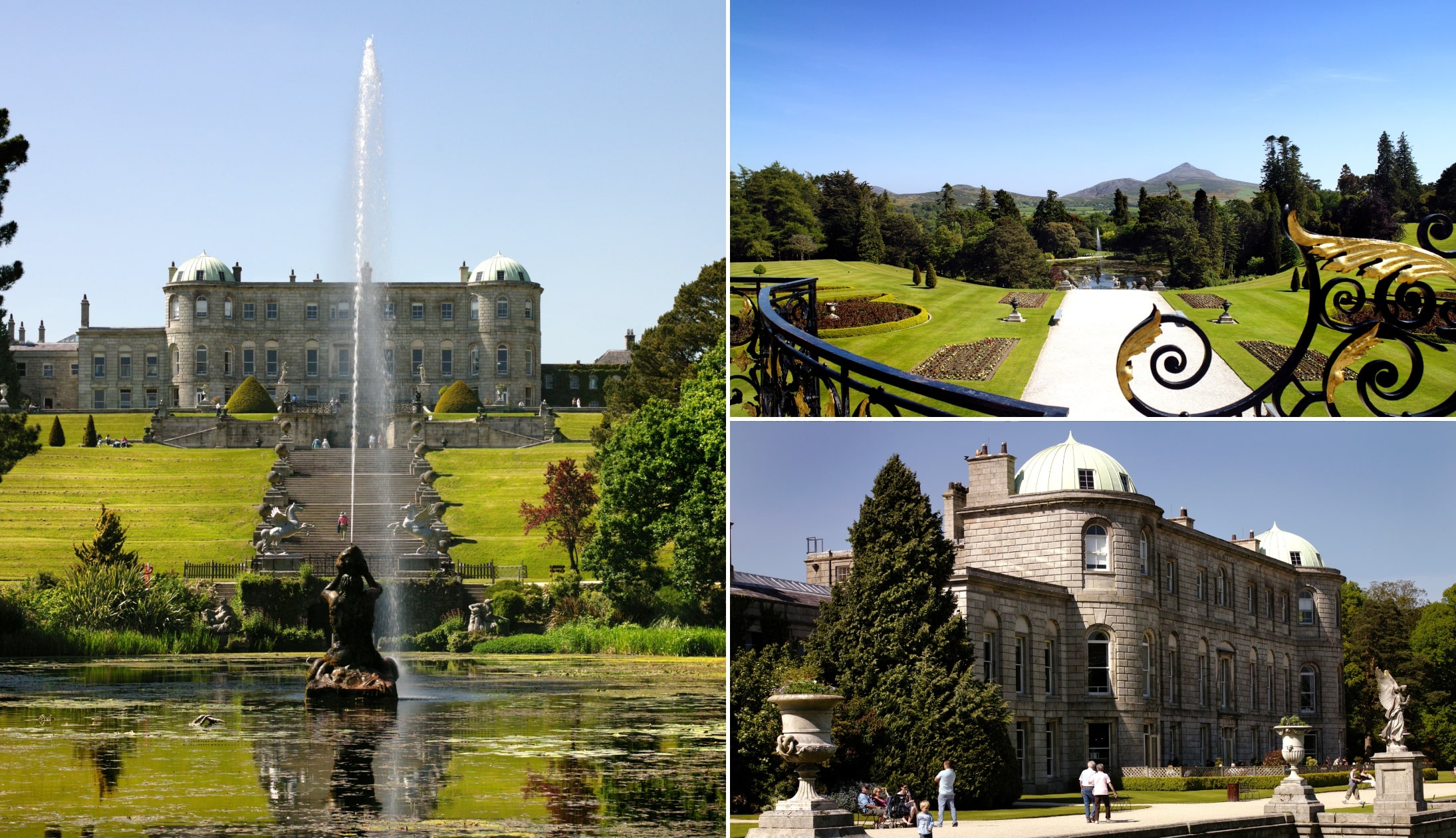
The Powerscourt Gardens are filled with grandeur and were voted by National Geographic as one of the world’s Top Ten Gardens!
The 47-acre Powerscourt Gardens are managed by a team of five gardeners, who tend to the Walled Garden, the Japanese Garden, the Italian Garden, and more.
The grounds are filled with ornamental lakes, formal gardens, and statues, making them perfect for a leisurely stroll!
Stop 5: Back to Dublin for the night
After a long day of sightseeing, you’ll be heading back to the city. Nip into your hotel to freshen up before dinner, or if you’re not fussed, head out for something to eat as soon as you get back.
Tonight we have a few suggestions for dinner. If you’re feeling like splashing out, head to Chapter One, a Michelin-starred restaurant in the basement of the Dublin Writers Museum.
The food is pricey, and a four-course dinner will set you back €120 per person, but, the mix of modern Irish and French cuisine is divine and the atmosphere is laid back and relaxing.
If, one the other hand, you don’t feel like going too big tonight, we’d recommend hitting up Bunsen in Temple Bar. They have delicious burgers and the value for money is great.
Dublin is full of great pubs, but some of our suggestions for tonight are Bowes on Fleet Street (for the Guinness) and Mulligans of Poolbeg Street.
Mulligans has had a long history over the years, and several people of note have drank at the pub, like Judy Garland and John F. Kennedy!
For trad music, take a look at our previous day’s suggestions, or have a wander and pop into a local pub if the music is to your liking!
Day 4: Meath and Louth
On day 4 of the 7 days in Ireland itinerary, you’ll be heading out to County Meath, known for its archaeological sites.
It’s another jam-packed day, so make sure to have a hearty breakfast and to pack some snacks in case you get peckish on the road.
Today’s 10-hour organised day trip leaves from the same spot, near the Molly Malone statue. There aren’t too many breakfast options open this early, so once again we recommend Keoghs Cafe as they open at 6am.
Keep reading below for an overview of the tour, but please note that 1, you may not always physically stop at all of these sights and 2, these tours are subject to change, so always check with the provider in advance.
Stop 1: Hill of Uisneach
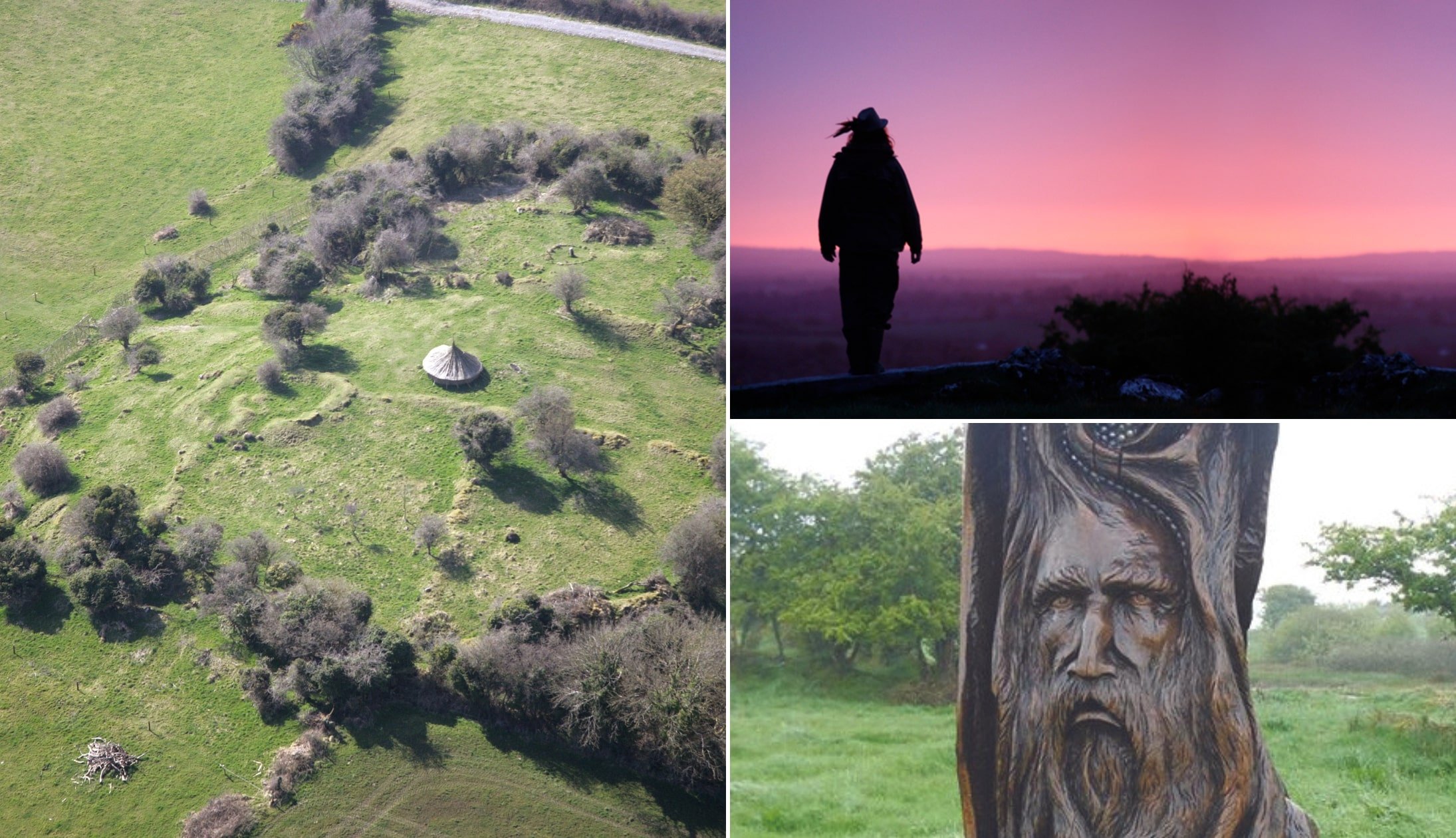
The Hill of Uisneach is an ancient ceremonial site that’s home to numerous monuments and earthen artefacts.
It’s an interesting spot that’s steeped in folklore, and according to Irish mythology, the hill is the centre of Ireland and where everything began!
At the site, you’ll find a conjoined ringfort, arguably the most important monument on the hill, a monument known as St Patrick’s Bed (stood at the highest point on the hill), and the Stone of the Divisions, a group of stones said to mark the exact centre of Ireland.
Stop 2: Fore Abbey
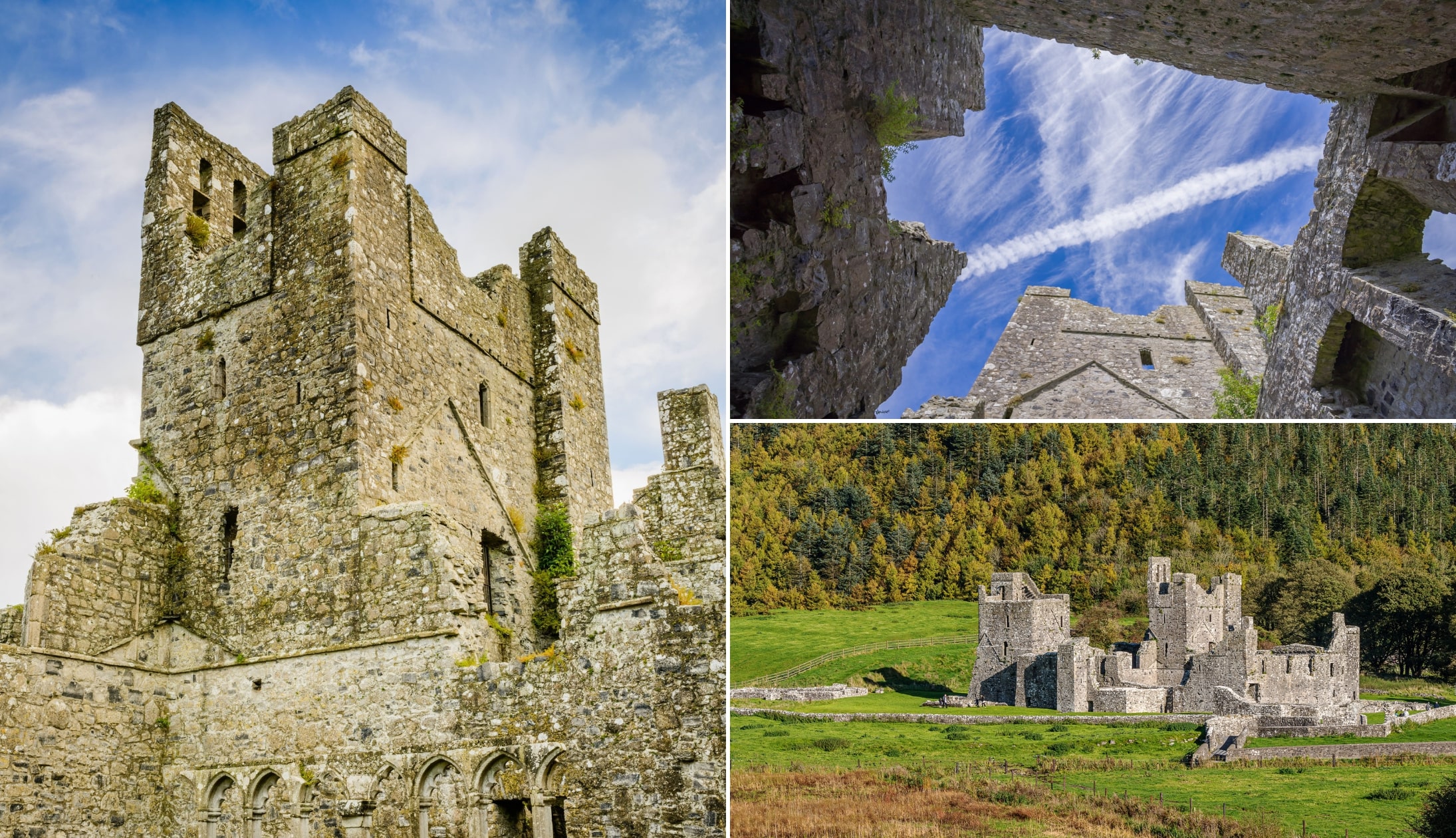
Fore Abbey is the ruin of a Benedictine Abbey founded by St. Feichin in the 7th century. The ruins are in good condition with several features that are still visible to this day, including St. Feichin’s Church which was built in 900 AD.
The abbey is known for its legendary “Seven Wonders of Fore”. These are the monastery in the bog; the water that flows uphill; the tree that has three branches; the mill without a race; the water that doesn’t boil (in St. Fechin’s holy well); the anchorite in a cell; and the lintel-stone raised by St. Fechin’s prayers.
Aside from the wonders, Fore Abbey is also well known for the Fore Crosses, 18 crosses that are spread out over 10km.
Stop 3: Loughcrew Passage Tombs
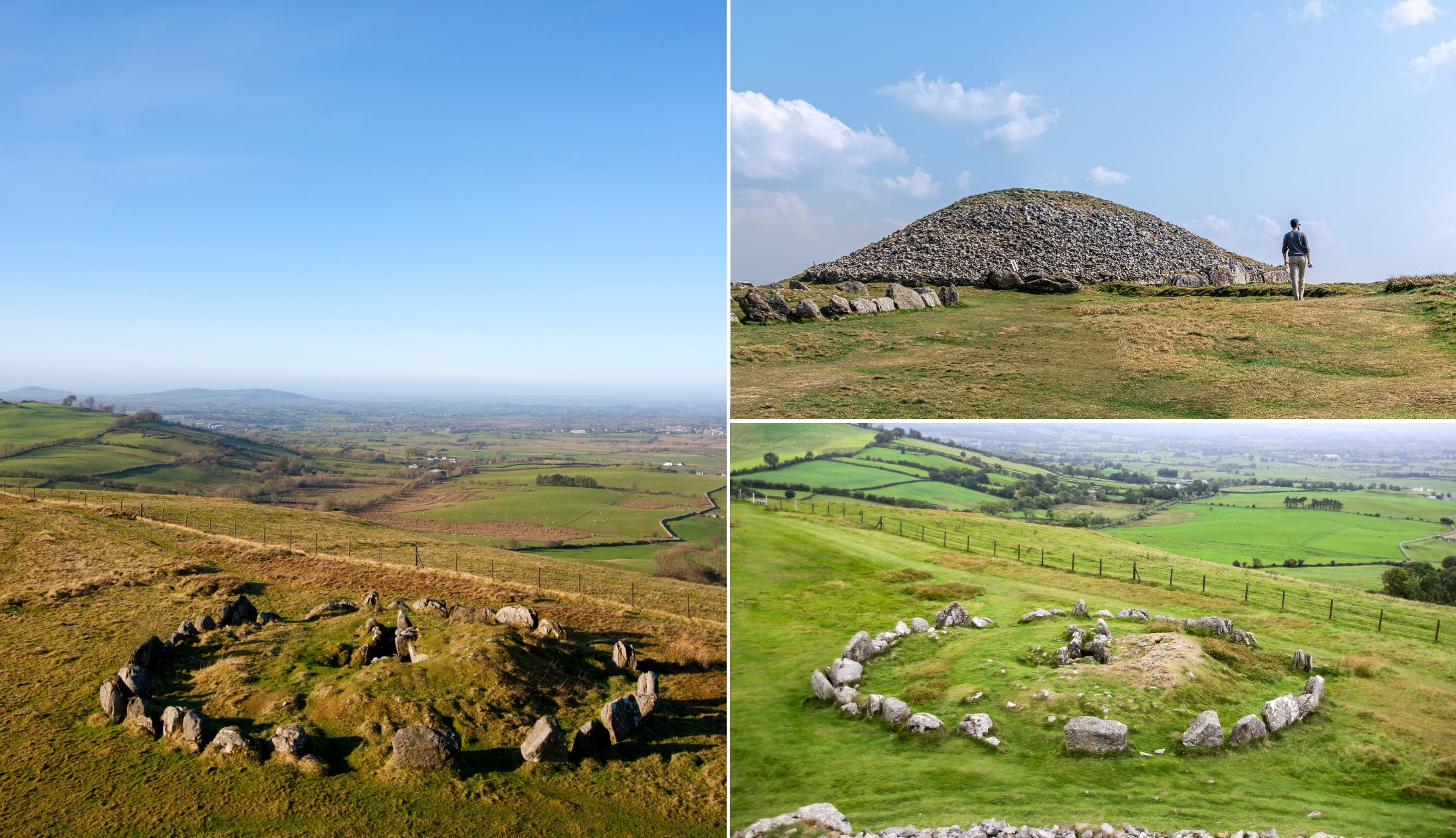
The Loughcrew Passage Tombs, or Loughcrew Cairns, are a group of neolithic passage tombs that date back to 3000 BC.
Cairn T is the largest of the tombs and can be seen from many miles away. It contains magnificent examples of neolithic art and is perfectly aligned to the sunrise during the spring and autumn equinoxes.
Like Fore Abbey, this site is also entangled in folklore. According to local legend. The huge throne-like boulder (nicknamed the Hag’s Chair) on the Cairn’s north side was the seat of an old witch!
Stop 4: Trim Castle
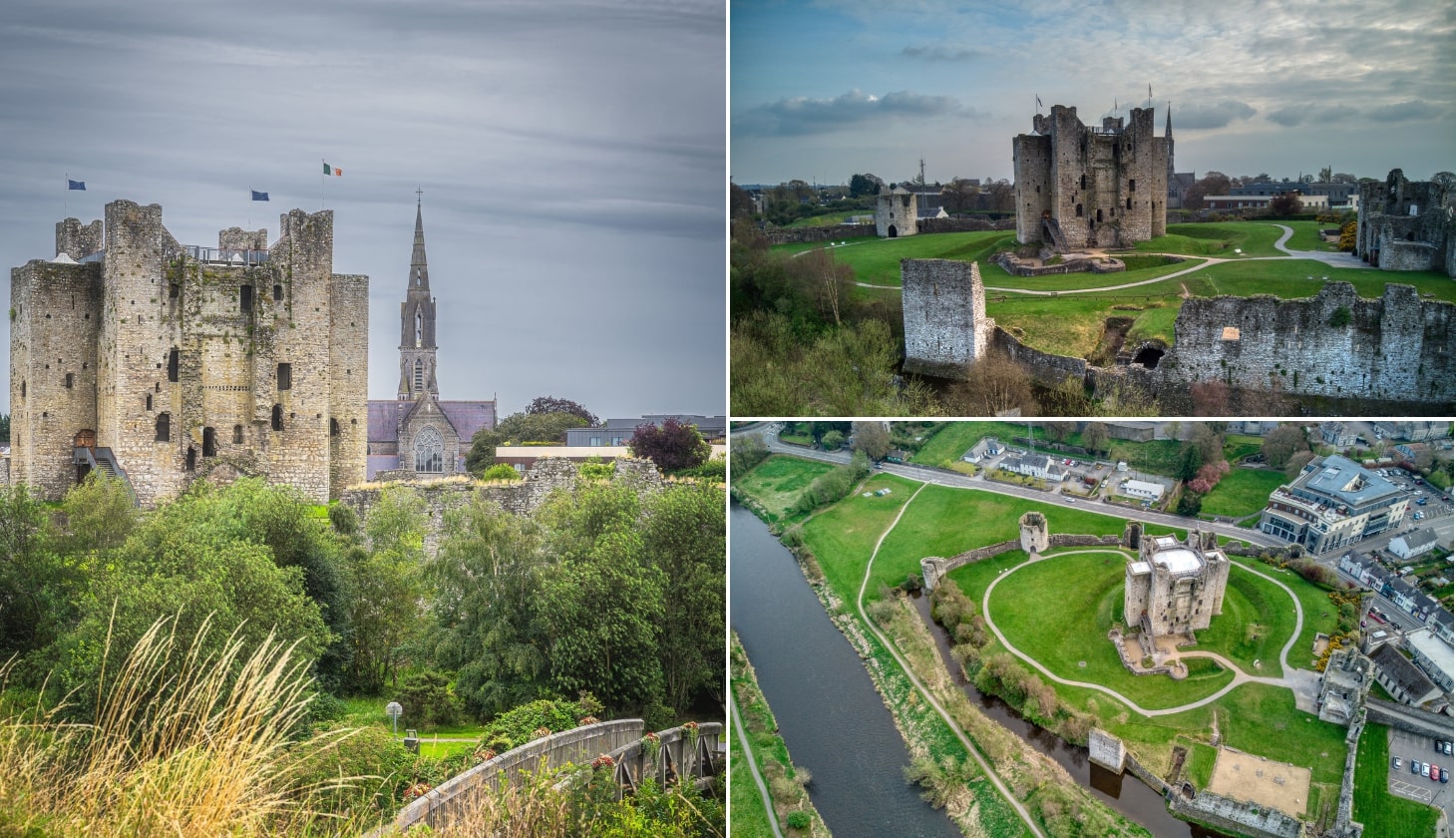
Trim Castle is Ireland’s largest Anglo-Norman fortification. It’s very impressive with an imposing presence that’ll catch your eye from afar as you approach the town.
The Castle dates back to the 12th century and took Hugh de Lacy and his successors 30 years to complete.
The tour of Trim Castle is well worth it, especially for any Braveheart fans, as parts of the movie were filmed there!
If you have time, take the stroll out to the large tower ruins on the hill past the castle (you can’t miss them). You’ll get a great view of the castle from afar from this point.
Stop 5: The Hill of Tara
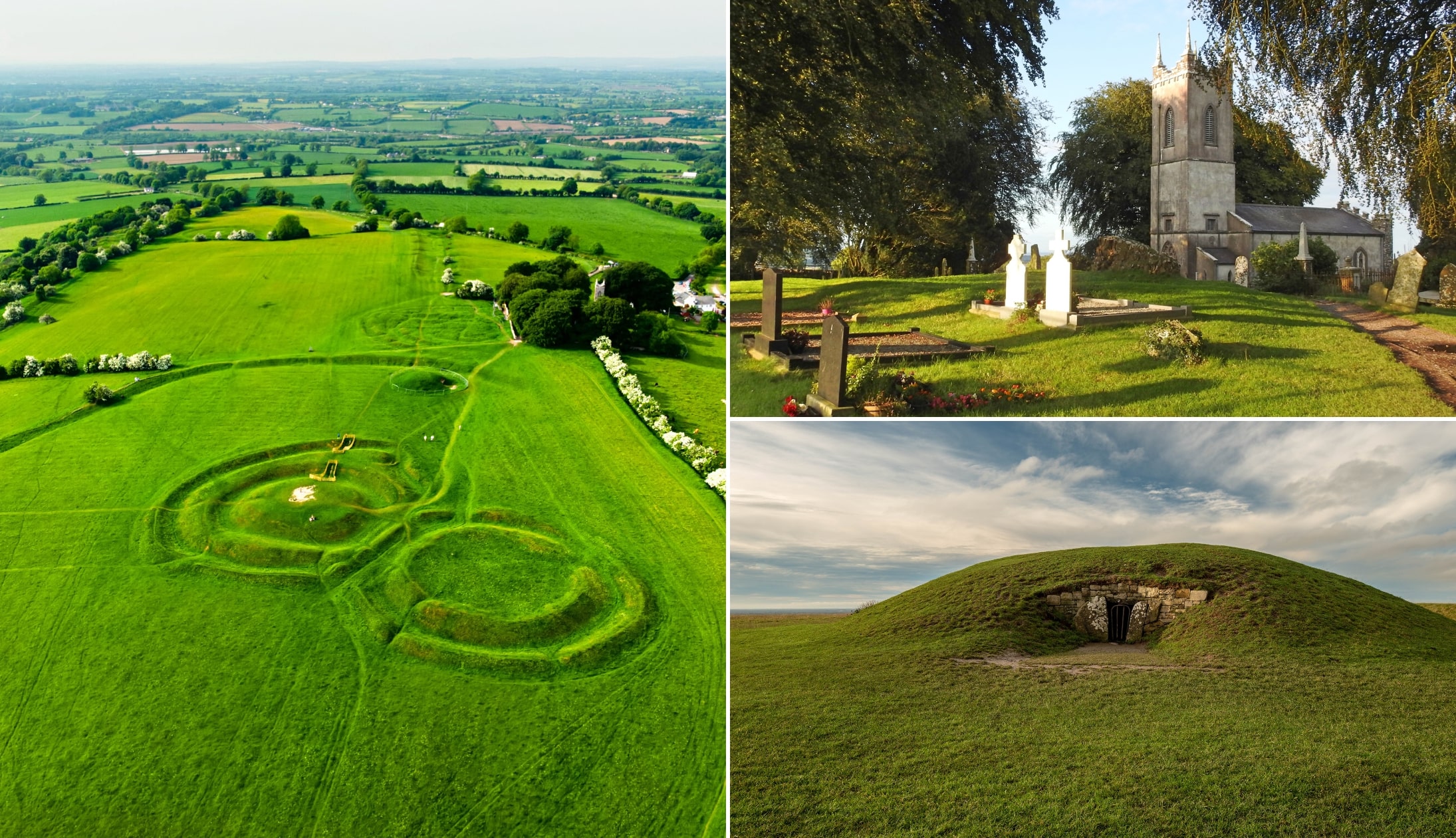
The Hill of Tara has been in use since the late Stone Age, but it’s known best as the seat of the High Kings of Ireland, with all old Irish roads leading to the site!
The site is shrouded in myth, and the story of Conn of the Hundred Battles tells the tale of how the High Kings of Ireland came to be.
It’s free to visit, with a free 25-minute Audio Visual Show at the visitor centre (in the church), and free guided tours scheduled every day.
Stop 6: Back to Dublin for the night
From the Hill of Tara, it’s a 50-minute drive back to Dublin City Centre (depending on traffic).
We’ve got some more dinner and drinks suggestions for you tonight. For dinner, head to Pickle on Camden Street to experience Indian food like never before.
If you feel up to it, get the five-course tasting menu which starts at €60 per person.
For drinks, head to Doheny & Nesbitt or Searson’s (both on Baggot Street). These are both traditional Irish pubs with cosy snugs.
Finally, for great music, we suggest The Merry Ploughboy (it’s a little outside the city in Rathfarnham, but you can get a €10 return shuttle). Or, if you want to stay inside the city, head to the Old Storehouse in Temple Bar.
Day 5: The trip to Galway
On day 5 of this itinerary, you’ll be taking the train from Dublin City to Galway City.
As always, we’d recommend booking your train ticket in advance to ensure you get a ticket and to avail of a lower price.
Recommended accommodation in Galway
- Budget: Feeney’s Audubon Lodge (in Salthill outside of the city by the sea) and Corrib View Guesthouse (a 45-minute walk from Eyre Square)
- Mid-range: Balcony House B&B (10-minute walk from Eyre Square) and Ash Grove House (gorgeous guesthouse near Galway Cathedral)
- Luxury: The G Hotel (luxury hotel in the city) and Glenlo Abbey (one of Ireland’s top hotels – a 15-minute drive from the city)
Stop 1: Heuston Station

The train to Galway departs from Heuston, you can take a taxi here, walk or take the Luas Red line, which has a stop right out front. The trip to Galway takes about 2.5 hours.
There are shops inside the station where you can grab snacks for the train and breakfast. We recommend buying food for the train instead of waiting to buy something on the train.
Stop 2: Galway Ceannt Station
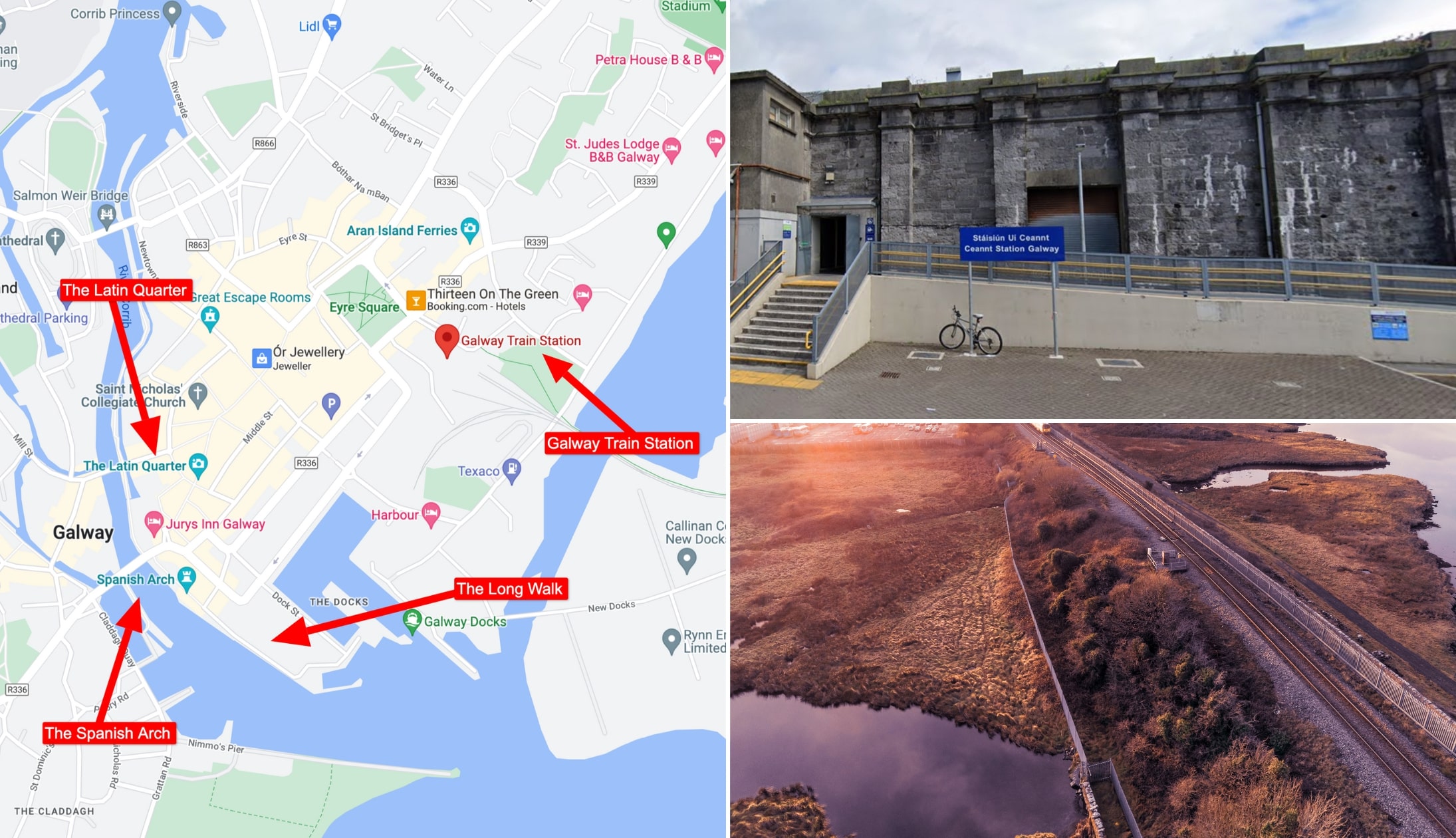
Welcome to Galway! The train station is located in the centre of Galway so, depending on your accommodation, you shouldn’t have to walk too far.
From here, we recommend you go drop off your bags before setting off to explore the city.
Stop 3: Check-in, get lunch and decide between walking/the bus
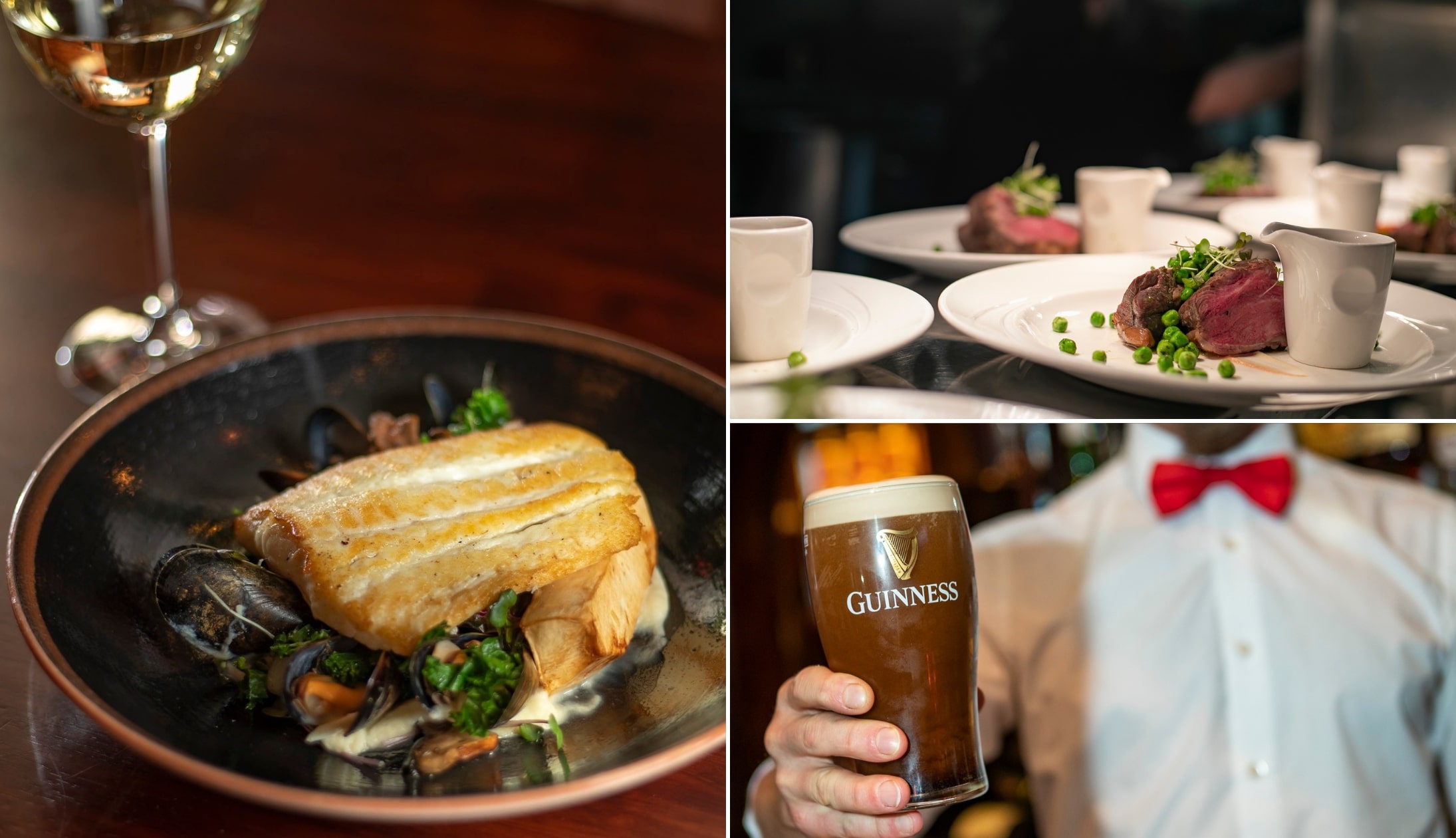
When you land in Galway, head to your accommodation, get checked in and head for lunch.
By now, you must be hungry. There are heaps of brilliant places for lunch in Galway, but if you don’t want the hassle of finding somewhere to eat, we’ve got a few suggestions!
We recommend Blakes Bar (traditional pub grub), Zappis (authentic Italian cuisine), or Tigh Neachtain (Irish and international cuisine).
Now, Galway is a very walkable city, but if it’s raining or if you fancy getting dropped to the ‘main’ attractions, the hop-on/hop-off bus tour is well worth buying.
Regardless of which option you choose, here are some of our favourite sites in Galway City (we’ve listed them in a logical way for you to walk between them).
Stop 4: Galway Cathedral
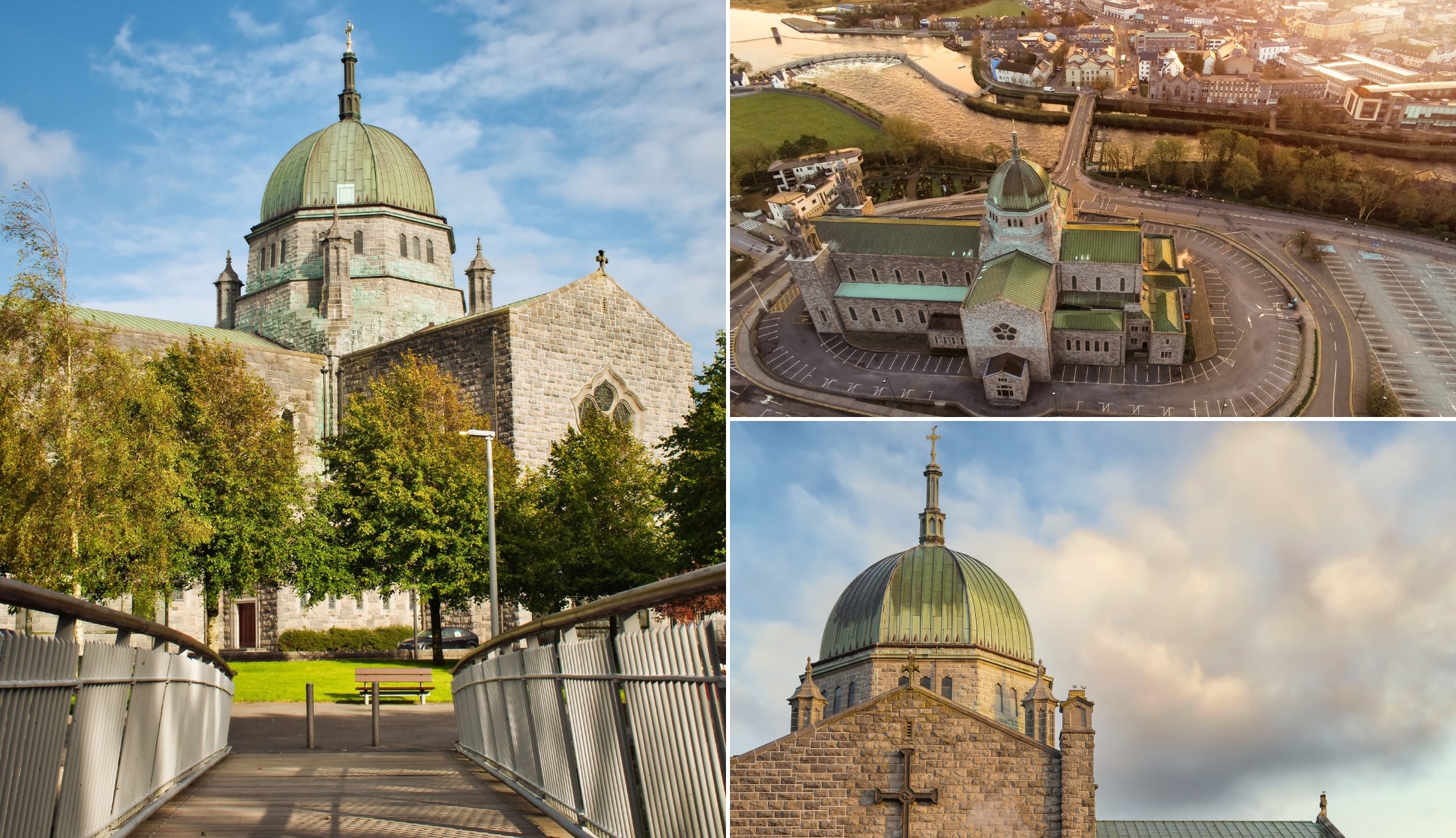
Galway Cathedral is wonderfully impressive both inside and out. It’s arguably the jewel in the Galway City skyline and you’ll cop it from many places as you stroll around the city.
Interestingly enough, it’s not as old as it looks, and construction on the building was only completed in 1965, earning it the title of ‘the last great stone cathedral to be constructed in Europe’.
The cathedral is free to enter, but visitors are asked for a donation of €2 to help with the building’s upkeep.
Stop 5: Quay Street and the Latin Quarter
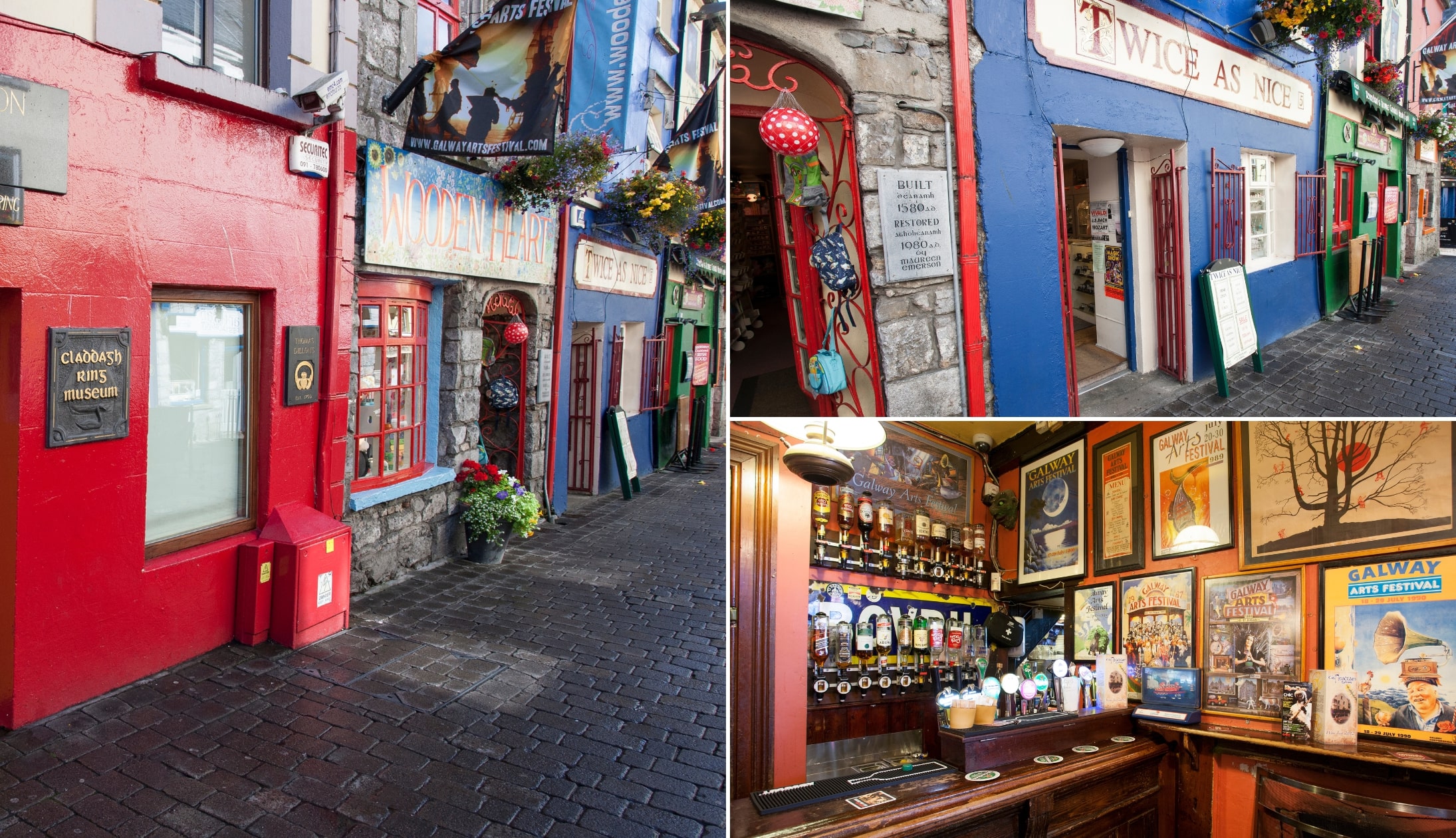
Galway’s colourful streets are an absolute joy to ramble along regardless of the time of year.
If you’re walking from the cathedral, you’re a short stroll away from the Latin Quarter and Quay Street where you can have a nosey around.
These streets are alive with the buzz from tourists and locals alike.
Stop 6: The Hall of the Red Earl

One of our favourite places to visit in Galway (especially if it’s raining!) is the Hall of the Red Earl.
The Hall of the Red Earl is one of Galway’s most interesting sites. The ruins date back to the 13th century, with ties to the founding of Galway and the Anglo-Norman De Burgo family.
It was the first municipal building in the city, used for collecting taxes, hosting banquets, and sentencing criminals.
The Hall of the Red Earl was lost as the city grew until 1997, when the ruins were unearthed by archaeologists on behalf of the Office of the Public Works.
Today, you can walk amongst the ruins, view the artefacts, and learn about the hall’s history from the informative displays.
Stop 7: Galway City Museum
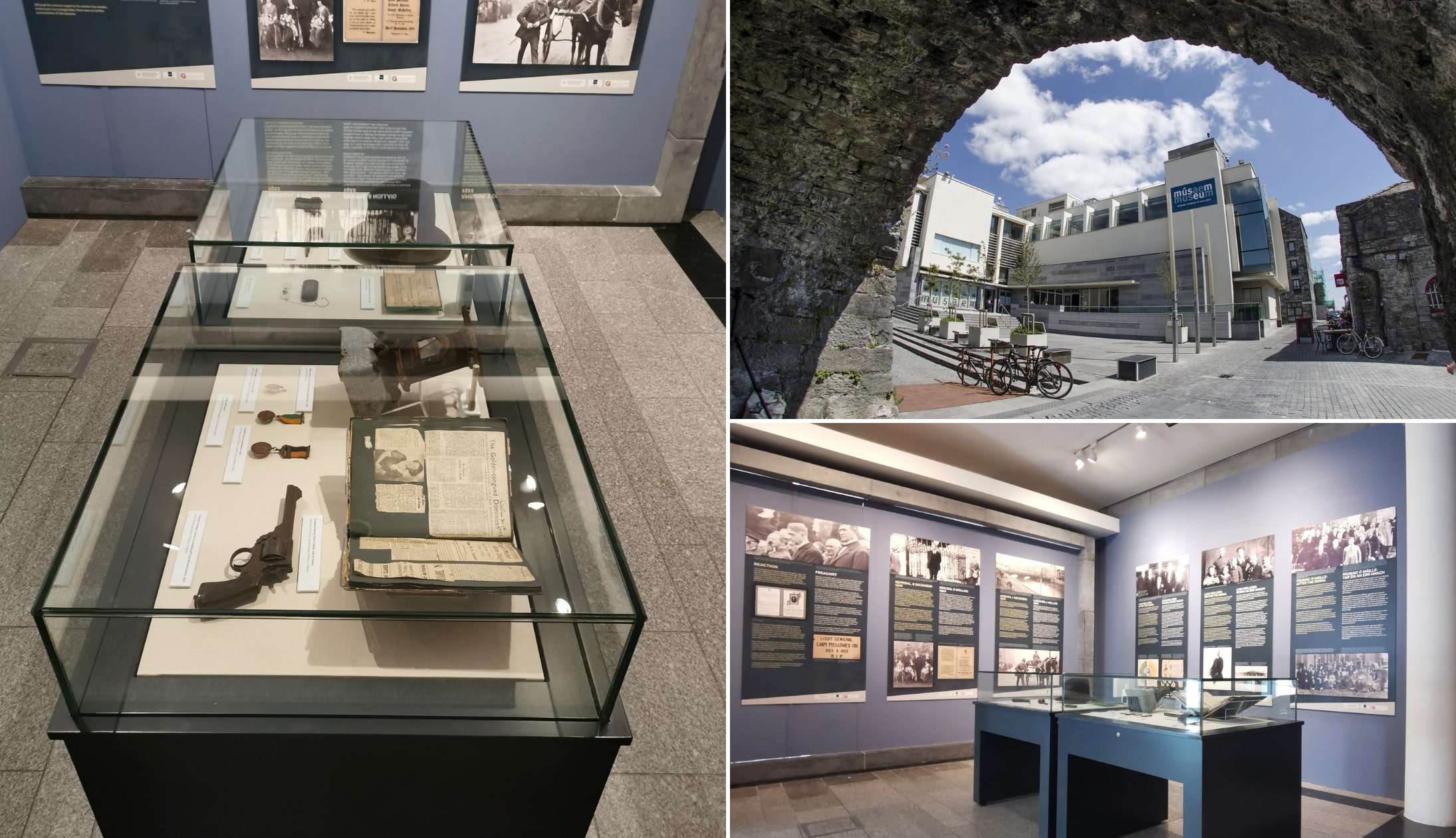
The Galway City Museum is just a stone’s throw from the Spanish Arch. It’s one of the best places to learn about Galway’s history, culture, and archaeology, with collections telling the story of prehistoric Galway all the way through to 19th and 20th-century Galway!
The museum has three floors and seven long-term exhibitions, including The Wild Atlantic – Sea Science, and an exhibition on Pádraic Ó Conaire.
It’s free to visit, although donations are always appreciated.
Stop 8: Spanish Arch and the Long Walk
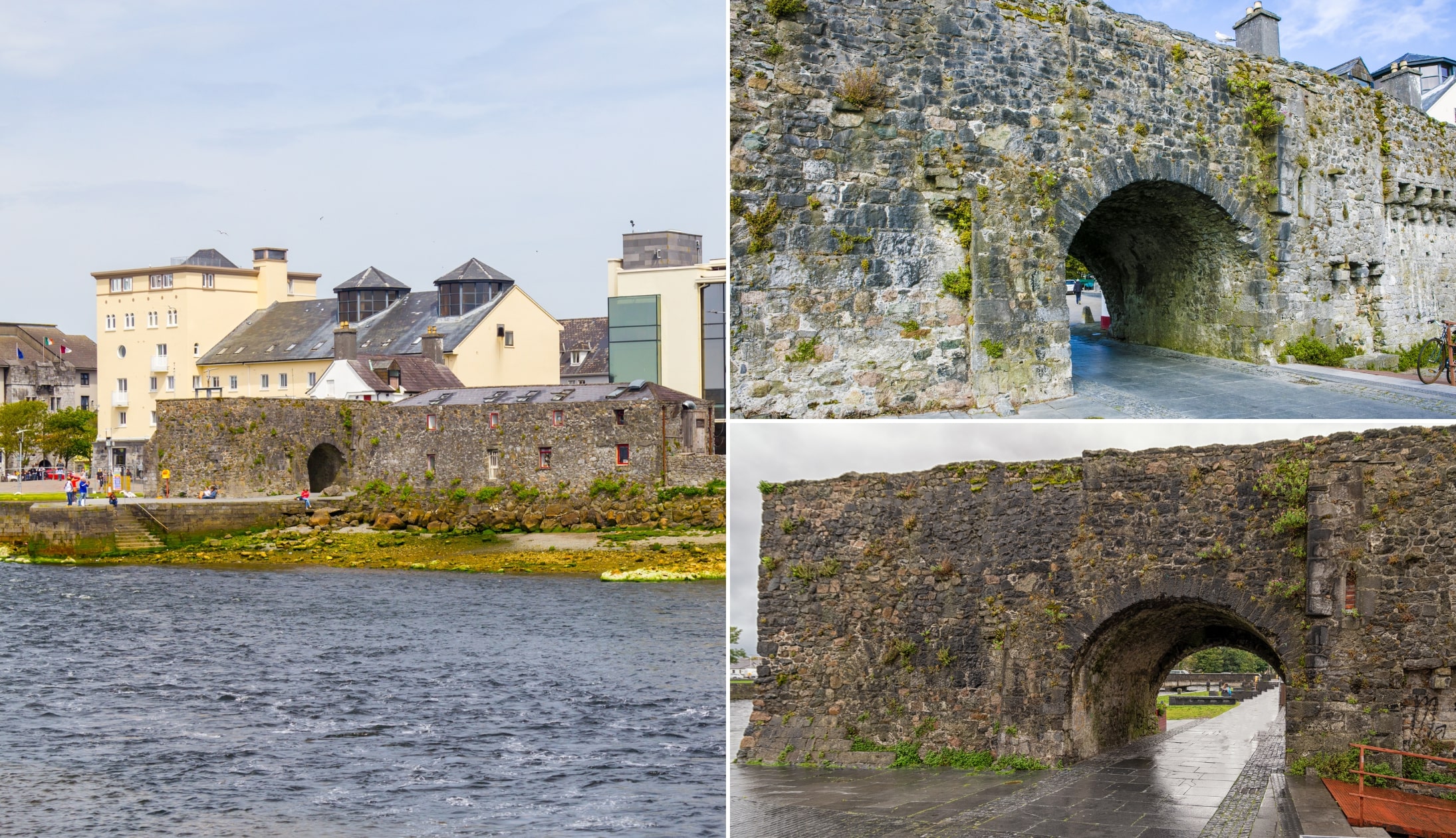
The Spanish Arch is a must-see Galway attraction, dating back to Medieval times. The large stone arch is located on the outskirts of the city centre, overlooking the Claddagh (shore).
It originally housed soldiers who were keeping watch on the city’s Medieval walls. Its nickname is thought to come from the city’s merchant trade with the Spanish, whose ships would often be docked in the area!
From the Spanish Arch, you can take a short stroll alongside the water to what’s known as The Long Walk. You’ll likely have seen pictures of it (it’s a line of colourful buildings right on the water).
Stop 9: Dinner, drinks and live music
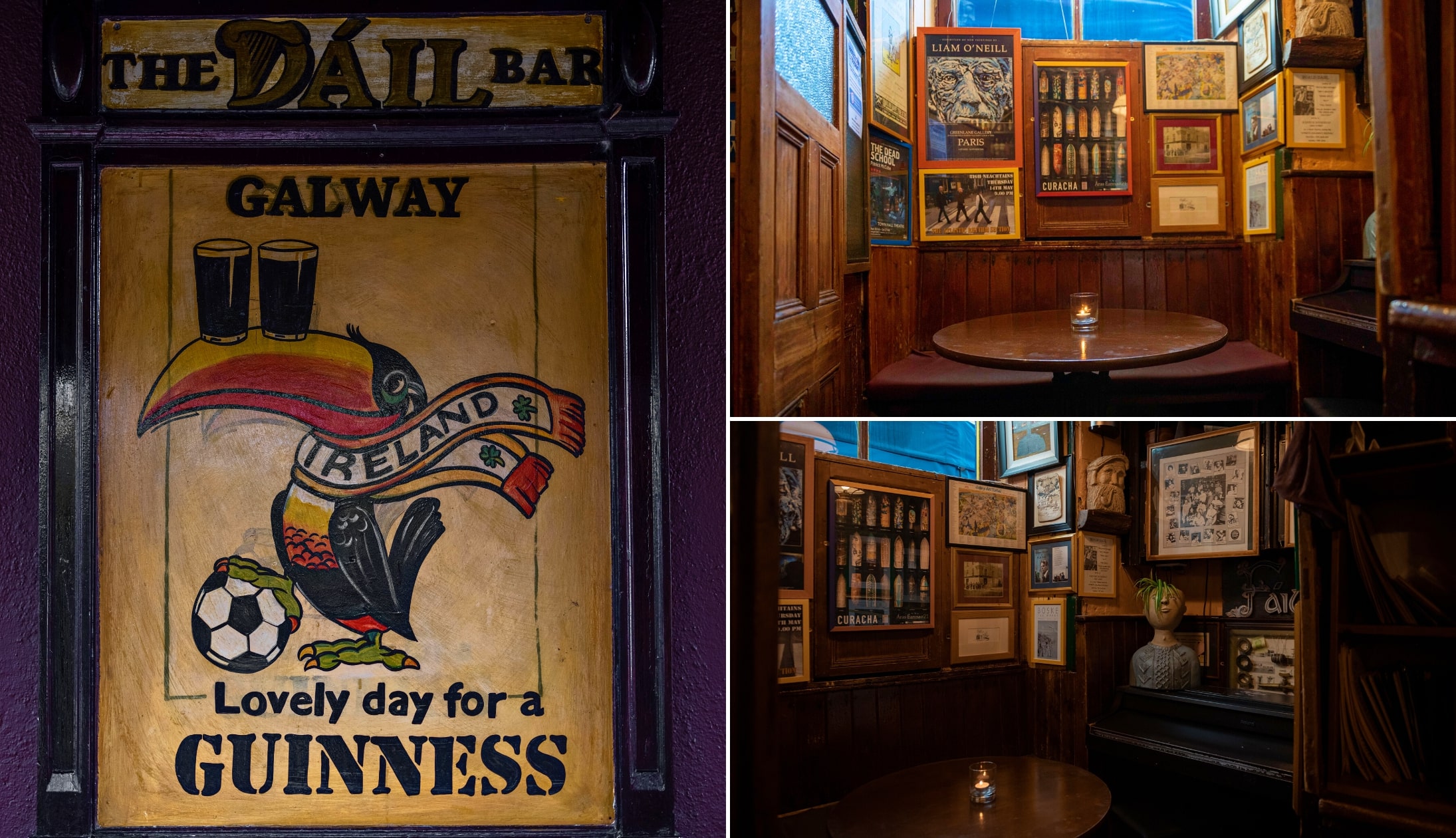
You’ve had a busy aul day today, so it’s time to kick back and chill with food and, if you fancy, a drink and some live music.
Galway is a lively city regardless of the time of year. Here’s some spots worth checking out:
Our dinner recommendations
For dinner, we’ve got a few stellar recommendations: Ard Bia, The Quay Street Kitchen, and Dela. Ard Bia is absolutely fantastic, but you need to book in advance for dinner.
The restaurant has a quirky interior and serves beautifully presented modern dishes.
The Quay Street Kitchen has a great selection of vegan and vegetarian-friendly dishes, and Dela has modern Irish cuisine on the menu.
Live music and trad bars
There’s some mighty pubs in Galway. After dinner, head out for drinks at either Tigh Neachtain or The Crane. Both are traditional pubs with a great atmosphere.
Trad music is an integral part of the city, with heaps of options to choose from. Our favourite spots are Crane Bar (mentioned above) and Tigh Chóilí.
Day 6: County Clare
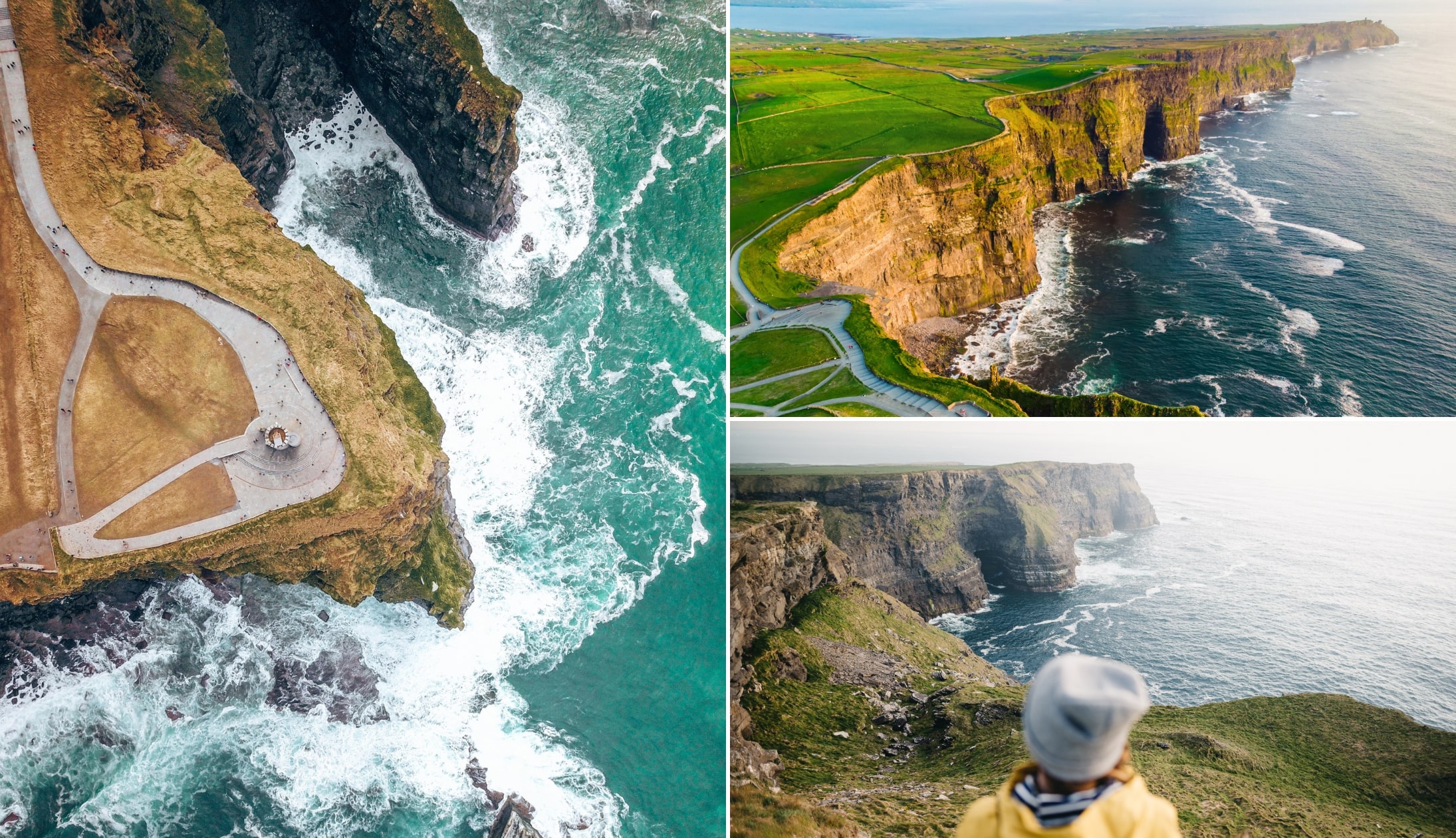
It’s day 6 of your 7 days in Ireland, and today, you’ll be taking a tour of Clare. It’s a wonderful corner of the island, with beautiful landscapes and historical sites.
It’s home to the Burren National Park and the Cliffs of Moher, one of the most popular natural tourist attractions in the country!
We’re recommending this 8-hour day trip from Galway City as it takes in a good chunk of Clare’s main attractions (and it has excellent reviews).
If you fancy a hearty breakfast, we’d recommend Pascal Coffee House (the pancakes are amazing) or Gaslight Brasserie (great for a full Irish or a breakfast burrito).
Keep reading below for an overview of the tour, but please note that 1, you may not always physically stop at all of these sights and 2, these tours are subject to change, so always check with the provider in advance.
Stop 1: Dunguaire Castle
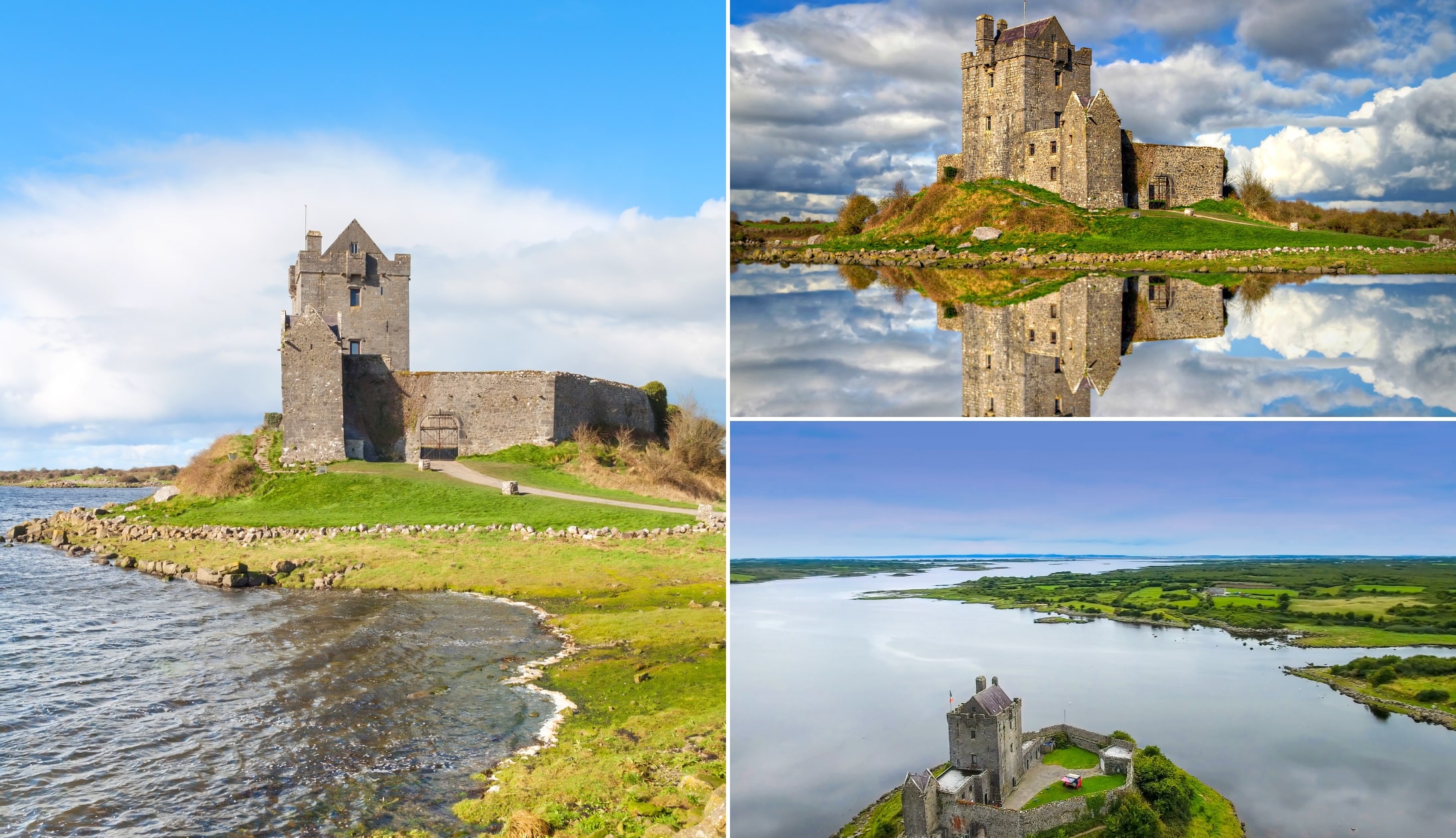
The enchanting Dunguaire Castle sits on the shores of Galway Bay and has an impressive 75-foot tower.
According to legend, if you stand at the front gate and ask a question, you’ll have an answer by the end of the day!
The castle was built in 1520 and belonged to the O’Hynes clan. In 1912, the castle was bought by writer Oliver St. John Gogarty.
During his ownership, he restored the castle and hosted several famous writers, including W.B. Yeats and George Bernard Shaw.
Stop 2: Corcomroe Abbey
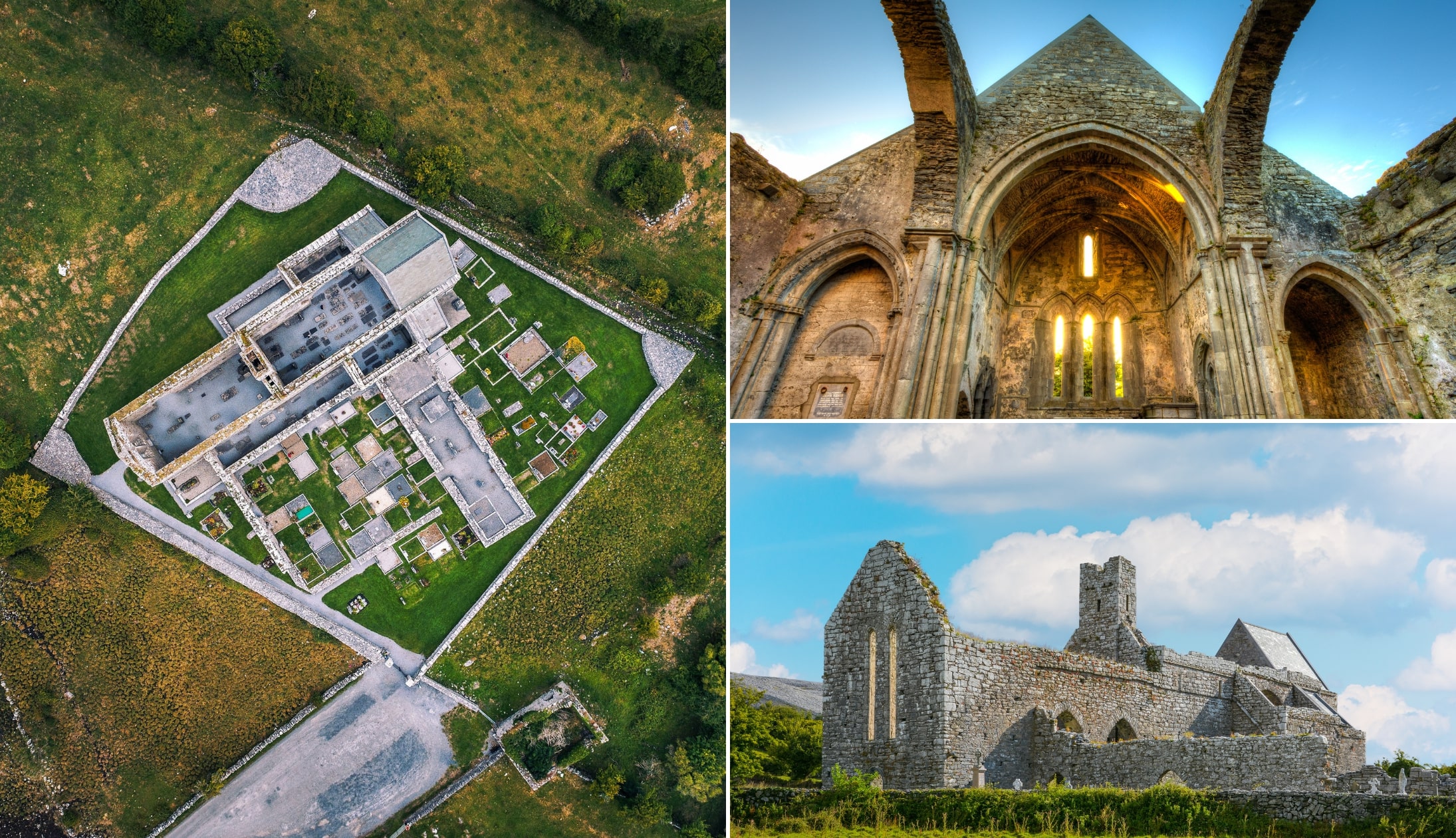
Corcomroe Abbey is a late 12th/early 13th-century abbey ruin, tucked away amongst the scenic Burren hills.
The ruins are in great condition and as you pass by, admire its Cistercian architecture set against the backdrop of lush green hills.
Stop 3: The Burren
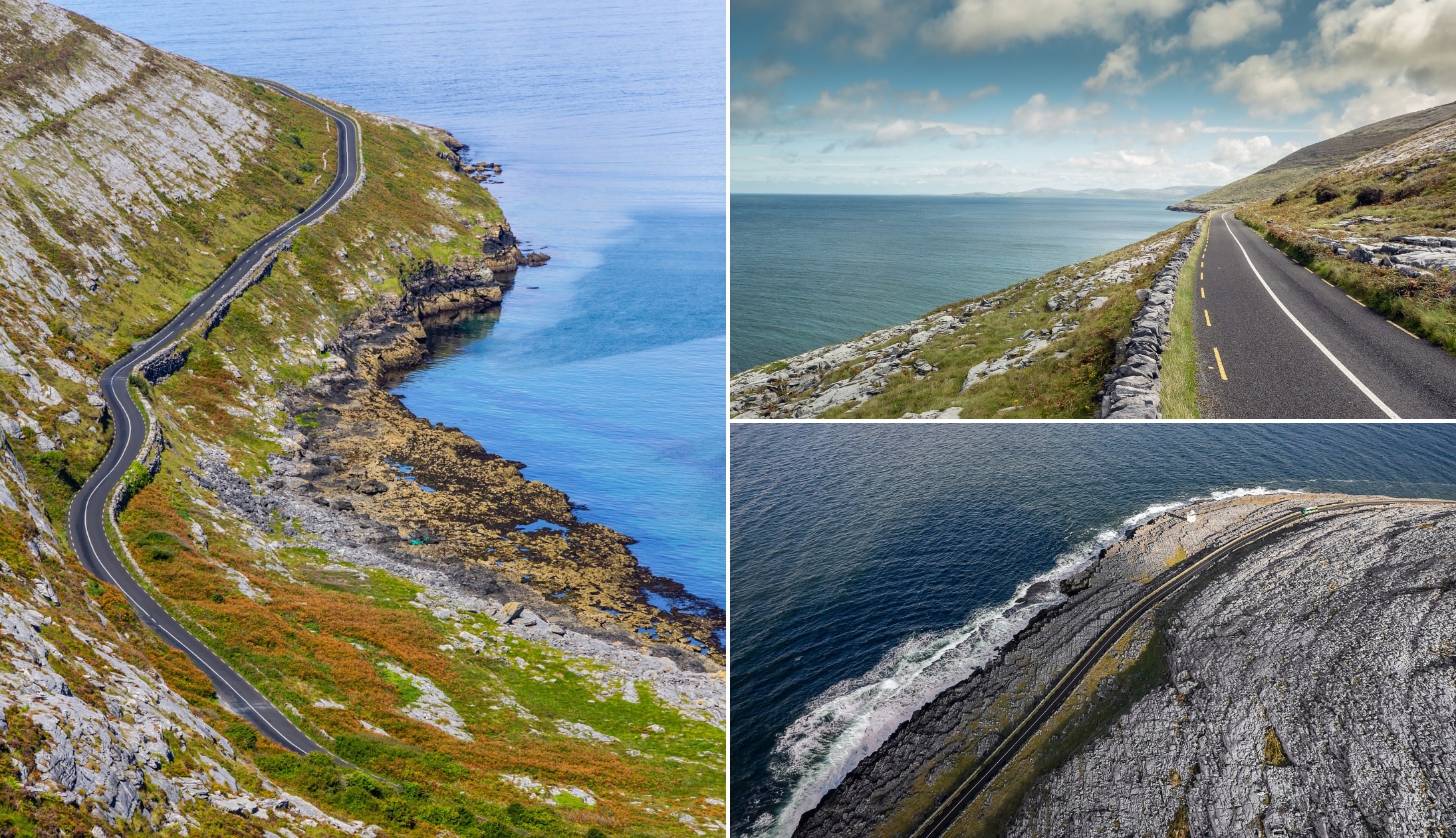
During the tour, you’ll be driving right through the Burren, a gorgeous landscape characterised by huge limestone plateaus.
The Burren is what is known as a karst landscape, a distinct landform that arises when carbonate rock (such as dolomite, marble, or limestone) is slowly dissolved by water, giving the land its unique shape.
In fact, the Burren is still being shaped by the rain to this day! Karst landscapes have sinkholes, caves, and underground streams, the Burren being no exception, with huge subterranean caverns below its surface.
The Burren is one of the best examples of karst landscapes worldwide, and it has a diverse range of flora and fauna thanks to its varied landscape.
Stop 4: Doolin Pier
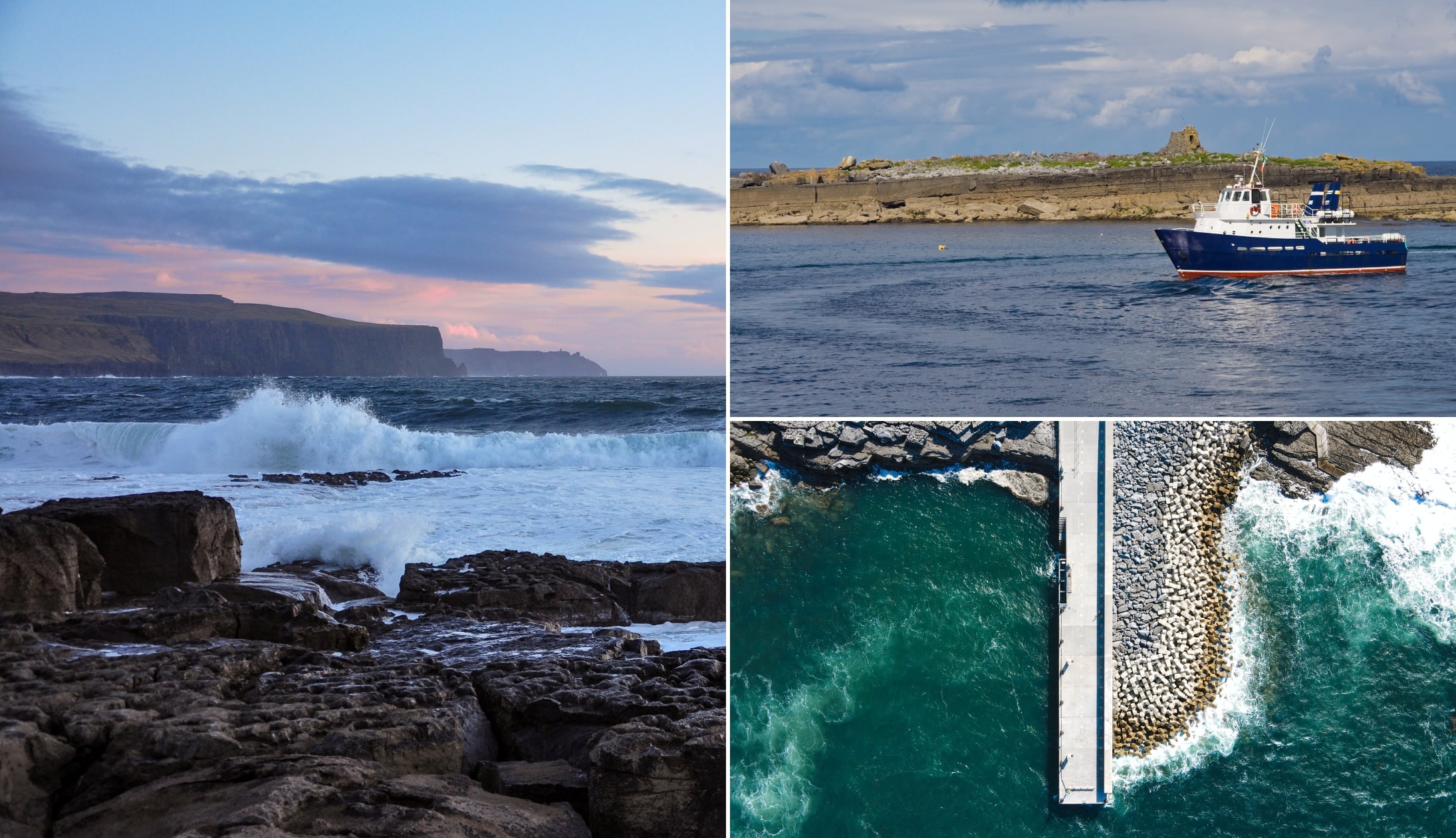
You’ll then make a quick stop at Doolin Pier, the main access point to the nearby Aran Islands.
This place tends to be a hive of activity as the two ferry providers shuttle people to and from Inis Mor, Inis Oirr and Inis Meain (you’ll be visiting Inis Mor tomorrow).
Stop 5: Lunch at Hotel Doolin
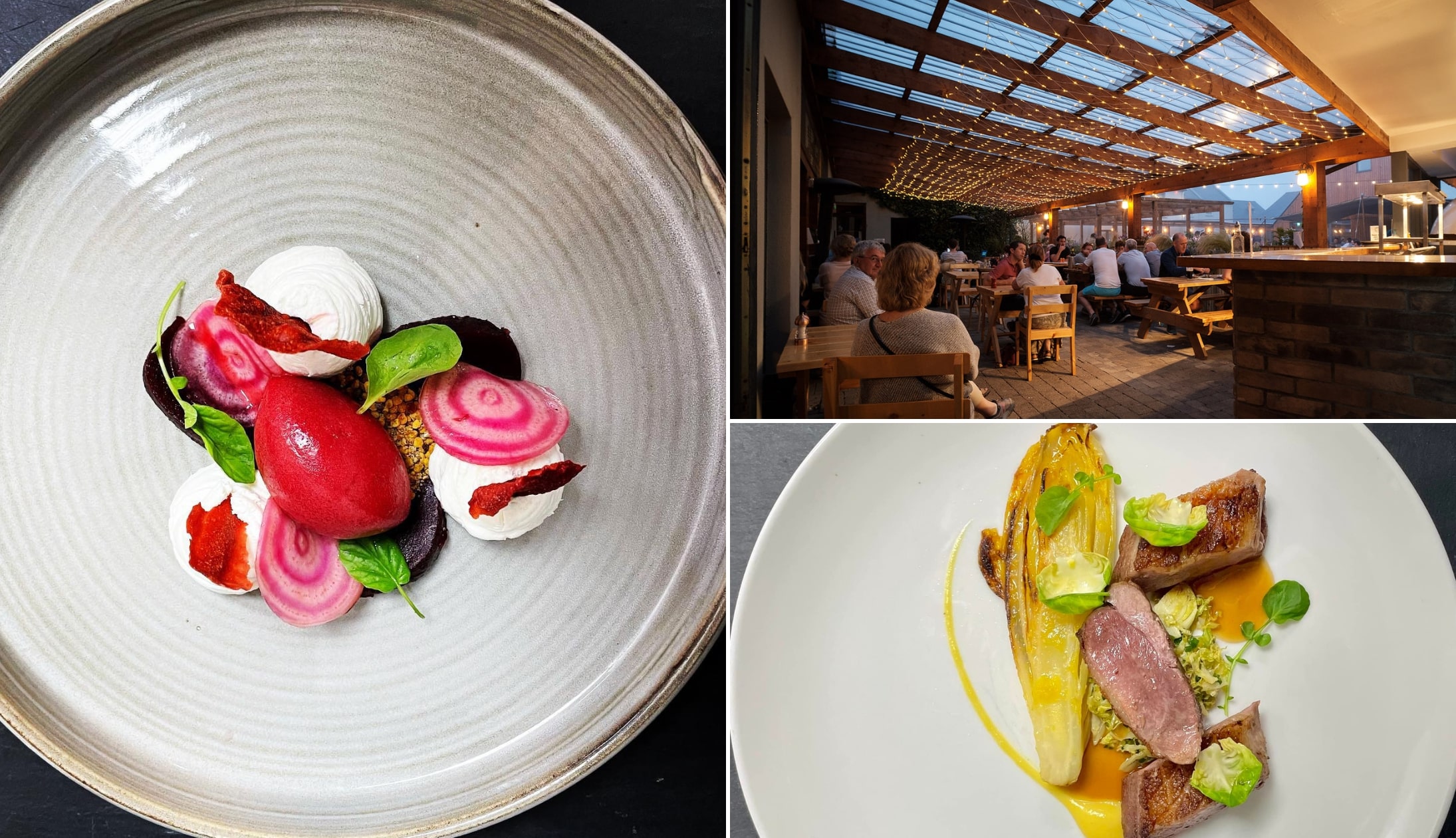
For lunch, you’ll be heading to Fitz’s Pub and Eatery, which is a part of Hotel Doolin. It’s a cosy traditional pub serving up delicious Irish food.
The Navarin-style Irish lamb stew is a huge hit, as is the sustainable all-white fish chowder. If you’re a beer drinker, make sure to try their in-house Dooliner Beer, a creamy and smooth Irish red ale.
Stop 6: The Cliffs of Moher
Your next stop, the magnificent Cliffs of Moher, are one of the most popular tourist attractions in Ireland.
The cliffs are 15 minutes away from Doolin, with breathtaking views of the wild Atlantic, Galway Bay, and the Aran Islands.
There’s a visitor centre on-site, as well as 800 metres of paved walkways with viewing areas, and the historic O’Brien’s Tower.
Stop 7: Lisdoonvarna
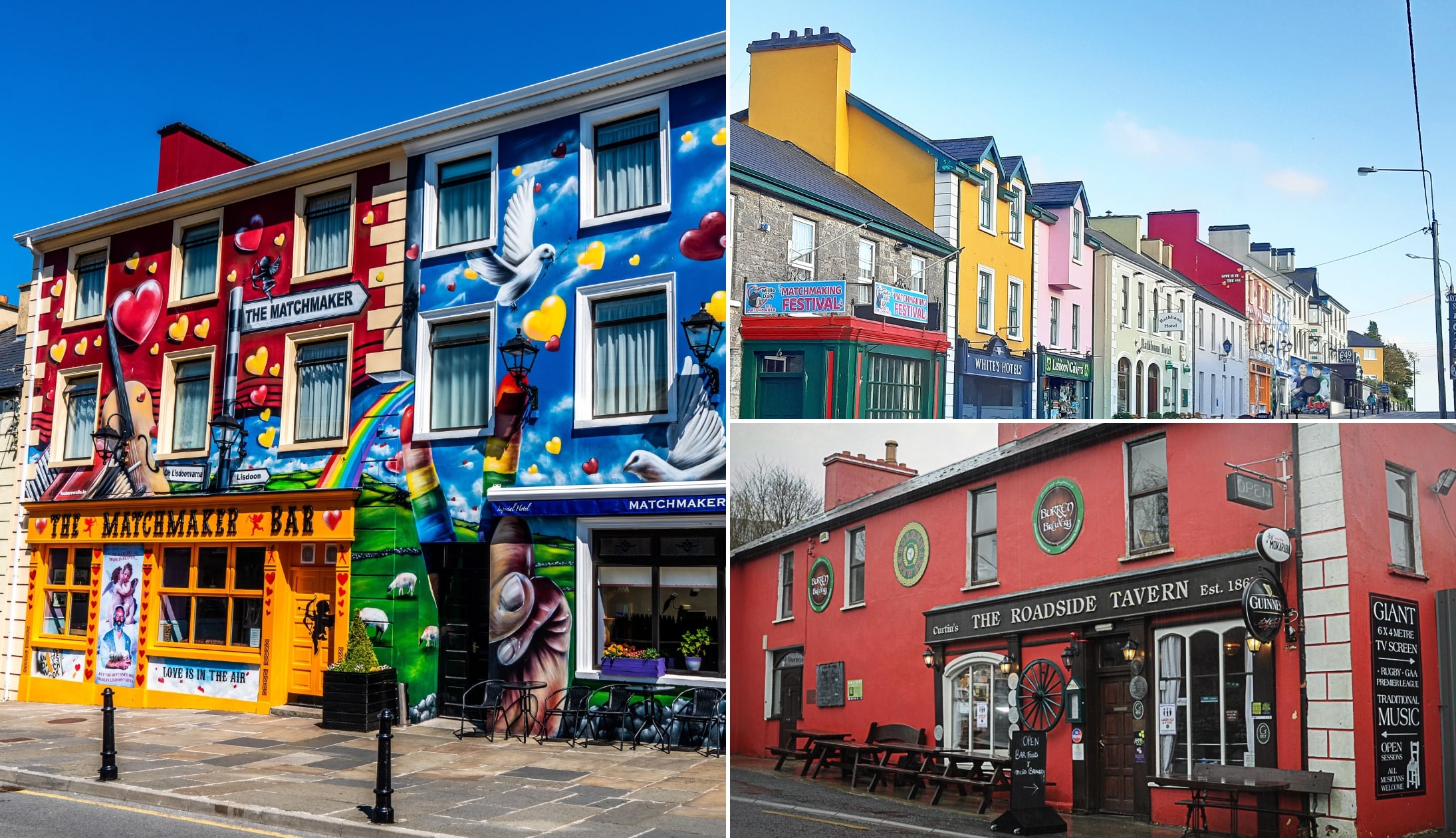
Keep your eyes peeled as you pass through Lisdoonvarna, a spa town renowned for its annual matchmaking festival! The festival began in 1857 and today it attracts over 20,000 visitors from all over the globe.
Lisdoonvarna is relatively new for Irish standards (dating back to the early 19th century), but it’s still full of charm, with colourful shop fronts and traditional houses.
Stop 8: Back to Galway for the night
From Lisdoonvarna, it’s around one hour and 20 minutes back to Galway, so sit back and relax as you may your way back through the lovely countryside.
Take a look at our recommendations from previous days for our favourite places to eat, drink, and listen to music in the city.
Or, if you want to go somewhere different tonight, we recommend heading to Loam, one of two Michelin-starred restaurants in the city.
If it’s a special occasion, consider going all out and ordering the seven-course tasting menu (vegetarian/vegan options available).
The head chef Enda McEvoy’s carefully crafted menus were designed to showcase the best of West Ireland ingredients and the food is magnificent.
Day 7: Back to Dublin
Today depends on your schedule. If you’re flying home, leave Galway early and get to Dublin Airport with enough time to allow for any delays en route.
Here’s what you need to know about your two options for getting from Galway to Dublin.
Option 1: Train
You can get the train direct to Dublin City with Irish Rail from Galways’s Ceannt Station. The advantages of the train are that it’s nice and comfortable.
The disadvantages are it only goes to Dublin City, so you’ll need to make your way to the airport from there. If you’re getting the train, head to Heuston Station.
From there, you can take the Dublin Express to the airport, which takes between 45 minutes to 1 hour, depending on traffic.
Option 2: Bus
GoBus and Aircoach both get you to Dublin City and Dublin Airport from Galway.
It takes at least 3.5 hours, so make sure to give yourself plenty of time if you need to catch a flight.
And that’s a wrap on this road trip
We hope you found the above road trip guide useful. If you have any questions, ask in the comments below and we’ll do our best to help.
Or, if you’d like to browse our other Irish Road Trip itineraries, visit our Road Trip Hub – cheers!

Keith O’Hara has lived in Ireland for 35 years and has spent much of the last 13 creating what is now The Irish Road Trip guide. Over the years, the website has published thousands of meticulously researched Ireland travel guides, welcoming 40 million+ visitors along the way. In 2022, the Irish Road Trip team published the world’s largest collection of Irish Road Trip itineraries. Keith lives in Dublin with his dog Toby and finds writing in the 3rd person minus craic altogether.